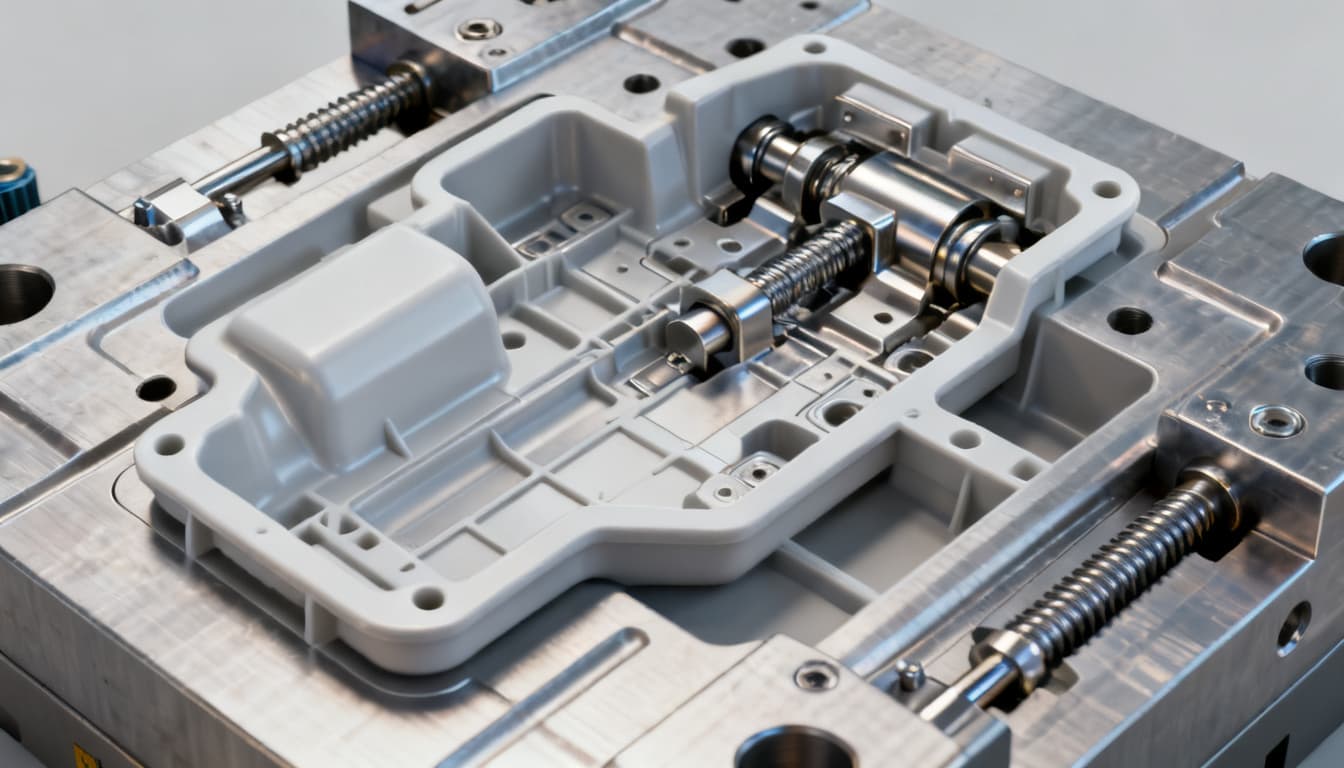
2026 Best Practices for Effective Plastic Injection Molding: Key Design Considerations
Every injection molding engineer knows that the road to a flawless plastic part is paved with meticulous design considerations. The difference between a successful product and a costly failure often lies in the details. In this article, we will delve into the key design practices that are shaping th
2026 Best Practices for Effective Plastic Injection Molding: Key Design Considerations
Every injection molding engineer knows that the road to a flawless plastic part is paved with meticulous design considerations. The difference between a successful product and a costly failure often lies in the details. In this article, we will delve into the key design practices that are shaping the future of effective plastic injection molding.
Understanding Material Selection
Choosing the right material is fundamental to the success of an injection molding project. Each material offers unique properties that can significantly impact the final product's performance and cost.
Comparing Common Materials
| Material | Melt Temperature (°C) | Mold Temperature (°C) | Typical Applications |
|---|---|---|---|
| ABS | 220-260 | 50-80 | Automotive, Electronics |
| PP | 200-250 | 10-60 | Packaging, Consumer Goods |
| PC | 270-320 | 80-120 | Optical Discs, Safety Helmets |
| PA66 | 260-290 | 80-100 | Gears, Bearings |
| POM | 190-230 | 80-120 | Precision Parts, Mechanical Gears |
Material Trade-offs
While selecting materials, consider trade-offs such as cost, mechanical properties, and environmental impact. For instance, while ABS offers excellent toughness and impact resistance, it is more expensive than PP. Similarly, PC provides superior clarity and strength but at a higher cost and processing temperature.
Designing for Manufacturability
Designing parts that are easy to manufacture can save time and reduce costs. Here are some critical considerations:
Wall Thickness
Maintaining consistent wall thickness is crucial to avoid defects such as warping and sink marks. Ideally, wall thickness should range between 1-3 mm. Thicker walls can lead to longer cooling times and increased material usage.
Draft Angles
Incorporating draft angles facilitates the smooth ejection of parts from the mold. A draft angle of 0.5-2° is recommended to minimize friction and avoid damage to the part surface.
Rib Design
Ribs can enhance the structural integrity of a part without significantly increasing its weight. However, rib thickness should not exceed 60% of the adjacent wall thickness to prevent sink marks.
Optimizing Process Parameters
Fine-tuning process parameters can lead to improved cycle times and product quality. Here are key parameters to monitor:
Melt and Mold Temperatures
Adjusting melt and mold temperatures within the specified range for each material is crucial. For example, PA66 typically requires a melt temperature of 260-290°C and a mold temperature of 80-100°C.
Injection Pressure
Injection pressure should be optimized to ensure proper filling without causing flash or part deformation. A typical pressure range is 50-150 MPa, depending on the material and part geometry.
Cycle Time
| Material | Cycle Time (seconds) | Cooling Time (seconds) |
|---|---|---|
| ABS | 30-60 | 20-40 |
| PP | 20-50 | 15-30 |
| PC | 40-80 | 25-50 |
| PA66 | 30-70 | 20-45 |
| POM | 25-60 | 15-35 |
Identifying and Solving Common Defects
Despite careful planning, defects can occur. Understanding their causes and solutions can help mitigate issues.
Warping
Warping often results from uneven cooling or inconsistent wall thickness. To prevent it, ensure uniform cooling and maintain consistent wall thickness.
Sink Marks
Sink marks are depressions that occur when the surface of the part cools faster than the inner material. To reduce sink marks, optimize cooling time and avoid overly thick sections.
Flash
Flash occurs when excess material escapes the mold cavity. This can be minimized by ensuring proper clamping force and maintaining optimal injection pressure.
Quality Assurance and Testing
Implementing robust quality assurance measures can help catch defects early and ensure consistent product quality.
Dimensional Inspection
Regular dimensional inspections using tools like calipers and coordinate measuring machines (CMMs) can verify part dimensions against specifications.
Material Testing
Conducting tests such as tensile strength, impact resistance, and thermal analysis can ensure the material properties meet the desired standards.
Step-by-Step Checklist for Effective Injection Molding
- Select the appropriate material considering cost, properties, and application.
- Ensure design for manufacturability with consistent wall thickness and appropriate draft angles.
- Optimize process parameters including melt temperature, mold temperature, and injection pressure.
- Implement thorough quality assurance and testing procedures.
- Continuously monitor and adjust the process to address any emerging defects.
Practical Tips: Always conduct a trial run to validate the process parameters and design before full-scale production. This can help identify potential issues early and save significant costs in the long run.
Conclusion
Effective plastic injection molding hinges on meticulous attention to design, material selection, and process optimization. By adhering to these best practices, manufacturers can produce high-quality parts with minimal defects and reduced costs. For expert guidance and to get a free quote, reach out to our experienced team at Panda Molding.