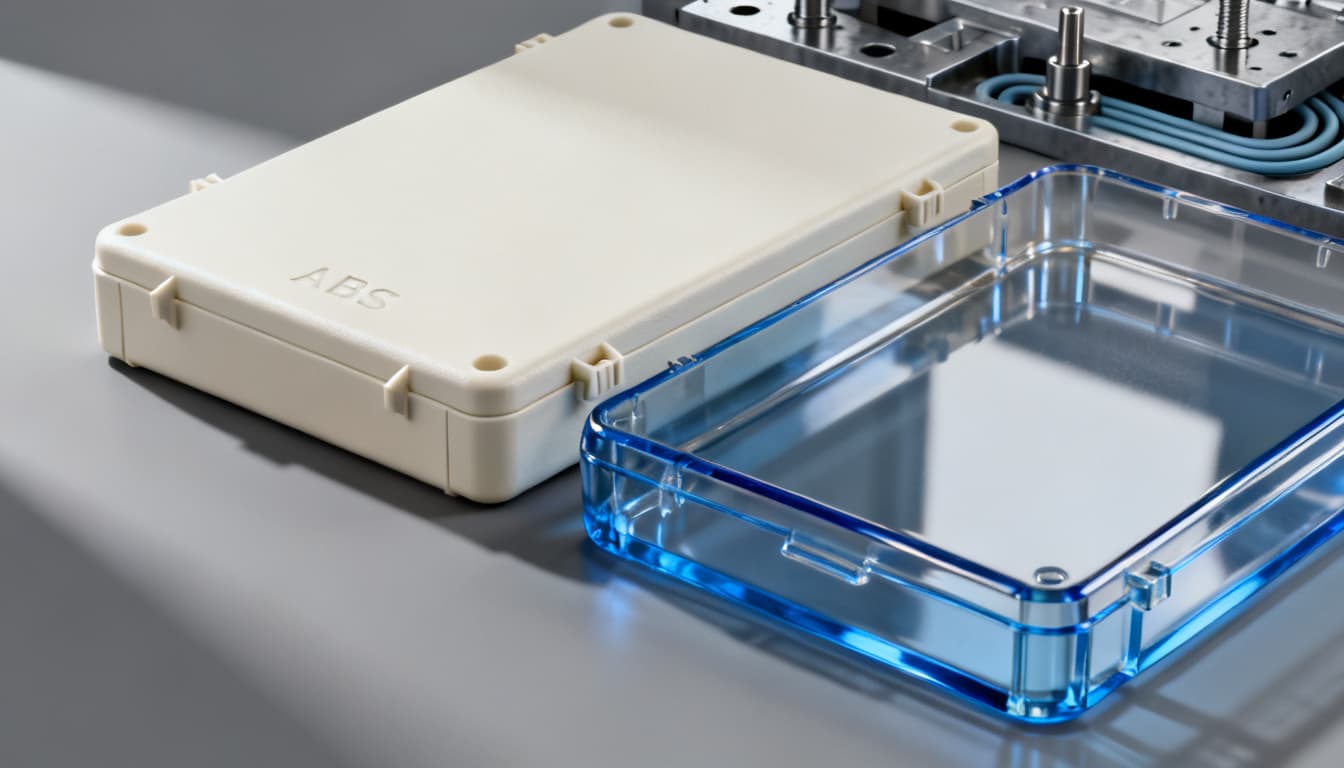
ABS vs PC Injection Molding: Material Selection for Enclosure Durability
In the realm of injection molding, choosing the right material for enclosure durability is crucial, especially when facing challenges like thermal cycling, supply chain disruptions, and vibration fatigue. A recent industry report highlights how picking the wrong plastic can lead to costly failures,

§1 核心矛盾与痛点 (CORE Friction & Industrial Impetus)
In the realm of injection molding, choosing the right material for enclosure durability is crucial, especially when facing challenges like thermal cycling, supply chain disruptions, and vibration fatigue. A recent industry report highlights how picking the wrong plastic can lead to costly failures, such as cracked housings and warped components, which necessitate redesigns and delay projects. These issues underscore the importance of understanding the material properties and their implications on system-level performance.
For example, ABS is widely used due to its balance of impact resistance and surface finish, making it a common choice for electronic housings and toy parts. However, if mishandled, it can lead to severe supply chain exposure, as noted in Weilin Plastic's guide. A failure to properly assess and select the appropriate material can result in production halts or increased costs due to material shortages or quality issues.
§2 物理/电气/商业底层逻辑深剖 (Root Cause & Mechanistic Analysis)
To make informed decisions in material selection for injection molding, it's essential to delve into the underlying physics and commercial considerations. The fracture mechanics of materials like ABS and PC, for instance, are critical in determining their suitability for specific applications. ABS offers a great balance of impact resistance and surface finish, with properties like tensile strength ranging from 40–55 MPa and a heat deflection temperature of 70–100°C, as detailed in Zetar Mold's complete processing guide. These properties make ABS a standard choice for applications requiring durability and aesthetic appeal.
Conversely, PC (polycarbonate) is known for its high impact resistance and optical clarity, making it suitable for applications that demand transparency and toughness. However, PC is less forgiving in terms of processing, requiring strict adherence to design rules to prevent defects, as noted in the Protolabs material selection guide. The choice between ABS and PC often hinges on specific application requirements, such as environmental exposure, mechanical stress, and aesthetic considerations.
Technical Specifications and Process Parameters (Table B)
| Parameter | ABS | PC | Unit/Notes |
|---|---|---|---|
| Tensile Strength | 40–55 | 60–70 | MPa |
| Flexural Modulus | 2,000–2,700 | 2,200–2,600 | MPa |
| Izod Impact Strength | 100–400 | 600–850 | J/m |
| Heat Deflection Temperature | 70–100 | 125–135 | °C |
| Shrinkage | 0.4–0.8% | 0.5–0.7% | Percentage |
| UV Stability | Moderate | High | — |
| Transparency | Opaque | Transparent | — |
| Cost | $2.50–3.50 | $3.00–3.80 | Per kg |
Key Takeaways
From the data above, it is evident that while ABS provides a cost-effective solution with acceptable mechanical properties, PC offers superior impact resistance and higher thermal stability, albeit at a slightly higher cost. The choice between these materials should be guided by the specific mechanical and aesthetic requirements of the application, as well as budgetary constraints.
Application and Compliance Considerations (Table C)
| Application Scenario | ABS Suitability | PC Suitability | Notes |
|---|---|---|---|
| Consumer Electronics | High | Moderate | Cost-effective with good finish |
| Automotive Components | Moderate | High | PC preferred for high impact areas |
| Outdoor Enclosures | Low | High | PC has better UV resistance |
| Optical Devices | Low | High | PC's transparency is critical |
| Industrial Equipment | High | Moderate | Depends on exposure conditions |
| Medical Devices | Moderate | High | PC's sterilization resistance |
Practical Implications
The application scenarios table underscores the importance of aligning material properties with end-use requirements. For instance, in applications where UV exposure is a concern, PC's superior resistance makes it the preferred choice. Conversely, ABS might be more suitable for indoor consumer electronics due to its cost-effectiveness and good surface finish.
§3 实时多维度对比模型 (Real-Time Comparative Metric Matrix)
Comparative Metric Matrix (Table A)
| 对比维度 (Metrics) | 方案 A (主流原厂/头部) | 方案 B (高品质替代/自研) | 选型决定因素与失效边界 |
|---|---|---|---|
| Impact Resistance | ABS: 100–400 J/m | PC: 600–850 J/m | High impact areas favor PC |
| Thermal Stability | ABS: 70–100°C | PC: 125–135°C | Applications with high heat exposure should use PC |
| Cost | ABS: $2.50–3.50/kg | PC: $3.00–3.80/kg | Budget constraints might favor ABS |
| UV Stability | Moderate | High | Outdoor use favors PC |
| Transparency | Opaque | Transparent | Optical applications require PC |
Design Considerations
This comparative matrix highlights the trade-offs between ABS and PC. While ABS is cost-effective and adequate for many applications, PC's superior mechanical and thermal properties make it indispensable for high-performance applications. Designers must weigh these factors against project-specific requirements to make informed material selections.
§4 全球行业标准合规与防控设计 (Compliance & Risk Mitigation)
Ensuring compliance with industry standards is crucial in mitigating risks associated with material selection for injection molding. Standards such as ISO 9001 and ASTM D638 provide guidelines for quality management and material testing, respectively. By adhering to these standards, manufacturers can reduce the likelihood of defects and ensure consistent product quality.
For instance, implementing a 30–35% electrical derating can prevent overloading and extend the lifespan of components. Maintaining a 3-month buffer stock can help mitigate supply chain disruptions. Furthermore, requiring a Certificate of Conformance (CoC) ensures that materials meet specified standards, reducing the risk of counterfeit or substandard materials entering the supply chain.
§5 高阶供应链决策导向 FAQ (Advanced Decision-Oriented FAQ)
- Q: How does supplier compliance audit (ERAI/ISO) mitigate this technical/supply risk before PO release?
A: Conducting a supplier compliance audit ensures that suppliers adhere to industry standards, such as ISO 9001, which enhances quality assurance and reduces the risk of receiving non-compliant materials. This proactive approach helps identify potential issues before purchase orders are released, safeguarding against supply chain disruptions.
- Q: Why does CoC + traceable closed-loop sourcing reduce long-term failure rate?
A: Implementing a CoC and traceable closed-loop sourcing ensures that all materials meet specified standards and can be traced back to their origin. This transparency reduces the likelihood of counterfeit or substandard materials being used, thereby decreasing the long-term failure rate and enhancing product reliability.
- Q: What are the benefits of maintaining a buffer stock in mitigating supply chain risks?
A: Maintaining a buffer stock allows companies to continue production during supply chain disruptions, such as delays or shortages. This practice ensures that production schedules are met and customer demands are fulfilled without compromising on quality or delivery timelines.
- Q: How does material selection impact the overall cost and efficiency of injection molding?
A: Material selection directly affects the cost and efficiency of injection molding. Choosing the right material can lead to faster molding cycles, reduced defect rates, and lower overall manufacturing costs. Conversely, the wrong material choice can result in increased scrap rates and higher production costs.
- Q: What role does environmental exposure play in material selection for injection molding?
A: Environmental exposure, such as UV radiation, temperature extremes, and humidity, can significantly impact material performance. Selecting materials with appropriate resistance to these factors is crucial to ensuring long-term durability and performance of the molded parts.
References & Further Reading
- The Ultimate Injection Molding Material Selection Guide in 2026 — material selection insights
- Xometry Injection Molding Material Selection Guide — design considerations
- ABS vs. PC: Which Plastic is Right for Your Injection Molded Parts? — material comparison
- Complete Plastic Material Selection Guide for Injection Molding — selection factors
- ABS Injection Molding: Complete Processing Guide & Parameters — ABS properties
- Injection Molding Material Selection Guide — PC processing considerations
- ISO 9001 Quality Management — compliance standard
- ASTM D638 — material testing standard
- Contact PandaMolding for a Quote
For further assistance in choosing the right material for your injection molding projects, please contact PandaMolding to get a quote.