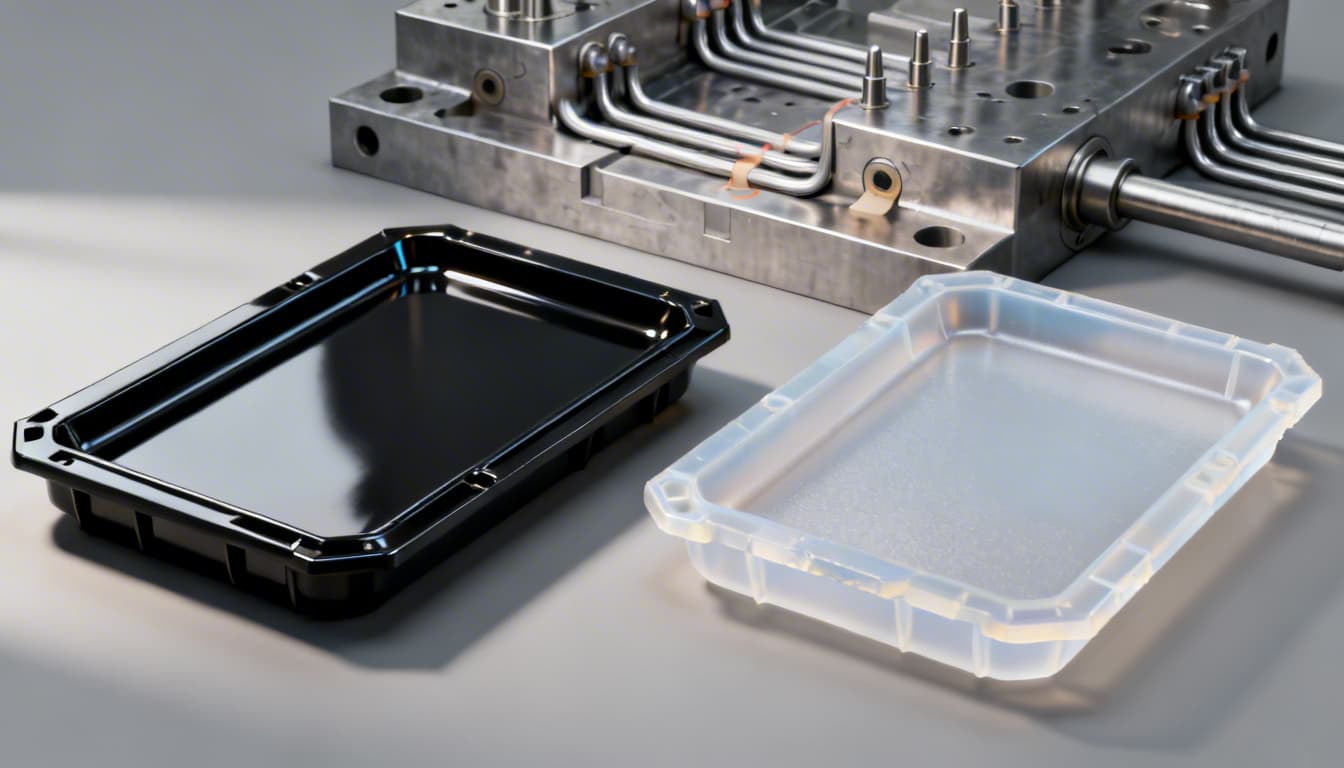
ABS vs Polypropylene: A Data-Driven Comparison for Injection Molding Success
Choosing the right material for your injection molding project can be a daunting task, especially when balancing performance, cost, and manufacturability. ABS (Acrylonitrile Butadiene Styrene) and Polypropylene (PP) are two popular thermoplastics with distinct characteristics that suit different app
ABS vs Polypropylene: A Data-Driven Comparison for Injection Molding Success
Choosing the right material for your injection molding project can be a daunting task, especially when balancing performance, cost, and manufacturability. ABS (Acrylonitrile Butadiene Styrene) and Polypropylene (PP) are two popular thermoplastics with distinct characteristics that suit different applications. This article delves into a data-driven comparison to help you make informed decisions for your next project.
Material Properties and Performance
Mechanical Properties
ABS is renowned for its strength and impact resistance, making it ideal for applications requiring durability. On the other hand, PP is valued for its flexibility and fatigue resistance, often used in applications where bending or repeated motion is involved.
| Property | ABS | Polypropylene |
|---|---|---|
| Tensile Strength (MPa) | 40-50 | 25-35 |
| Impact Strength (J/m) | 200-300 | 70-100 |
| Flexural Modulus (MPa) | 2000-3000 | 1000-1500 |
Thermal Properties
ABS has a higher heat resistance compared to PP, making it suitable for applications exposed to higher temperatures. However, PP's lower density contributes to its lightweight nature, which can be advantageous in certain designs.
| Property | ABS | Polypropylene |
|---|---|---|
| Melting Temperature (°C) | 220-250 | 160-180 |
| Heat Deflection Temperature (°C) | 85-100 | 50-60 |
Injection Molding Process Parameters
ABS Molding Parameters
ABS requires precise control of process parameters to achieve optimal results. Typical settings include a melt temperature of 220-250°C, mold temperature of 50-80°C, and injection pressure ranging from 60-100 MPa.
Polypropylene Molding Parameters
PP is generally easier to mold with a wider processing window. It has a melt temperature of 170-230°C, mold temperature of 20-50°C, and injection pressure between 50-80 MPa.
Cost Considerations
Cost is a significant factor in material selection. PP is typically less expensive than ABS, which can be a decisive factor for large volume productions. However, the cost should be weighed against performance needs and long-term durability.
Design and Application Considerations
Design Rules
Both materials follow standard design rules for injection molding. For instance, maintaining a uniform wall thickness of 1-3mm and incorporating draft angles of 0.5-2° is crucial for minimizing defects and ensuring part consistency.
Application Suitability
ABS is preferred for automotive interiors, consumer electronics, and toys due to its strength and aesthetic finish. PP is often used in packaging, automotive battery cases, and medical components for its chemical resistance and lightweight properties.
Common Defects and Solutions
ABS Defects
ABS can suffer from issues such as warping and surface blemishes. To mitigate these, ensure proper cooling rates and maintain consistent mold temperatures. Warping can often be addressed by optimizing the cooling process and adjusting the gate design.
Polypropylene Defects
PP may encounter flow marks and shrinkage. These can be minimized by adjusting the injection speed and pressure, as well as ensuring adequate venting in the mold design.
Step-by-Step Molding Process
- Material Selection: Choose between ABS and PP based on mechanical and thermal requirements.
- Design Optimization: Incorporate standard design rules such as wall thickness and draft angles.
- Parameter Setup: Set appropriate melt temperature, mold temperature, and injection pressure for the chosen material.
- Mold Preparation: Ensure the mold is clean and properly vented to avoid defects.
- Injection Molding: Execute the molding process while monitoring critical parameters to ensure quality.
- Quality Control: Inspect the finished parts for defects and verify dimensional accuracy.
Practical Tip: Always conduct a trial run with new materials or designs to fine-tune process parameters and identify potential issues before full-scale production.
Conclusion
When deciding between ABS and Polypropylene for injection molding, it's crucial to consider the specific requirements of your application. ABS offers superior strength and heat resistance, while PP provides flexibility and cost-effectiveness. By understanding their properties, processing parameters, and potential defects, you can make informed decisions that align with your project goals. For further assistance and to get a free quote, reach out to our team at Panda Molding.