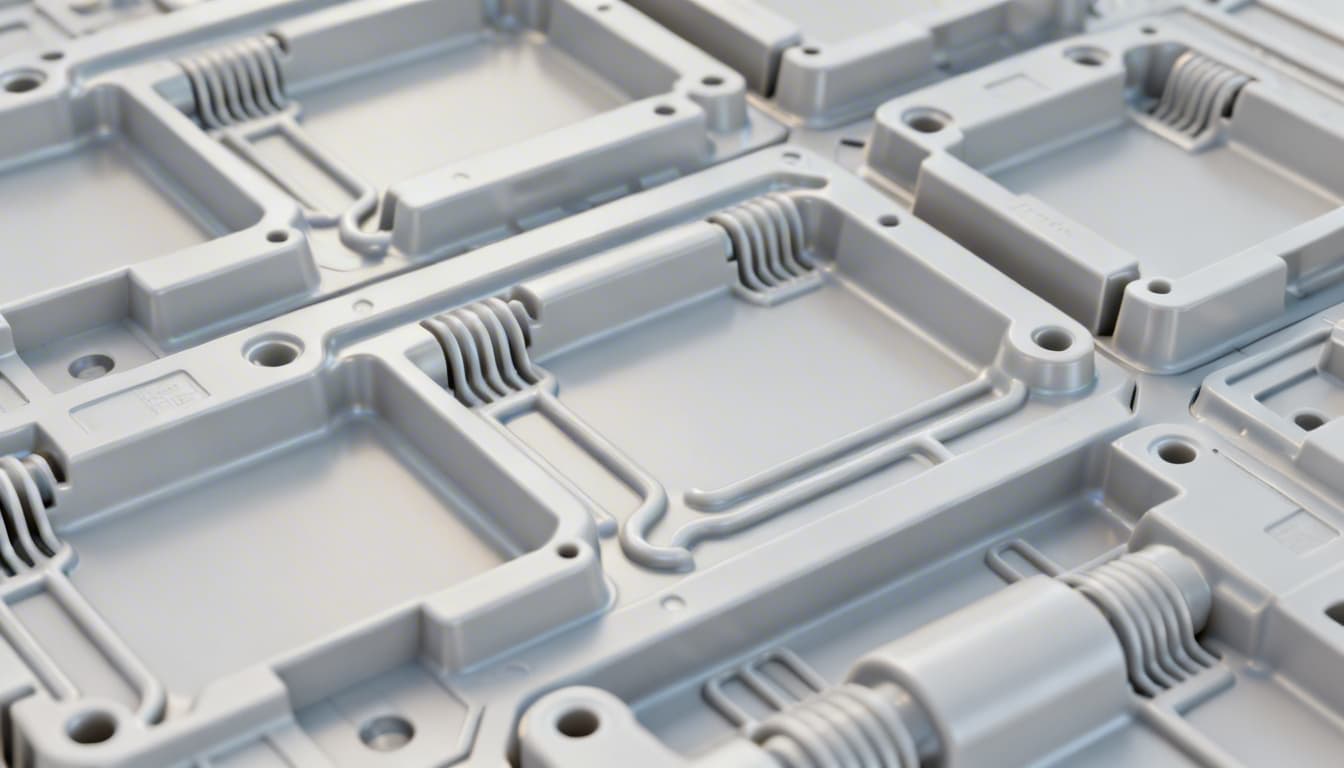
Avoiding 13 Potential Injection Molding Defects: Strategies for Designers and Engineers
Injection molding is an intricate process where precision and expertise are paramount. Even seasoned engineers encounter defects that can compromise product quality, increase costs, and delay production. This article delves into strategies to avoid 13 common injection molding defects, offering desig
Avoiding 13 Potential Injection Molding Defects: Strategies for Designers and Engineers
Injection molding is an intricate process where precision and expertise are paramount. Even seasoned engineers encounter defects that can compromise product quality, increase costs, and delay production. This article delves into strategies to avoid 13 common injection molding defects, offering designers and engineers actionable insights.
1. Warping
Warping occurs when different sections of a molded part cool at different rates, causing distortions.
Causes
Uneven cooling is often the primary culprit, exacerbated by improper material selection or inadequate mold design.
Solutions
- Material Selection: Choose materials with uniform shrinkage rates. For instance, ABS is less prone to warping compared to PP.
- Mold Design: Ensure even wall thickness (1-3mm recommended) and incorporate proper cooling channels.
- Process Parameters: Maintain consistent mold temperatures (typically 50-80°C for ABS) to ensure uniform cooling.
2. Sink Marks
Sink marks are depressions on the surface of the molded part, often resulting from thick sections.
Causes
Thick sections cool slower than thinner areas, causing the surface to sink inward.
Solutions
- Design Adjustments: Maintain uniform wall thickness and use ribs to reinforce thick sections without adding bulk.
- Pressure Control: Increase holding pressure (typically 50-80 MPa) to pack more material into the mold cavity.
3. Flow Lines
Flow lines are visible streaks or patterns on the surface of a part, indicating the path of molten plastic.
Causes
Flow lines result from variations in cooling speed as the material flows through the mold.
Solutions
- Gate Location: Optimize gate placement to ensure uniform flow and reduce flow line visibility.
- Injection Speed: Adjust injection speed (optimal range: 50-100 mm/s) to ensure smooth flow.
4. Weld Lines
Weld lines occur where two flow fronts meet, often resulting in weak spots.
Causes
Weld lines are caused by the convergence of different flow fronts, often at holes or inserts.
Solutions
- Temperature Control: Increase melt temperature (e.g., 230-260°C for PC) to improve flow and bonding at weld lines.
- Gate Position: Relocate gates to minimize the number of flow fronts.
5. Short Shots
Short shots occur when the mold cavity is not completely filled with plastic.
Causes
Inadequate material flow or insufficient pressure can lead to short shots.
Solutions
- Material Selection: Use materials with lower viscosity for easier flow, such as PA66 over POM.
- Pressure and Speed: Increase injection pressure and speed to ensure complete cavity filling.
6. Flash
Flash is excess material that escapes the mold cavity and forms thin protrusions.
Causes
Flash can result from excessive injection pressure or poor mold fit.
Solutions
- Mold Maintenance: Regularly inspect and maintain mold surfaces and parting lines to ensure tight fit.
- Pressure Adjustment: Optimize injection pressure to avoid over-packing.
Material Comparison
| Material | Melt Temperature (°C) | Shrinkage Rate (%) | Recommended Applications |
|---|---|---|---|
| ABS | 210-250 | 0.4-0.7 | Automotive, consumer goods |
| PP | 180-240 | 1.0-2.5 | Packaging, household items |
| PC | 260-310 | 0.5-0.7 | Electronics, safety equipment |
7. Burn Marks
Burn marks are discolorations or charred areas on the surface of the molded part.
Causes
They are caused by trapped air or excessive heating during injection.
Solutions
- Ventilation: Improve venting in the mold to allow trapped air to escape.
- Temperature Control: Reduce melt temperature and injection speed to prevent overheating.
8. Voids
Voids are air pockets trapped within the molded part.
Causes
They occur due to inadequate packing or cooling.
Solutions
- Pressure Management: Increase holding pressure to pack the material more densely.
- Cooling Time: Extend cooling time to allow thorough solidification.
9. Jetting
Jetting appears as worm-like lines on the surface of the part, caused by high-speed injection.
Causes
It occurs when the molten plastic enters the cavity too quickly, causing it to snake.
Solutions
- Injection Speed: Reduce injection speed to allow the material to flow smoothly.
- Gate Design: Use a larger gate to slow down the initial flow of material.
10. Delamination
Delamination is the separation of the molded part into layers.
Causes
It can be caused by contamination or incompatible materials.
Solutions
- Material Handling: Ensure materials are free from contaminants and properly dried before processing.
- Material Compatibility: Use compatible materials to avoid chemical reactions.
11. Blistering
Blisters are raised areas on the surface of the part.
Causes
They are often caused by trapped gases or moisture.
Solutions
- Drying: Properly dry materials before use to remove moisture.
- Ventilation: Improve mold ventilation to allow gases to escape.
12. Surface Delamination
This defect manifests as surface peeling or splitting.
Causes
It is often due to poor bonding between layers or contamination.
Solutions
- Material Purity: Use pure materials without fillers or contaminants.
- Temperature Control: Ensure optimal melt temperature to promote bonding.
13. Bubbles
Bubbles are small air pockets beneath the surface of the part.
Causes
They are caused by trapped air or volatile substances.
Solutions
- Material Drying: Thoroughly dry materials to remove moisture.
- Process Control: Optimize injection speed and pressure to minimize air entrapment.
Process Parameter Table
| Parameter | ABS | PP | PC |
|---|---|---|---|
| Melt Temperature (°C) | 210-250 | 180-240 | 260-310 |
| Mold Temperature (°C) | 50-80 | 30-60 | 80-120 |
| Injection Pressure (MPa) | 50-80 | 50-100 | 70-140 |
Checklist: Avoiding Injection Molding Defects
- Ensure uniform wall thickness and proper draft angles (0.5-2°).
- Select materials with appropriate shrinkage rates and thermal properties.
- Optimize mold design with adequate cooling channels and venting.
- Adjust process parameters for consistent injection speed and pressure.
- Regularly maintain and inspect molds to prevent wear and tear.
Practical Tip: Always conduct a mold flow analysis before production to predict and address potential defects.
Conclusion
Injection molding defects can be costly and time-consuming to rectify. By understanding their causes and implementing strategic solutions, designers and engineers can enhance product quality and production efficiency. For expert guidance and quality molding services, consider reaching out to get a free quote from Panda Molding.