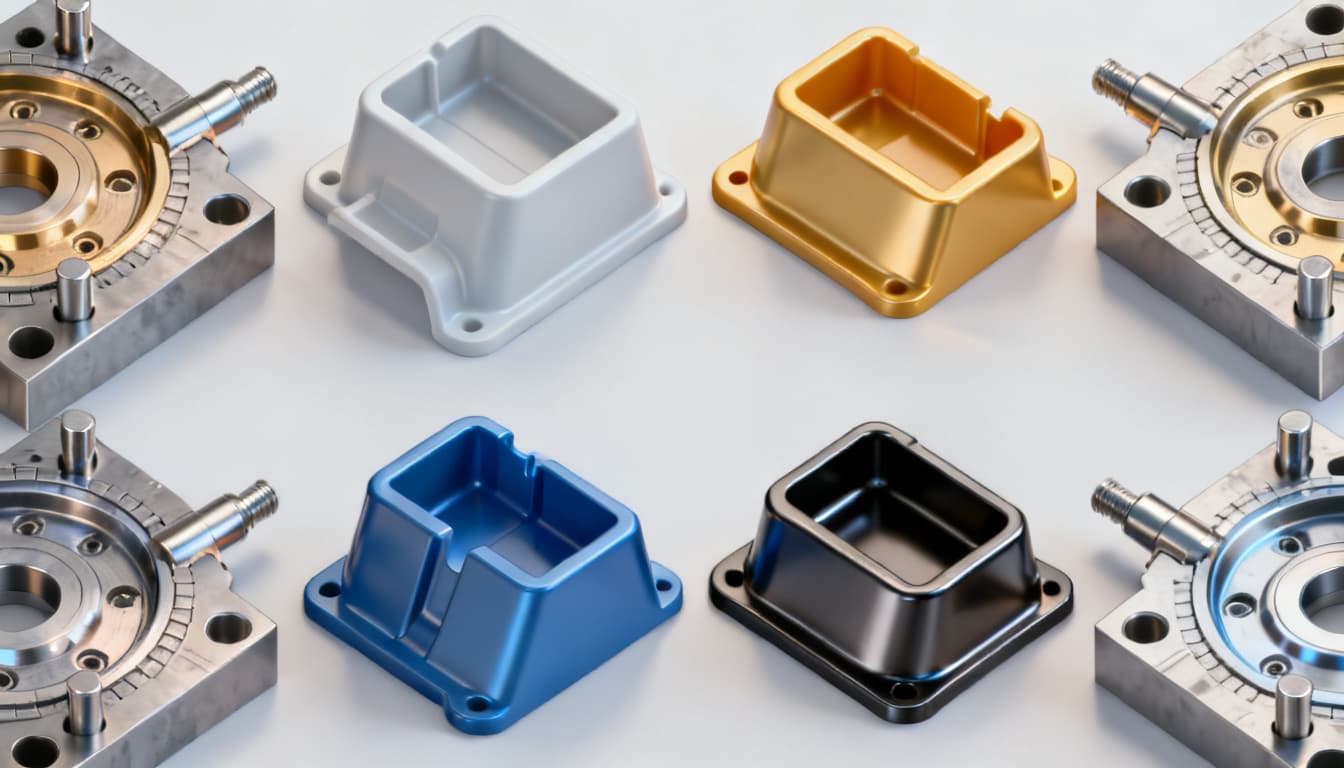
Cost-Effective Injection Molding: 4 Strategic Approaches to Reduce Production Expenses
In today's competitive manufacturing landscape, reducing production costs without compromising quality is a critical challenge for injection molding operations. Through strategic adjustments in design, material selection, and process optimization, manufacturers can achieve significant cost savings.
Cost-Effective Injection Molding: 4 Strategic Approaches to Reduce Production Expenses
In today's competitive manufacturing landscape, reducing production costs without compromising quality is a critical challenge for injection molding operations. Through strategic adjustments in design, material selection, and process optimization, manufacturers can achieve significant cost savings. Let’s explore four effective strategies to make your injection molding process more cost-efficient.
1. Optimize Part Design for Manufacturability
Designing for manufacturability is crucial in minimizing production costs. By adhering to industry standards and guidelines, manufacturers can reduce material usage, shorten cycle times, and minimize defects.
1.1 Wall Thickness and Draft Angles
Uniform wall thickness between 1-3mm helps prevent warping and sink marks. Incorporating draft angles between 0.5-2° facilitates easier ejection, reducing cycle times and wear on molds.
1.2 Rib and Boss Design
Ribs and bosses should be designed with a thickness of 0.5-0.6 times the nominal wall thickness to avoid sink marks and ensure structural integrity. Properly designed ribs can enhance stiffness without adding excessive material.
2. Select Cost-Effective Materials
Material selection plays a pivotal role in cost management. Balancing performance with cost can lead to substantial savings.
2.1 Material Comparison
| Material | Cost (per kg) | Processing Temperature (°C) | Applications |
|---|---|---|---|
| ABS | $1.50 | 220-260 | Automotive, Electronics |
| PP | $1.20 | 200-250 | Packaging, Consumer Goods |
| PC | $2.50 | 270-320 | Optical Discs, Lighting |
| PA66 | $3.00 | 280-300 | Industrial, Automotive |
2.2 Trade-offs in Material Selection
While materials like PC and PA66 offer superior strength and heat resistance, they are costlier. For applications where these properties are not critical, PP or ABS can be more economical choices.
3. Streamline the Molding Process
Optimizing the injection molding process parameters can significantly reduce cycle times and energy consumption.
3.1 Process Parameters Optimization
Adjusting melt temperatures, mold temperatures, and injection pressures can lead to quicker cycle times and reduced energy usage. For example, reducing the melt temperature by 10°C can cut energy consumption by 5-10%.
3.2 Reduce Cycle Time
- Minimize cooling time by optimizing mold temperature (e.g., 40-80°C for ABS).
- Use faster cooling techniques like conformal cooling channels.
- Implement robotic automation to speed up part removal and handling.
4. Implement Quality Control and Preventive Maintenance
Ensuring consistent quality and maintaining equipment can prevent costly downtime and defects.
4.1 Quality Control Measures
Implement regular inspections and use statistical process control (SPC) to monitor critical dimensions and reduce variability. This can decrease scrap rates by up to 20%.
4.2 Preventive Maintenance
Regular maintenance of molds and machines can prevent unexpected breakdowns. Studies show that planned maintenance can extend equipment life by 30% and reduce unplanned downtime by 50%.
Practical Tip: Invest in a digital monitoring system to track machine performance and predict maintenance needs. This proactive approach can save significant costs in the long term.
Conclusion
By focusing on design optimization, material selection, process efficiency, and quality control, manufacturers can achieve substantial cost reductions in injection molding. These strategies not only lower production expenses but also enhance product quality and operational efficiency. To explore how these approaches can be tailored to your specific needs, get a free quote from Panda Molding today.