Decoding Insert Molding and Overmolding: Key Differences and Their Impact on Manufacturing Choices
Choosing the right molding process can be a daunting task, especially when faced with complex design requirements and tight production schedules. Insert molding and overmolding are two popular techniques that offer unique advantages, but understanding their differences is crucial for making informed
Decoding Insert Molding and Overmolding: Key Differences and Their Impact on Manufacturing Choices
Choosing the right molding process can be a daunting task, especially when faced with complex design requirements and tight production schedules. Insert molding and overmolding are two popular techniques that offer unique advantages, but understanding their differences is crucial for making informed manufacturing decisions. In this article, we'll explore these processes in depth, examining their technical parameters and real-world applications.
Understanding Insert Molding
What is Insert Molding?
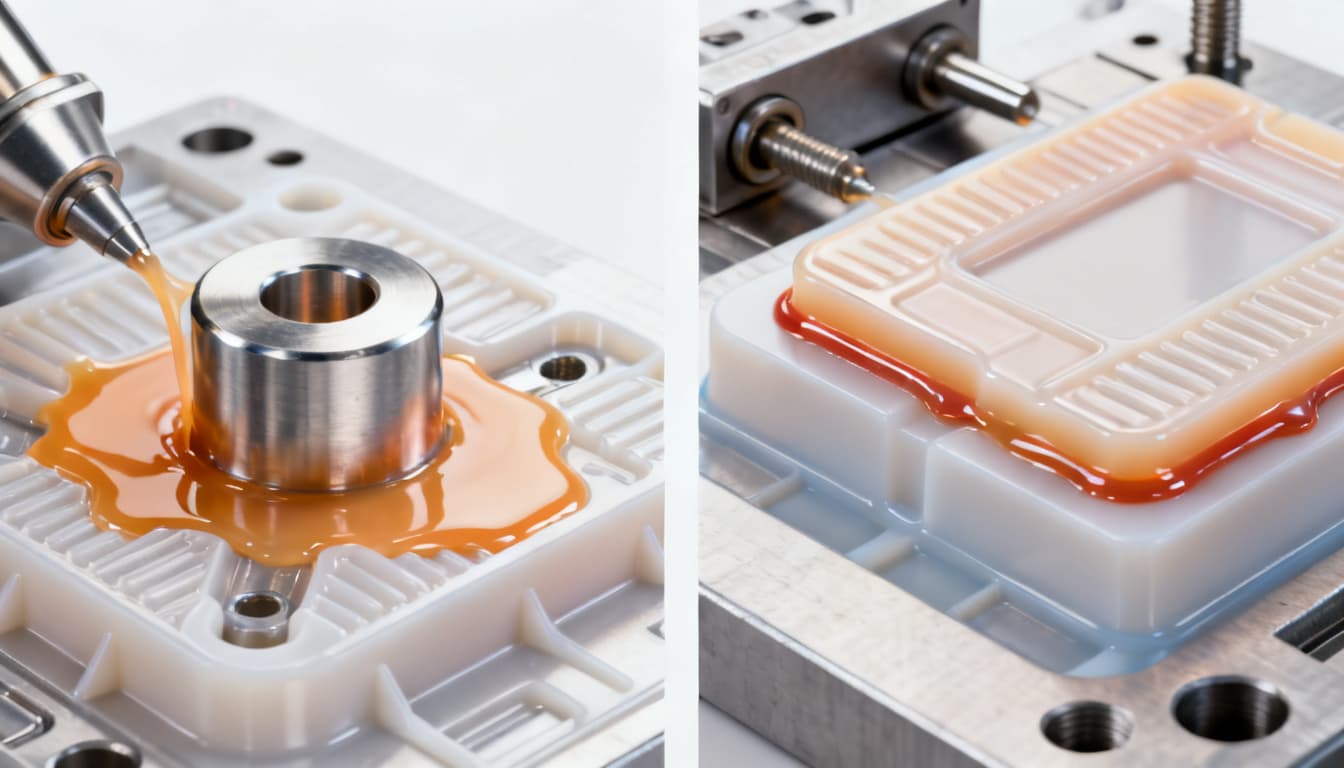
Insert molding is a process where pre-formed components, often metal inserts, are placed into a mold cavity before injecting plastic material around them. This technique is particularly useful for creating parts with integrated metal features, such as threaded inserts or electrical contacts.
Technical Parameters
Insert molding requires precise control over several parameters to ensure part quality and dimensional accuracy:
- Melt Temperature: Typically ranges from 200°C to 280°C depending on the plastic material used, such as ABS or PC.
- Mold Temperature: Maintained between 60°C and 100°C to facilitate proper flow and cooling.
- Injection Pressure: Usually between 500 and 1500 bar to achieve optimal filling.
- Cycle Time: Varies from 30 to 90 seconds, influenced by part complexity and material.
Common Applications
Insert molding is widely used in the automotive and electronics industries. For example, automotive components like gear knobs and electrical connectors benefit from the strength and durability of embedded metal inserts.
Exploring Overmolding
What is Overmolding?
Overmolding involves the process of molding a secondary material over a substrate, often a previously molded part. This technique allows for the creation of multi-material assemblies with enhanced tactile properties and aesthetics.
Technical Parameters
Similar to insert molding, overmolding demands meticulous control over various parameters:
- Melt Temperature: Typically between 180°C and 260°C, depending on materials like TPE or PA66.
- Mold Temperature: Generally maintained from 40°C to 80°C for effective bonding.
- Injection Pressure: Ranges from 600 to 1200 bar to ensure proper coverage.
- Cycle Time: Often between 40 and 120 seconds, depending on the complexity of the part.
Common Applications
Overmolding is frequently used for products requiring a soft-touch surface or enhanced grip, such as toothbrush handles and power tool grips.
Key Differences Between Insert Molding and Overmolding
Material Compatibility
While insert molding typically uses metal inserts with plastic, overmolding often involves two different plastic materials. It's crucial to ensure material compatibility to prevent delamination or poor bonding.
Design Considerations
Insert molding requires precise placement of inserts, which can be challenging for complex geometries. Overmolding, on the other hand, demands careful design of the substrate to ensure proper material flow and adhesion.
Impact on Manufacturing Choices
Cost Implications
| Factor | Insert Molding | Overmolding |
|---|---|---|
| Tooling Costs | Higher due to complex mold design | Moderate, depends on substrate complexity |
| Material Costs | Lower, single material | Higher, multiple materials |
| Cycle Time | Shorter, fewer processing steps | Longer, additional material layers |
Quality and Performance
Insert molding offers enhanced structural integrity, while overmolding provides superior ergonomic features. The choice between the two often hinges on the specific performance requirements of the final product.
Common Mistakes and Solutions
Insert Molding Defects
Common issues include misalignment of inserts and voids around the insert. Solutions involve ensuring precise insert placement and optimizing injection parameters to minimize air entrapment.
Overmolding Defects
Delamination and poor adhesion are frequent challenges. To address these, ensure proper surface preparation and select compatible materials with similar shrinkage rates.
Step-by-Step Process for Successful Insert Molding
- Select appropriate materials considering application requirements and compatibility.
- Design mold with accurate insert placement features.
- Preheat inserts if necessary to improve bonding.
- Set injection molding parameters based on material specifications.
- Conduct trial runs to refine process settings.
- Implement quality control checks to ensure part integrity.
Practical Tip: Always conduct a thorough design review and prototyping phase to identify potential issues early in the development process. This can save significant time and cost in the long run.
Conclusion
Both insert molding and overmolding offer distinct advantages and challenges. The choice between the two should be guided by the specific needs of the application, considering factors such as material compatibility, cost, and desired part performance. By understanding the technical nuances of each process, manufacturers can make informed decisions that optimize production efficiency and product quality.
For more information or to discuss your project needs, get a free quote from our expert team at Panda Molding.