Essential Design Practices for Injection Molding: Crafting Flawless Molded Plastic Parts
Injection molding is a cornerstone of modern manufacturing, yet achieving flawless molded plastic parts requires meticulous attention to design details. Common issues like warping, sink marks, and dimensional inaccuracies can often trace back to design flaws. Understanding essential design practices
Essential Design Practices for Injection Molding: Crafting Flawless Molded Plastic Parts
Injection molding is a cornerstone of modern manufacturing, yet achieving flawless molded plastic parts requires meticulous attention to design details. Common issues like warping, sink marks, and dimensional inaccuracies can often trace back to design flaws. Understanding essential design practices can significantly enhance the quality and performance of your molded parts.
Understanding Material Selection
Choosing the right material is crucial for achieving desired mechanical properties and aesthetics. Each material has distinct characteristics that influence the molding process and the final product.
Comparing Common Materials
| Material | Melt Temperature (°C) | Typical Applications |
|---|---|---|
| ABS | 220-250 | Consumer electronics, automotive trim |
| PP | 200-250 | Food containers, automotive parts |
| PC | 270-310 | Optical discs, safety helmets |
| PA66 | 260-290 | Gears, bearings |
| POM | 190-230 | Precision parts, mechanical gears |
Designing for Manufacturability
Designing with manufacturability in mind is essential to minimize defects and optimize production efficiency. Key considerations include wall thickness, draft angles, and rib design.
Wall Thickness
Uniform wall thickness is critical to prevent warping and sink marks. The recommended wall thickness for most materials ranges from 1 to 3 mm.
Draft Angles
Incorporating draft angles of 0.5° to 2° facilitates easier ejection from the mold, reducing the risk of surface defects and part damage.
Rib Design
Ribs should be no more than 60% of the wall thickness to avoid sink marks. Proper rib design enhances part strength without compromising quality.
Optimizing Mold Design
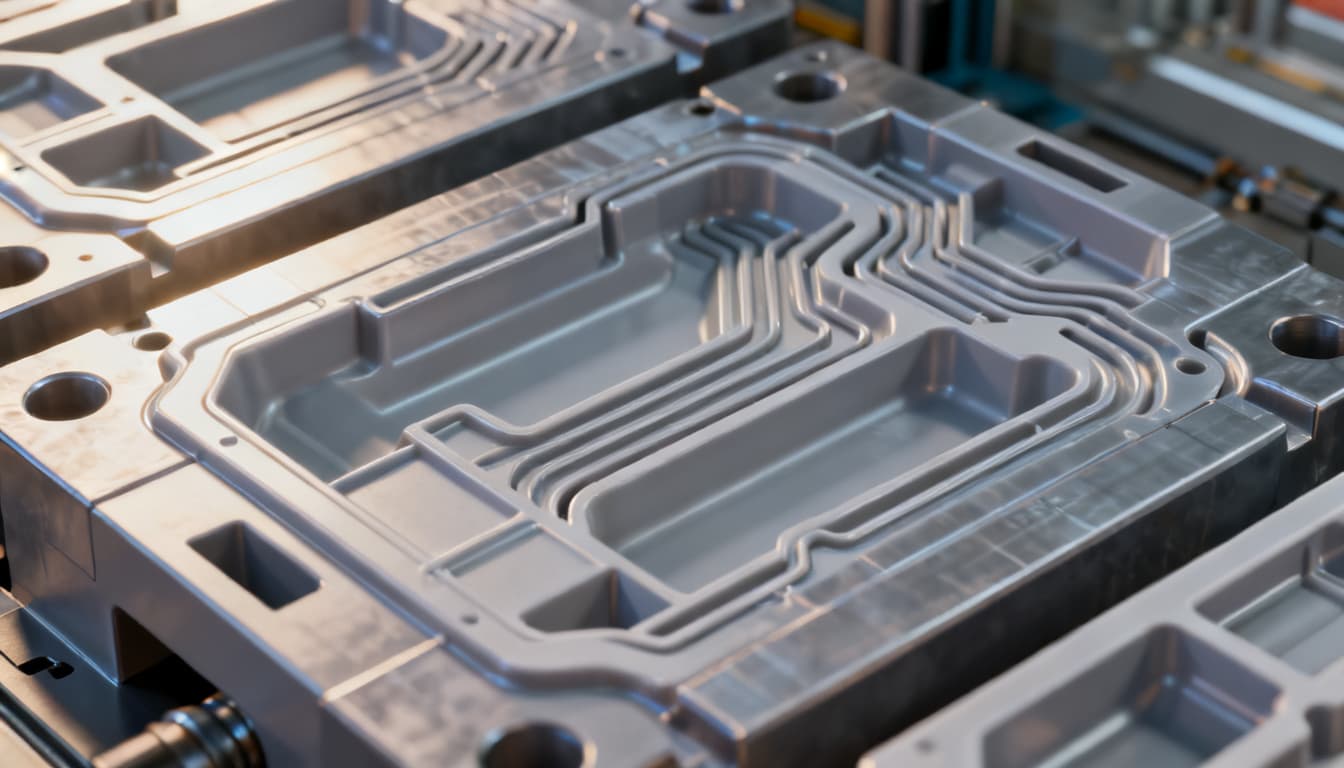
Effective mold design is pivotal for achieving high-quality molded parts. Considerations include gate type and location, cooling channels, and venting.
Gate Design
Gate type and location can significantly impact the aesthetics and mechanical properties of the part. A well-placed gate minimizes flow lines and ensures even filling.
Cooling Channels
Efficient cooling channel design is crucial for reducing cycle time and ensuring uniform cooling. The mold temperature should be controlled within a range specific to the material, often between 40-80°C.
Venting
Adequate venting prevents air traps that can cause burn marks and incomplete filling. Vents are typically 0.02-0.05 mm deep.
Process Parameter Optimization
Fine-tuning process parameters is vital for achieving consistent part quality. Key parameters include injection pressure, cycle time, and melt temperature.
Injection Pressure
Injection pressure should be optimized to achieve complete mold filling without causing flash. Typical pressures range from 50 to 200 MPa.
Cycle Time
Minimizing cycle time while ensuring part quality is a balancing act. Cycle times vary based on material and part complexity, typically ranging from 10 to 60 seconds.
Melt Temperature
Maintaining the correct melt temperature is crucial for material flow and part integrity. Refer to material-specific guidelines for optimal temperature settings.
Checklist for Flawless Injection Molded Parts
- Select the appropriate material based on application requirements.
- Ensure uniform wall thickness and incorporate suitable draft angles.
- Design ribs and other features to prevent defects like sink marks.
- Optimize gate placement and cooling channel design in the mold.
- Fine-tune injection pressure, cycle time, and melt temperature for consistency.
Practical Tip: Always conduct a mold flow analysis before production to identify potential issues and adjust design parameters accordingly.
Conclusion
Crafting flawless molded plastic parts requires a comprehensive understanding of material properties, design principles, and process optimization. By adhering to essential design practices and leveraging expert insights, manufacturers can significantly enhance part quality and production efficiency. For professional guidance and services, consider reaching out to get a free quote from Panda Molding.