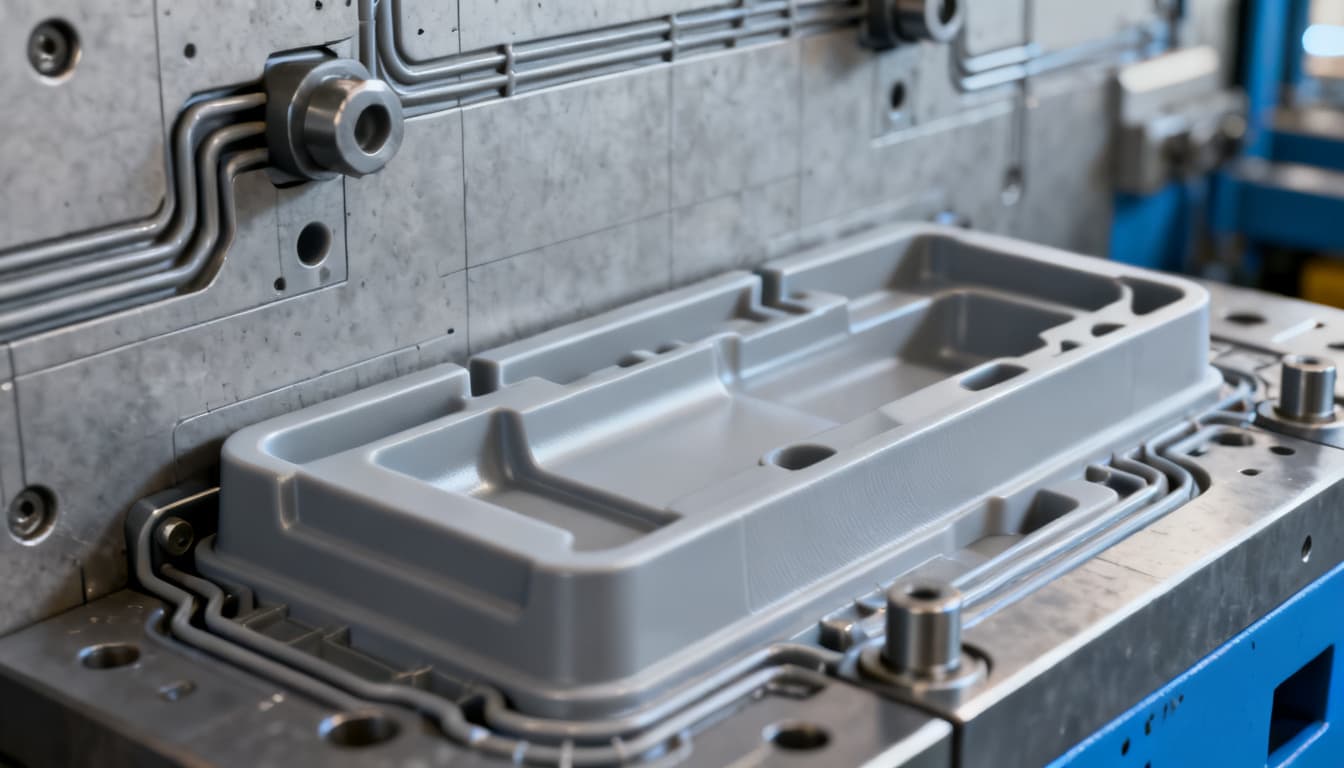
Essential Wall Thickness Guidelines: Optimizing Design for Injection Molded Parts
Designing for injection molding presents unique challenges, particularly when it comes to determining the ideal wall thickness. A common issue many engineers face is achieving the right balance between part strength, material efficiency, and manufacturability. This article delves into the critical g
Essential Wall Thickness Guidelines: Optimizing Design for Injection Molded Parts
Designing for injection molding presents unique challenges, particularly when it comes to determining the ideal wall thickness. A common issue many engineers face is achieving the right balance between part strength, material efficiency, and manufacturability. This article delves into the critical guidelines and best practices for optimizing wall thickness in injection molded parts, leveraging more than 15 years of industry experience and insights from leading sources.
Understanding the Importance of Wall Thickness
Wall thickness significantly impacts the quality, cost, and performance of injection molded parts. Uniform wall thickness helps minimize defects such as warping, sink marks, and voids, which are often caused by uneven cooling and inconsistent material flow.
Impact on Material Flow
Uniform wall thickness ensures consistent material flow during injection, reducing stress and potential weak points. For instance, a part with a 1.5mm wall thickness will generally exhibit fewer flow-related defects compared to one with varying thicknesses.
Cooling Time and Cycle Efficiency
Thicker walls require longer cooling times, increasing cycle times and production costs. A 2mm wall thickness typically cools faster than a 3mm wall, leading to more efficient production cycles.
Recommended Wall Thickness for Common Materials
Different materials have specific guidelines for optimal wall thickness, which can affect the final product's performance and manufacturability.
| Material | Recommended Wall Thickness (mm) | Comments |
|---|---|---|
| ABS | 1.2 - 3.5 | Good balance of strength and flexibility |
| Polypropylene (PP) | 0.8 - 3.0 | Lightweight and cost-effective |
| Polycarbonate (PC) | 1.0 - 4.0 | High impact resistance |
| Nylon (PA66) | 0.8 - 2.5 | Excellent mechanical properties |
Design Rules for Optimal Wall Thickness
Adhering to established design rules can significantly reduce defects and improve part quality.
Uniformity and Gradual Transitions
Maintain consistent wall thickness throughout the part, and if changes are necessary, ensure they are gradual. Sudden changes can lead to stress concentrations and defects.
Draft Angles and Wall Thickness
Draft angles of 0.5° to 2° are recommended to facilitate part ejection. Ensure the wall thickness accommodates the draft without compromising structural integrity.
Rib and Boss Design
Ribs and bosses should be designed with a thickness of 50-60% of the main wall to prevent sink marks and ensure proper filling.
Common Defects and Solutions
Understanding the relationship between wall thickness and common defects can guide design improvements and troubleshooting.
Sink Marks
Sink marks occur when thicker sections cool slower than surrounding areas. Keeping wall thickness uniform and using proper rib design can mitigate this issue.
Warping
Warping is often caused by uneven cooling. Maintaining a uniform wall thickness and consistent cooling rates can help reduce warping.
Voids
Voids are internal air pockets that form due to improper fill. Ensuring adequate injection pressure and uniform wall thickness can prevent voids.
Step-by-Step Process for Optimizing Wall Thickness
- Analyze the part design and identify areas with varying wall thickness.
- Use simulation software to predict material flow and cooling patterns.
- Adjust wall thickness to ensure uniformity, using gradual transitions where necessary.
- Incorporate recommended draft angles and rib designs to support structural integrity.
- Test prototypes to validate design assumptions and adjust as needed.
Practical Tips for Designers
Tip: When designing for injection molding, always consider the material's properties and the part's end-use environment. For example, if the part is subject to high impact, materials like polycarbonate with a thicker wall may be more appropriate.
Conclusion
Optimizing wall thickness is crucial for successful injection molding. By adhering to recommended guidelines, maintaining uniformity, and understanding material-specific needs, designers can enhance part quality and manufacturing efficiency. For more detailed assistance, consider reaching out for a free quote from our expert team at Panda Molding.