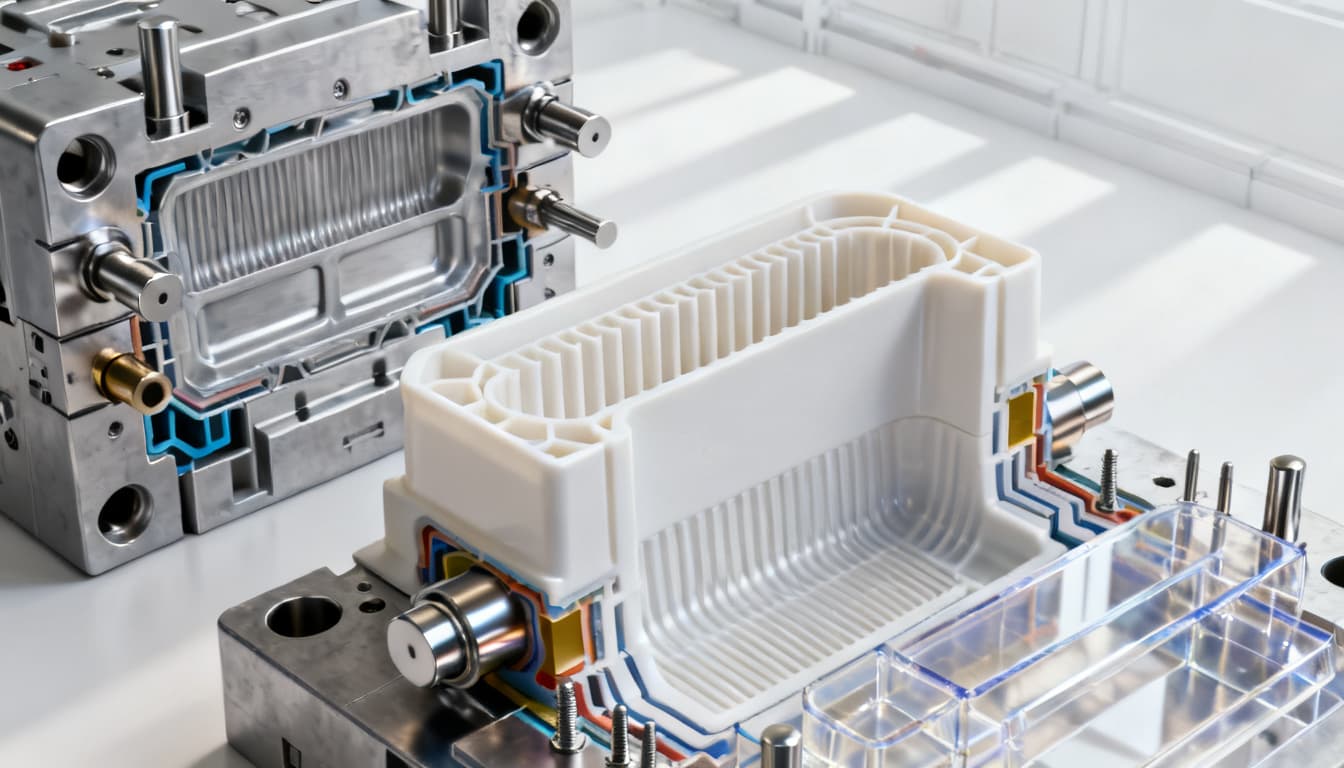
Fundamental Design Principles for Wall Thickness in Plastic Products: Avoiding Common Pitfalls
Designing plastic products with optimal wall thickness is crucial to ensuring structural integrity, cost-efficiency, and manufacturability. A common challenge faced by engineers is balancing these factors while avoiding defects such as warping, sink marks, and voids. This article delves into the fun
Fundamental Design Principles for Wall Thickness in Plastic Products: Avoiding Common Pitfalls
Designing plastic products with optimal wall thickness is crucial to ensuring structural integrity, cost-efficiency, and manufacturability. A common challenge faced by engineers is balancing these factors while avoiding defects such as warping, sink marks, and voids. This article delves into the fundamental design principles for wall thickness in plastic products and provides practical guidance to help you steer clear of common pitfalls.
Understanding the Importance of Wall Thickness
Wall thickness directly impacts the performance and quality of an injection-molded part. It's essential to maintain a balance that supports functionality without compromising efficiency. Inconsistent wall thickness can lead to defects and increased production costs.
Impact on Structural Integrity
The wall thickness of a plastic part determines its strength and durability. For example, thin walls may lead to fragile parts that can easily break under stress, while excessively thick walls can cause internal stresses and uneven cooling, leading to warping.
Effect on Cycle Time and Cost
Cycle time is significantly influenced by wall thickness. Thicker walls require longer cooling times, which increases cycle time and, consequently, production costs. The table below illustrates the relationship between wall thickness and cooling time for common materials.
| Material | Wall Thickness (mm) | Cooling Time (s) |
|---|---|---|
| ABS | 2.0 | 20 |
| PP | 2.5 | 25 |
| PC | 3.0 | 30 |
Material Considerations for Wall Thickness
Different materials exhibit varying behavior under similar conditions. Understanding these differences is crucial for optimizing wall thickness.
Material Properties and Behavior
Each material has unique properties that influence the ideal wall thickness. For instance, ABS is known for its toughness and impact resistance, while PP is lightweight with good chemical resistance. The choice of material should align with the product's intended use and performance requirements.
| Material | Typical Wall Thickness (mm) | Key Properties |
|---|---|---|
| ABS | 1.5 - 3.0 | Toughness, Impact Resistance |
| PP | 1.2 - 3.8 | Lightweight, Chemical Resistance |
| PA66 | 2.0 - 3.5 | High Strength, Heat Resistance |
Design Rules for Wall Thickness
Adhering to established design rules can prevent common issues associated with inappropriate wall thickness.
Uniformity and Gradual Transitions
Maintaining uniform wall thickness is crucial to minimize stress concentrations and ensure even cooling. Gradual transitions between different thicknesses can help reduce the likelihood of defects such as sink marks and voids.
Recommended Wall Thickness Range
For most injection-molded parts, a wall thickness range of 1.0 to 3.0 mm is recommended. This range allows for sufficient strength while maintaining efficient cycle times. Deviating from this range should only be done with careful consideration and analysis.
Common Defects and Their Causes
Understanding the causes of common defects can help in designing better products and avoiding costly mistakes.
Warping
Warping is often caused by uneven cooling due to inconsistent wall thickness. Ensuring uniformity and proper cooling can mitigate this issue.
Sink Marks
Sink marks occur when the outer surface of a part solidifies before the inner material, leading to depressions. This is often a result of excessive wall thickness or insufficient packing pressure.
Step-by-Step Process for Optimizing Wall Thickness
- Identify the material to be used and understand its properties.
- Determine the functional requirements of the part, including load-bearing needs and environmental conditions.
- Design the part with uniform wall thickness, ideally within the 1.0 to 3.0 mm range.
- Use simulations to analyze cooling times and potential defects.
- Prototype the design and conduct physical tests to validate performance.
- Iterate on the design based on test results and refine as necessary.
Practical Tip: Always involve cross-functional teams, including designers, material scientists, and production engineers, early in the design process to ensure all aspects are considered.
Conclusion
Optimizing wall thickness in plastic products is a critical aspect of injection molding design that requires careful consideration of material properties, design rules, and manufacturing constraints. By adhering to the guidelines outlined in this article, you can enhance the quality, performance, and cost-effectiveness of your plastic products. For expert guidance and support, get a free quote from our experienced team at Panda Molding.