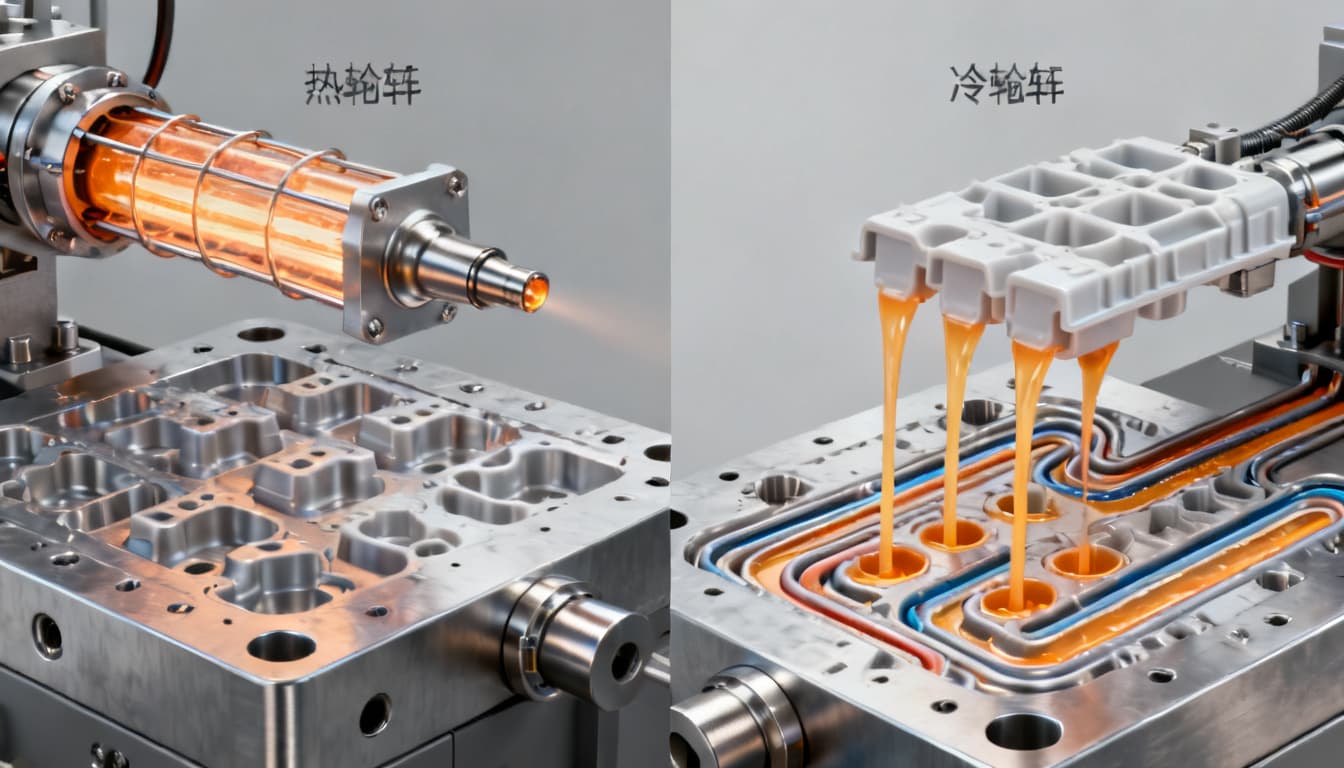
Hot Runner vs Cold Runner: Critical Insights for Optimal Injection Mold Design
Choosing between a hot runner and a cold runner system is one of the most pivotal decisions in injection mold design. This choice can significantly impact production efficiency, part quality, and cost. In this article, we delve into the technical nuances of each system, helping you make an informed
Hot Runner vs Cold Runner: Critical Insights for Optimal Injection Mold Design
Choosing between a hot runner and a cold runner system is one of the most pivotal decisions in injection mold design. This choice can significantly impact production efficiency, part quality, and cost. In this article, we delve into the technical nuances of each system, helping you make an informed decision for your next project.
Understanding the Basics: Hot Runner Systems
How They Work
Hot runner systems keep the plastic material in a molten state within the mold, using heated components. This eliminates the need for runners to be ejected with each cycle, which is common in cold runner systems.
Technical Parameters
Typical operating temperatures for hot runner systems range from 200°C to 300°C, depending on the material. For example, when working with Polycarbonate (PC), maintain a melt temperature of 270°C to 330°C and a mold temperature of 80°C to 120°C.
Advantages and Disadvantages
- Advantages: Reduced cycle times, minimized waste, and improved surface finish.
- Disadvantages: Higher initial cost and increased maintenance complexity.
Exploring Cold Runner Systems
System Overview
Cold runner systems use a simple channel to convey molten plastic from the injection unit to the mold cavity. Once the part solidifies, the runner is ejected along with the part.
Technical Parameters
The cycle time for cold runner systems typically ranges from 15 to 60 seconds, based on part size and material. For Acrylonitrile Butadiene Styrene (ABS), keep the melt temperature between 220°C and 280°C, with a mold temperature of 40°C to 80°C.
Pros and Cons
- Pros: Lower tool cost, simpler design, easier color changes.
- Cons: Increased material waste and longer cycle times.
Material Compatibility
Choosing the Right System for Your Material
The choice between hot and cold runner systems can also depend on the type of material used. Here's a comparison of common materials:
| Material | Suitable System | Remarks |
|---|---|---|
| Polypropylene (PP) | Hot Runner | Reduces waste, suitable for high-volume production. |
| Polyamide (PA66) | Cold Runner | Lower initial cost, suitable for low-volume production. |
| Thermoplastic Elastomer (TPE) | Hot Runner | Maintains material properties, minimizes waste. |
Cost Considerations
Initial Investment vs. Long-term Savings
While hot runner systems require a higher initial investment, they offer significant savings in material costs and cycle times for large production runs. Cold runner systems, on the other hand, are more cost-effective for smaller batches.
| System | Initial Cost | Material Waste | Cycle Time |
|---|---|---|---|
| Hot Runner | High | Low | Short |
| Cold Runner | Low | High | Long |
Design Guidelines and Standards
Ensuring Optimal Mold Design
Adhering to industry standards such as ISO 20457 for mold design can help optimize performance. Key design rules include maintaining a wall thickness of 1-3mm and draft angles of 0.5° to 2°.
Common Mistakes and Solutions
One typical mistake in hot runner design is inadequate thermal control, leading to material degradation. Ensure uniform temperature distribution to avoid this issue. In cold runner systems, excessive runner length can increase cycle time and waste; design with minimal runner length in mind.
Step-by-Step Checklist for Choosing the Right System
- Evaluate production volume and material cost.
- Determine material type and compatibility.
- Assess budget constraints and investment capacity.
- Consider part complexity and design requirements.
- Consult with experts or get a free quote for tailored advice.
Practical Tip: For parts with intricate geometries, a hot runner system can provide better fill and surface finish. However, for simple parts or prototypes, a cold runner system might be more economical.
Conclusion: Making the Right Choice
Both hot and cold runner systems have their distinct advantages and trade-offs. Your choice should align with your production goals, material requirements, and budget. By understanding the technical parameters and design guidelines, you can optimize your injection mold design for efficiency and quality.
For more detailed guidance tailored to your specific needs, consider consulting with industry professionals or get a free quote from Panda Molding.