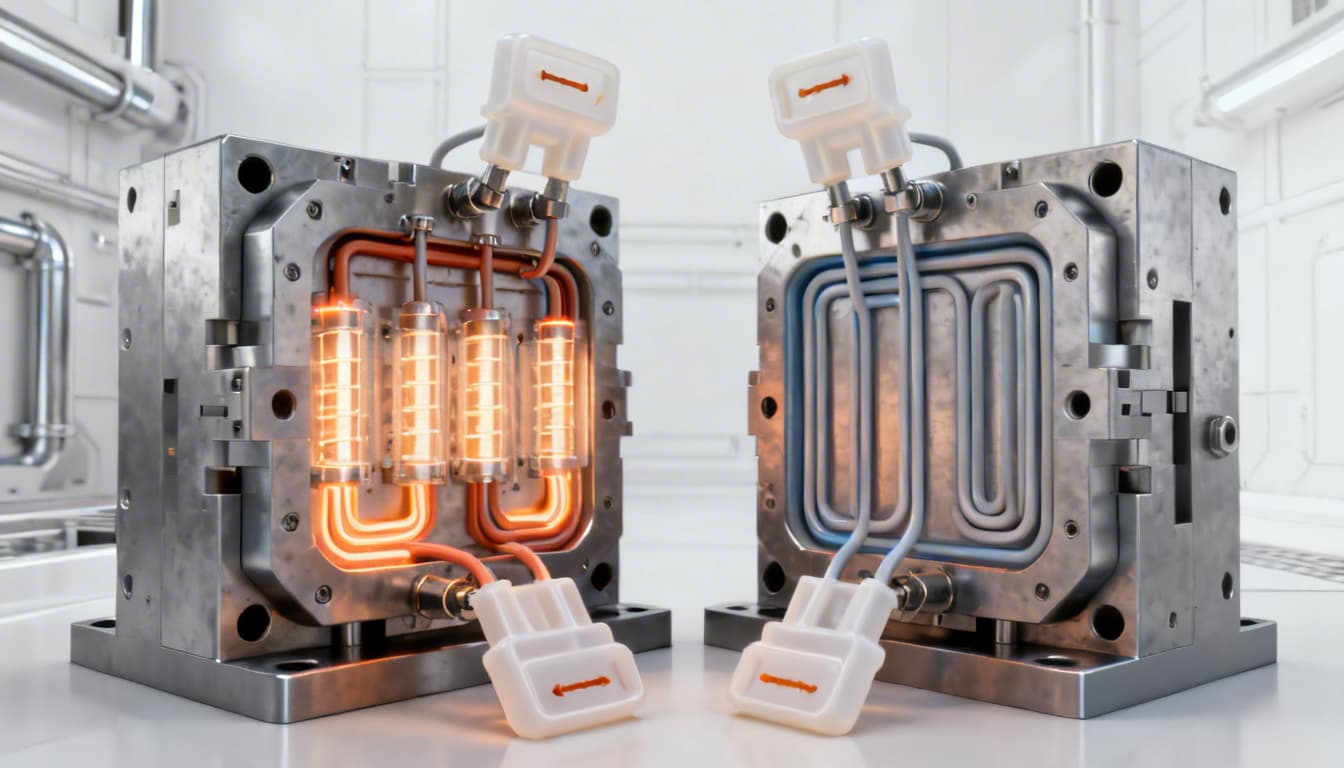
Hot Runner vs Cold Runner Injection Molds: Key Differences Impacting Your Production Costs
Choosing between hot runner and cold runner systems can significantly affect your injection molding production costs. Understanding the differences between these systems can help you optimize your process, reduce waste, and improve product quality. This article dives into the technical aspects and c
Hot Runner vs Cold Runner Injection Molds: Key Differences Impacting Your Production Costs
Choosing between hot runner and cold runner systems can significantly affect your injection molding production costs. Understanding the differences between these systems can help you optimize your process, reduce waste, and improve product quality. This article dives into the technical aspects and cost implications of each system, providing you with the expertise to make an informed decision.
Understanding Hot Runner Systems
Technical Parameters
Hot runner systems maintain the plastic material in a molten state within the mold, eliminating the need for sprues and runners. This system typically operates with melt temperatures ranging from 200°C to 300°C, depending on the material used. Injection pressures can vary between 50 to 150 MPa. Cycle times are generally shorter due to the absence of solidified runners.
Material Considerations
Hot runner systems are suitable for a wide range of materials, including ABS, PC, and PA66. These materials benefit from the consistent temperature control and reduced cycle times. However, materials sensitive to temperature variations, such as POM, may present challenges due to potential thermal degradation.
| Material | Melt Temperature (°C) | Common Defects |
|---|---|---|
| ABS | 230 - 260 | Burn marks, warping |
| PC | 280 - 320 | Silver streaks, bubbles |
| PA66 | 260 - 290 | Stringing, splay |
Advantages and Trade-offs
The primary advantage of hot runner systems is the reduction of material waste and improved cycle times. However, they require higher initial investment and maintenance costs. Additionally, the complexity of the system can lead to potential downtime if not properly maintained.
Tip: Regular maintenance and monitoring of temperature control units can prevent costly downtimes and ensure consistent product quality.
Exploring Cold Runner Systems
Technical Parameters
Cold runner systems use a simpler design where the plastic solidifies in the runner, which is later ejected along with the part. Typical mold temperatures range from 20°C to 80°C, with injection pressures between 60 to 140 MPa. Cycle times are longer due to the additional step of removing the runner.
Material Considerations
Cold runner systems are versatile and can handle materials like PP, TPE, and POM effectively. These systems are ideal for materials that do not require precise temperature control.
| Material | Mold Temperature (°C) | Common Defects |
|---|---|---|
| PP | 30 - 70 | Shrinkage, warpage |
| TPE | 20 - 50 | Flow lines, weld lines |
| POM | 80 - 100 | Voids, burn marks |
Advantages and Trade-offs
Cold runner systems are generally less expensive to install and maintain. They are simpler and more flexible, making them suitable for low-volume production. However, they produce more scrap material, which can increase material costs over time.
Tip: Consider integrating a runner recycling system to minimize material waste and reduce overall production costs.
Cost Comparison
Initial Investment
Hot runner systems require a higher initial investment due to their complexity and the need for precise temperature control equipment. Cold runner systems, on the other hand, have lower upfront costs.
Operational Costs
While hot runner systems reduce material waste, their maintenance and potential downtime can increase operational costs. Cold runner systems incur higher material costs due to waste but have lower maintenance expenses.
Checklist for Choosing the Right System
- Evaluate the production volume and material costs.
- Consider the complexity of the part design and required precision.
- Assess the available budget for initial investment and maintenance.
- Analyze the potential for material waste and recycling options.
- Consult with an experienced injection molding service provider.
For a detailed assessment and to get a free quote, reach out to our experts at Panda Molding.
Conclusion
Choosing between hot runner and cold runner systems depends on various factors, including production volume, material considerations, and budget constraints. Hot runner systems offer reduced waste and faster cycle times but require a higher initial investment. Cold runner systems are more cost-effective initially but may incur higher material costs over time. By understanding the key differences and evaluating your specific needs, you can make an informed decision that optimizes your production costs and enhances product quality.