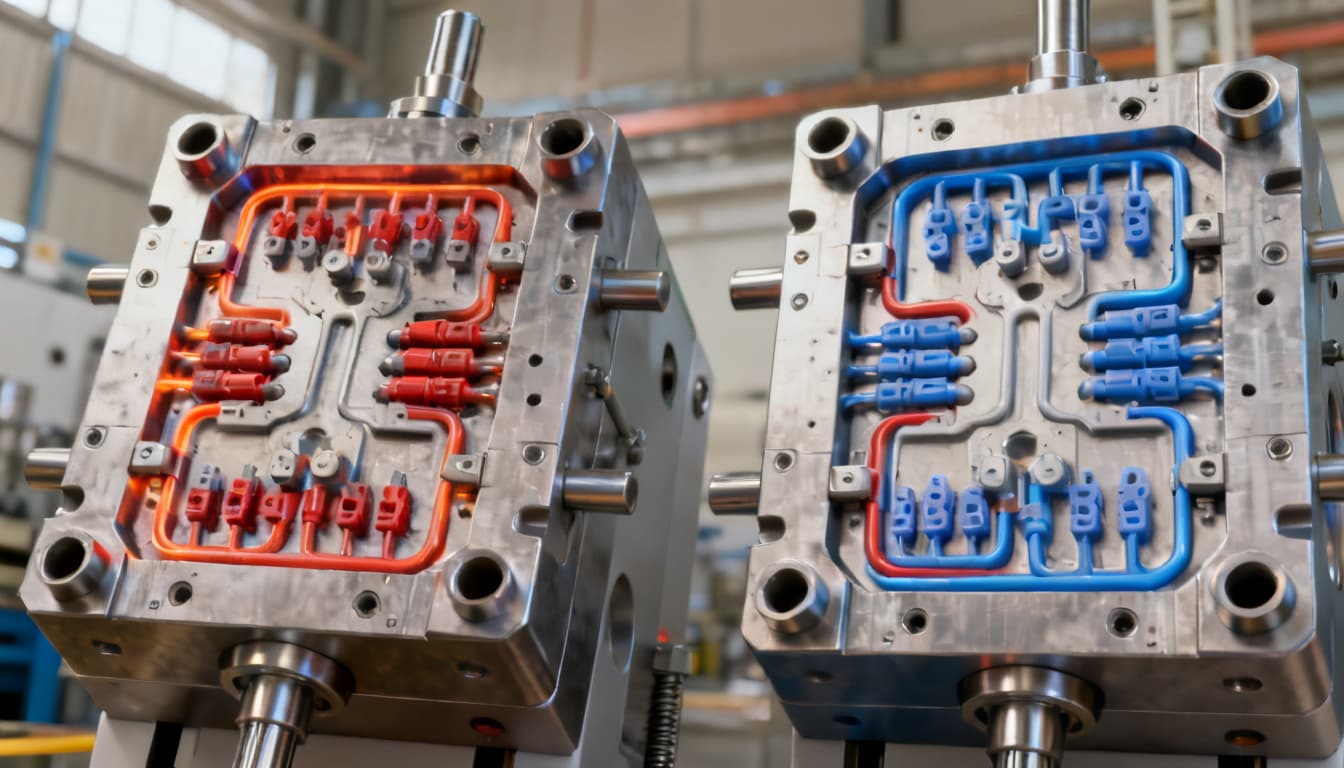
Hot Runner vs Cold Runner Injection Molds: Unpacking the Key Differences for Your Next Project
Choosing between hot runner and cold runner injection molds can significantly impact the efficiency, cost, and quality of your injection molding project. As a seasoned injection molding engineer with over 15 years of experience, I’ve seen firsthand how this decision can make or break a project. Let'
Hot Runner vs Cold Runner Injection Molds: Unpacking the Key Differences for Your Next Project
Choosing between hot runner and cold runner injection molds can significantly impact the efficiency, cost, and quality of your injection molding project. As a seasoned injection molding engineer with over 15 years of experience, I’ve seen firsthand how this decision can make or break a project. Let's delve into the specifics to help you make an informed choice.
Understanding the Basics: Hot Runner and Cold Runner Systems
Hot Runner Systems
Hot runner systems use a manifold to maintain the plastic material in a molten state within the mold. This eliminates the need for runners, reducing waste and cycle time. Typical melt temperatures range from 200°C to 300°C, depending on the material.
Cold Runner Systems
Cold runner systems involve solidifying the plastic within the runner, which is then ejected with the part. This requires additional processing to separate the runner from the part. Common cycle times range from 30 to 90 seconds, influenced by factors like material type and part thickness.
Material Compatibility: What Works Best?
| Material | Hot Runner Suitability | Cold Runner Suitability |
|---|---|---|
| ABS | Excellent | Good |
| PP | Good | Excellent |
| PC | Excellent | Good |
| PA66 | Good | Excellent |
| POM | Good | Good |
| TPE | Excellent | Good |
Cost Considerations: Initial Investment vs. Long-term Savings
Initial Tooling Costs
Hot runner systems generally have higher initial tooling costs due to their complexity. These systems can range from $20,000 to $100,000, depending on the mold size and complexity.
Operational Costs and Savings
While cold runner systems have lower upfront costs, typically between $5,000 to $30,000, they incur higher material waste and longer cycle times, affecting long-term profitability.
| Cost Factor | Hot Runner | Cold Runner |
|---|---|---|
| Initial Tooling Cost | High | Low |
| Material Waste | Low | High |
| Cycle Time | Short | Long |
Quality and Defect Management
Typical Defects in Hot Runner Systems
In hot runner systems, one common defect is color streaking. Keeping melt temperatures within the recommended range (e.g., 230°C for ABS) can mitigate this issue.
Common Cold Runner Defects
Cold runner systems often face issues like warping and sink marks, especially with materials like PP. Ensuring uniform wall thickness (1-3mm) and appropriate draft angles (0.5-2°) can help reduce these defects.
Design Flexibility and Complexity
Design Complexity with Hot Runners
Hot runners offer more design flexibility, allowing for complex geometries and multi-cavity molds without compromising cycle time.
Cold Runner Design Constraints
Cold runner systems may limit design options due to the need for larger runner channels, impacting part aesthetics and function.
Decision-Making Checklist: Choosing the Right System
- Evaluate the material compatibility with each system.
- Consider initial tooling costs and long-term operational savings.
- Assess the potential for defects and required quality standards.
- Determine the complexity of the design and production requirements.
- Consult with experts to validate your choice.
Practical Tip: When in doubt, run a small-scale trial with both systems to evaluate performance in real-world conditions. This can provide invaluable insights and prevent costly mistakes.
Conclusion: Making the Right Choice for Your Project
Both hot runner and cold runner systems have their distinct advantages and trade-offs. Hot runners excel in reducing waste and cycle time, making them ideal for high-volume production. Cold runners offer lower initial costs, suitable for simpler designs and lower production volumes. By considering factors like material compatibility, cost, quality, and design complexity, you can make a well-informed decision tailored to your specific project needs.
For further guidance and to get a free quote, reach out to our team of experts at Panda Molding. We’re here to help you navigate your next injection molding project with confidence.