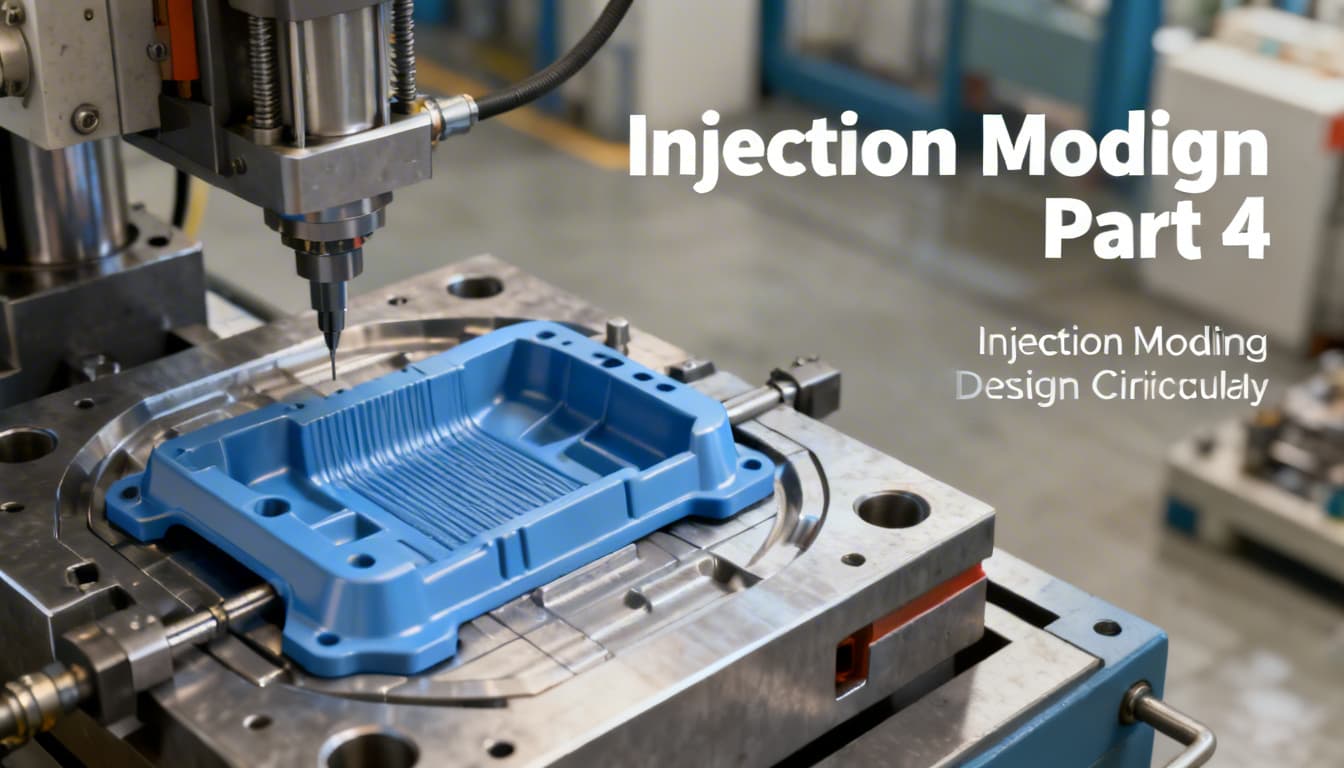
Injection Mold Design Part 4: Injection Molding Curriculum
Designing an efficient injection mold is a complex task that requires a deep understanding of materials, processes, and best practices. As someone who has spent over 15 years in the field, I’ve encountered numerous challenges and learning opportunities. In this installment, we’ll explore the critica
Injection Mold Design Part 4: Injection Molding Curriculum
Designing an efficient injection mold is a complex task that requires a deep understanding of materials, processes, and best practices. As someone who has spent over 15 years in the field, I’ve encountered numerous challenges and learning opportunities. In this installment, we’ll explore the critical components of an injection molding curriculum, focusing on the essential knowledge and skills needed to excel in this domain.
Understanding Material Properties
One of the foundational elements of injection mold design is understanding the properties of different materials. Each material has unique characteristics that influence how it behaves during the injection molding process.
Material Comparison
Choosing the right material is crucial for achieving the desired product quality and performance. Below is a comparison of some commonly used materials:
| Material | Melt Temperature (°C) | Mold Temperature (°C) | Injection Pressure (MPa) |
|---|---|---|---|
| ABS | 210-250 | 50-80 | 60-100 |
| PP | 200-250 | 20-60 | 50-90 |
| PC | 270-320 | 80-120 | 80-140 |
| PA66 | 260-290 | 80-120 | 75-125 |
Practical Tip: Always conduct a thorough material analysis before selecting the material for your mold. Consider factors like thermal stability, mechanical strength, and compatibility with the intended application.
Designing for Manufacturability
Designing parts for manufacturability involves balancing the design requirements with the capabilities and limitations of the injection molding process.
Key Design Rules
- Wall Thickness: Maintain a uniform wall thickness between 1-3 mm to prevent warping and ensure consistent cooling.
- Draft Angles: Use draft angles between 0.5-2° to facilitate easy ejection of parts from the mold.
- Radii and Fillets: Incorporate radii and fillets to reduce stress concentration and improve flow.
Common Design Mistakes
Some common mistakes to avoid include:
- Ignoring the shrinkage factor, which can lead to dimensional inaccuracies.
- Overlooking the need for adequate venting, resulting in trapped air and defects.
- Failing to optimize the gate location, which can cause uneven filling and weld lines.
Process Optimization
Optimizing the injection molding process is essential for achieving high-quality parts and reducing cycle times.
Key Process Parameters
Understanding and controlling process parameters is crucial. Here are some typical values:
| Parameter | Value |
|---|---|
| Cycle Time | 15-60 seconds |
| Cooling Time | 30-50% of cycle time |
| Injection Pressure | 50-140 MPa |
Defect Causes and Solutions
- Sink Marks: Caused by insufficient cooling or excessive material in thick sections. Solution: Optimize cooling time and reduce wall thickness.
- Warping: Caused by uneven cooling or material shrinkage. Solution: Ensure uniform wall thickness and proper cooling.
- Flash: Caused by excessive injection pressure or poor mold fit. Solution: Adjust pressure settings and ensure mold alignment.
Quality Control and Testing
Implementing robust quality control measures is vital for ensuring that the final product meets specifications.
Testing Methods
- Dimensional Inspection: Use precision measuring tools to verify part dimensions.
- Mechanical Testing: Conduct tensile, impact, and fatigue tests to assess material performance.
- Visual Inspection: Check for surface defects such as scratches, flow lines, and discoloration.
Training and Skill Development
Continuous learning and skill development are essential for staying competitive in the injection molding industry.
Recommended Curriculum
- Material Science: Understanding material properties, selection criteria, and processing behavior.
- Mold Design Principles: Learning about mold components, design rules, and manufacturability.
- Process Control: Mastering the art of optimizing process parameters for quality and efficiency.
- Quality Assurance: Implementing testing and inspection techniques to ensure product integrity.
For those looking to delve deeper into injection molding, get a free quote from Panda Molding to explore how professional services can meet your specific needs.
Conclusion
The path to mastering injection mold design involves a comprehensive understanding of material properties, design principles, process optimization, and quality control. By following a structured curriculum and learning from real-world experiences, you can enhance your skills and contribute to successful injection molding projects. Remember, the key to excellence lies in continuous improvement and adaptation to new challenges.