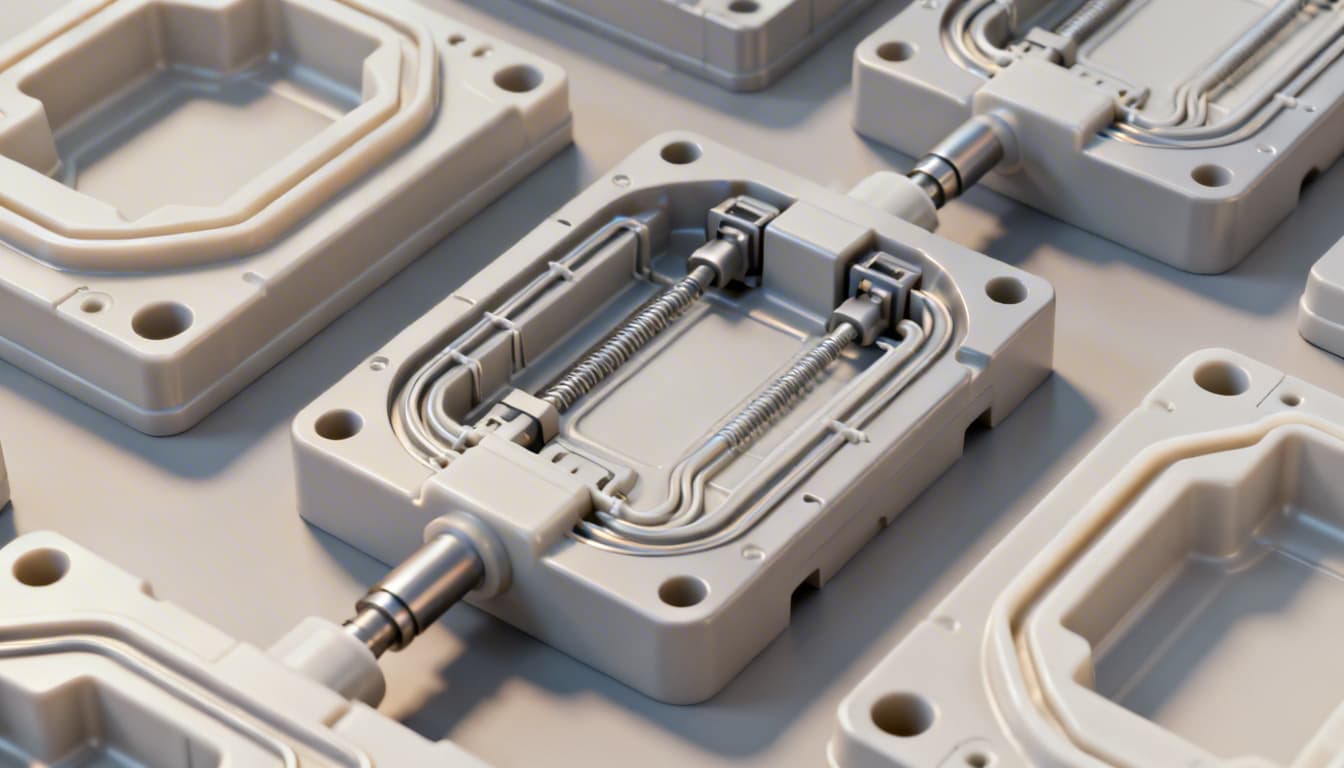
Injection Molding Design Guidelines: Essential Tips for Creating High-Quality Parts
Designing for injection molding can be challenging, especially when aiming for high-quality parts without compromising efficiency or cost. Many manufacturers face issues such as warping, sink marks, or incomplete fills, which can be mitigated with a well-thought-out design. Here, we provide essentia
Injection Molding Design Guidelines: Essential Tips for Creating High-Quality Parts
Designing for injection molding can be challenging, especially when aiming for high-quality parts without compromising efficiency or cost. Many manufacturers face issues such as warping, sink marks, or incomplete fills, which can be mitigated with a well-thought-out design. Here, we provide essential guidelines to help you create superior injection-molded components.
Understanding Material Selection
Choosing the right material is crucial for the success of your injection-molded part. Different materials offer varying properties, which can significantly impact the performance and quality of the final product.
Comparison of Common Materials
| Material | Melt Temperature (°C) | Mold Temperature (°C) | Applications |
|---|---|---|---|
| ABS | 220-250 | 50-80 | Automotive, Consumer Goods |
| PP | 200-230 | 10-50 | Packaging, Medical Devices |
| PC | 270-310 | 80-120 | Electronics, Safety Equipment |
| PA66 | 260-290 | 80-120 | Industrial, Automotive |
| POM | 190-230 | 80-110 | Gears, Bearings |
Design for Manufacturability
Optimizing your design for manufacturability can reduce production costs and defects. Here are some critical design rules to consider:
Wall Thickness
Maintaining uniform wall thickness is essential to prevent warping and ensure proper flow. The recommended wall thickness ranges between 1-3mm, depending on the material and part size.
Draft Angles
Incorporating draft angles of 0.5-2° facilitates the ejection of parts from the mold, reducing stress and potential damage.
Rib Design
Ribs should be designed with a thickness of 50-70% of the wall thickness to avoid sink marks and ensure structural integrity.
Optimizing Process Parameters
Setting the right process parameters is crucial for achieving high-quality parts. Here, we discuss essential parameters and their recommended values.
Injection Pressure
Typical injection pressures range from 70 to 140 MPa, depending on the material and part complexity. Adjusting pressure can help eliminate defects like short shots or flash.
Cycle Time
Cycle time is influenced by the material and part design. For example, ABS parts typically have a cycle time of 30-45 seconds, while PP parts may range from 20-30 seconds.
Common Defects and Solutions
Understanding common defects and their causes can help you design better parts and optimize your process.
Warping
Warping can occur due to uneven cooling or inconsistent wall thickness. To minimize warping, ensure uniform cooling and design consistent wall thickness.
Sink Marks
Sink marks are often caused by thick sections or inadequate packing pressure. Reducing wall thickness and optimizing packing pressure can help mitigate this issue.
Step-by-Step Checklist for Designing Injection Molded Parts
- Select the appropriate material based on application requirements.
- Ensure uniform wall thickness throughout the design.
- Incorporate draft angles to facilitate part ejection.
- Design ribs with appropriate thickness to prevent sink marks.
- Set optimal process parameters, including injection pressure and cycle time.
- Conduct mold flow analysis to identify potential defects.
Cost Considerations
While quality is paramount, cost-effectiveness is also essential. Here's a breakdown of costs associated with different materials and processes.
| Material | Material Cost ($/kg) | Cycle Time (s) | Total Cost Estimation ($/part) |
|---|---|---|---|
| ABS | 1.5-2.5 | 30-45 | 0.10-0.20 |
| PP | 1.2-2.0 | 20-30 | 0.08-0.15 |
| PC | 3.0-4.5 | 40-60 | 0.20-0.40 |
| PA66 | 2.5-3.5 | 35-55 | 0.15-0.30 |
| POM | 2.0-3.0 | 30-50 | 0.12-0.25 |
Practical Tip: Always perform a prototype run before full-scale production. This step allows you to identify and rectify potential issues early, saving time and costs in the long run.
Conclusion
Designing injection-molded parts requires a careful balance of material selection, design principles, and process optimization. By following these guidelines, you can enhance part quality and reduce production costs. For expert assistance with your injection molding projects, get a free quote from Panda Molding today.