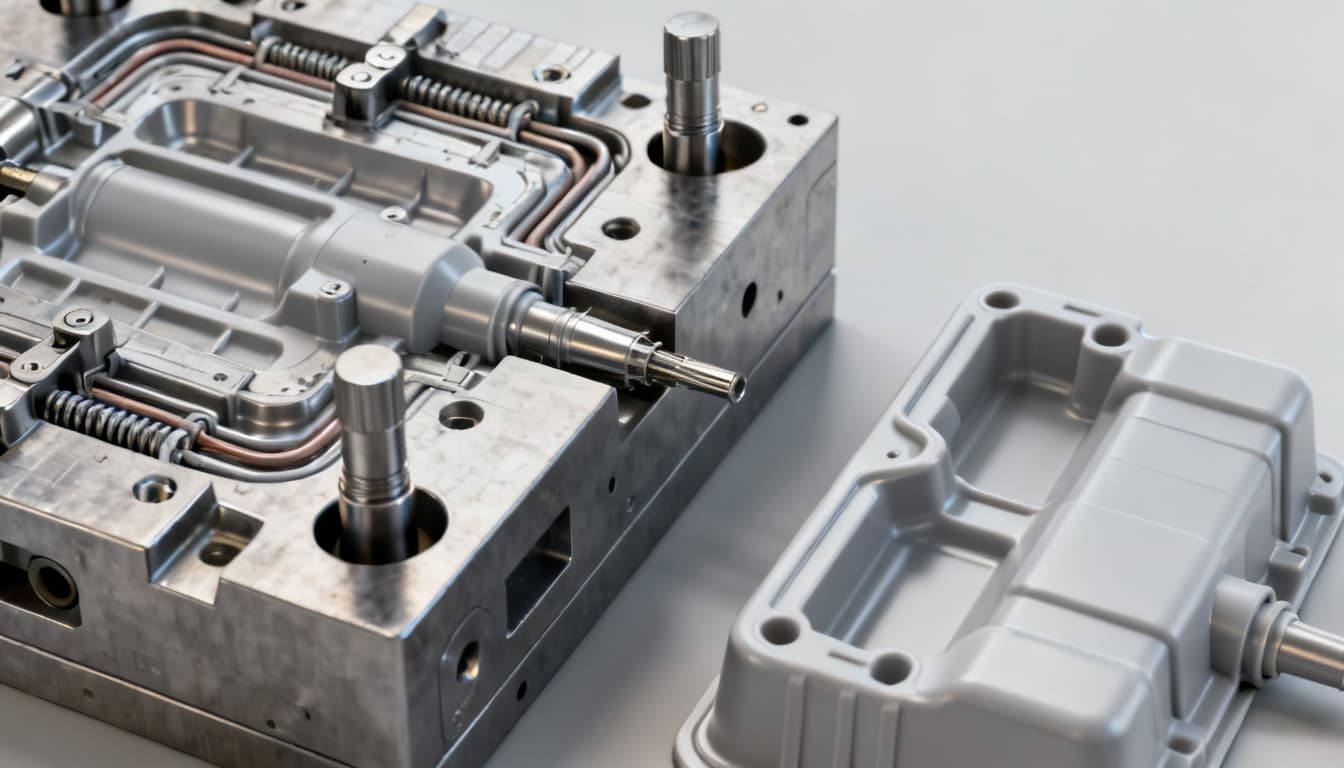
Innovative Mold Design: Strategies to Enhance Injection Molding Performance and Reduce Cycle Time
In the competitive field of injection molding, optimizing mold design is crucial to enhancing performance and reducing cycle time. Manufacturers often face challenges with cycle efficiency and product quality. By implementing innovative design strategies, these challenges can be addressed effectivel
Innovative Mold Design: Strategies to Enhance Injection Molding Performance and Reduce Cycle Time
In the competitive field of injection molding, optimizing mold design is crucial to enhancing performance and reducing cycle time. Manufacturers often face challenges with cycle efficiency and product quality. By implementing innovative design strategies, these challenges can be addressed effectively, leading to significant improvements in production outcomes.
Understanding the Core Elements of Mold Design
Material Selection
The choice of material impacts the mold's durability and the quality of the final product. Common materials include ABS, PP, PC, PA66, POM, and TPE, each with distinct properties.
| Material | Properties | Typical Applications |
|---|---|---|
| ABS | High impact resistance, good machinability | Automotive parts, consumer electronics |
| PP | Good chemical resistance, low density | Packaging, textiles |
| PC | High strength, excellent transparency | Optical discs, eyewear lenses |
Design for Manufacturability
Proper wall thickness (1-3mm) and draft angles (0.5-2°) are crucial to prevent defects such as warping and ensure easy ejection of the part. Adhering to these design rules minimizes cycle time and improves part quality.
Optimizing Mold Temperature and Pressure
Melt and Mold Temperature
Maintaining the correct melt temperature and mold temperature is essential. For instance, ABS typically requires a melt temperature of 220-250°C and a mold temperature of 60-80°C. Deviating from these parameters can lead to defects like sink marks or voids.
Injection Pressure
Injection pressure should be optimized to ensure complete cavity filling without causing flash. For materials like PP, injection pressures range from 700 to 1200 bar. Monitoring and adjusting pressure can significantly reduce cycle time and improve product consistency.
Innovative Cooling System Design
Conformal Cooling Channels
Implementing conformal cooling channels can drastically reduce cooling time by up to 30%. These channels follow the part's geometry, providing uniform cooling and reducing cycle time.
Cooling Time Optimization
Cooling time constitutes a significant portion of the cycle time. By using advanced simulation software, engineers can predict cooling times accurately and make necessary adjustments to the mold design.
Advanced Mold Technologies
Hot Runner Systems
Hot runner systems eliminate the need for runners, reducing material waste and cycle time. By maintaining a constant temperature, these systems ensure consistent part quality and reduce the risk of defects.
Gas-Assisted Injection Molding
This technique allows for the creation of hollow parts, reducing material usage and cycle time. It is particularly beneficial for thick-walled parts where traditional cooling would be inefficient.
Implementing a Step-by-Step Process for Mold Design Optimization
- Identify critical part features and select appropriate materials.
- Design mold with optimal wall thickness and draft angles.
- Simulate mold filling and cooling processes using software.
- Incorporate advanced technologies like hot runners if applicable.
- Test and validate the mold design with a prototype run.
Common Mistakes and How to Avoid Them
Ignoring Material-Specific Parameters
Each material has specific processing parameters. Ignoring these can lead to defects such as warping or incomplete filling. Always refer to industry standards like ISO 294 for guidance.
Overlooking Cooling System Design
Cooling is often underestimated. A poorly designed cooling system can increase cycle time significantly. Utilize conformal cooling and simulation tools to design efficient cooling systems.
Practical Tip: Always conduct a mold flow analysis before finalizing the mold design. This helps identify potential issues and optimize the mold for better performance.
Conclusion
Innovative mold design is a cornerstone of enhancing injection molding performance and reducing cycle time. By focusing on material selection, optimizing temperature and pressure, leveraging advanced technologies, and adhering to industry standards, manufacturers can achieve significant improvements in efficiency and product quality. For expert assistance in optimizing your mold design, get a free quote from Panda Molding today.