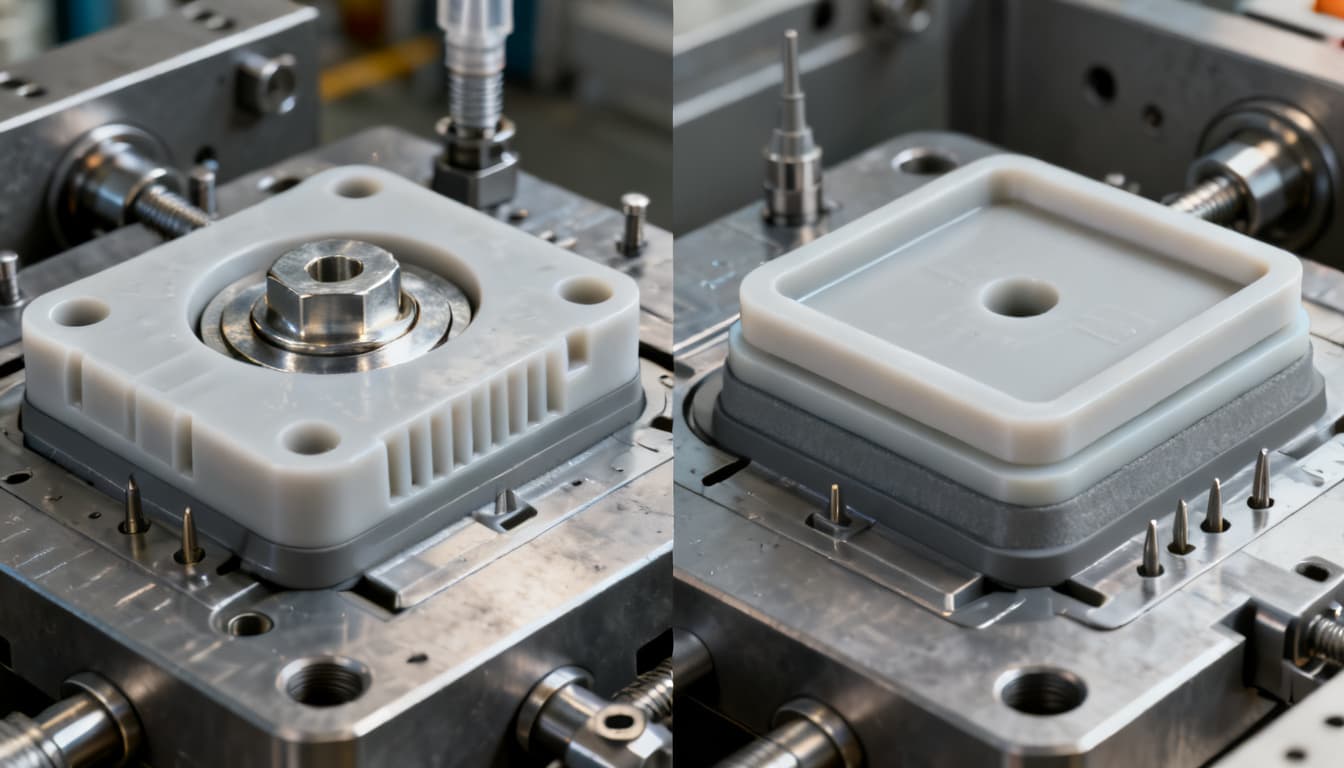
Insert Molding vs. Overmolding: Key Factors for Engineers to Consider in Your Next Project
Choosing between insert molding and overmolding can significantly impact the success of your injection molding project. Understanding the nuances of each process, from material compatibility to design constraints, is crucial for engineers aiming to optimize both performance and cost. In this article
Insert Molding vs. Overmolding: Key Factors for Engineers to Consider in Your Next Project
Choosing between insert molding and overmolding can significantly impact the success of your injection molding project. Understanding the nuances of each process, from material compatibility to design constraints, is crucial for engineers aiming to optimize both performance and cost. In this article, we delve into the critical factors to consider, supported by industry standards and real-world data.
Understanding the Processes
Insert Molding: The Basics
Insert molding involves placing a pre-formed insert, often metal or another plastic, into the mold before injecting the plastic material. This process is ideal for creating components that require a combination of materials, such as plastic parts with metal threads.
Overmolding: A Layered Approach
Overmolding involves molding a secondary material over a substrate or initial component. This is often used to add a soft grip or seal to a hard plastic part. The process requires precise control of material compatibility and adhesion.
Material Selection and Compatibility
Choosing the Right Materials
Material selection is critical in both processes. Engineers must consider factors such as thermal expansion, bonding properties, and mechanical performance. Common materials include:
| Material | Melting Temperature (°C) | Applications |
|---|---|---|
| ABS (Acrylonitrile Butadiene Styrene) | 220-250 | Automotive parts, electronic housings |
| PP (Polypropylene) | 170-180 | Consumer goods, packaging |
| TPE (Thermoplastic Elastomer) | 180-230 | Soft-touch grips, seals |
Compatibility Considerations
For successful overmolding, the materials must be compatible, ensuring proper adhesion and mechanical bonding. Engineers should refer to ASTM D3801 and ISO 1629 for guidelines on material compatibility and testing.
Design Guidelines and Constraints
Wall Thickness and Draft Angles
Designing for insert and overmolding requires careful attention to wall thickness and draft angles. The recommended wall thickness is typically 1-3mm, while draft angles should be between 0.5-2° to facilitate demolding.
Insert Placement and Tolerances
Proper placement and tolerance control of inserts are crucial in insert molding. Engineers should ensure that inserts are securely held within the mold to prevent movement during injection. Tolerances should align with industry standards such as DIN 16742.
Process Parameters and Optimization
Temperature and Pressure Settings
Controlling injection parameters is key to achieving high-quality parts. Typical settings include:
| Parameter | Insert Molding | Overmolding |
|---|---|---|
| Melt Temperature (°C) | 200-250 | 180-230 |
| Mold Temperature (°C) | 50-75 | 40-60 |
| Injection Pressure (bar) | 500-1000 | 300-800 |
| Cycle Time (seconds) | 30-60 | 40-80 |
Cycle Time Optimization
Optimizing cycle time is essential for cost-effective production. Engineers should focus on reducing cooling time and improving mold design to enhance efficiency without compromising quality.
Common Defects and Solutions
Addressing Warpage and Shrinkage
Warpage and shrinkage are common issues in both insert and overmolding. Controlling mold temperature and using uniform wall thickness can mitigate these defects. ASTM D955 provides guidelines on managing these parameters.
Ensuring Proper Adhesion
Poor adhesion in overmolding can lead to delamination. Ensuring surface cleanliness and using compatible materials are critical. Adhesion tests, as per ISO 2409, can help verify bond strength.
Cost Analysis and Considerations
Cost Breakdown
Understanding the cost implications of each process is vital. Factors include material costs, cycle time, and tooling expenses.
- Material Costs: Consider both primary and secondary materials.
- Tooling Costs: More complex molds may require higher initial investment.
- Production Volume: Higher volumes can reduce per-unit costs.
Economic Trade-offs
While insert molding may offer lower material costs due to reduced plastic usage, overmolding can enhance product functionality, potentially increasing market value.
Practical Tip: Always conduct a thorough cost-benefit analysis before deciding on the molding process. Consider both short-term and long-term impacts on production and product performance.
Conclusion
Both insert molding and overmolding offer unique advantages and challenges. By carefully considering material compatibility, design constraints, process parameters, and cost implications, engineers can make informed decisions that align with project goals. For personalized guidance and to explore our injection molding services, get a free quote from Panda Molding today.