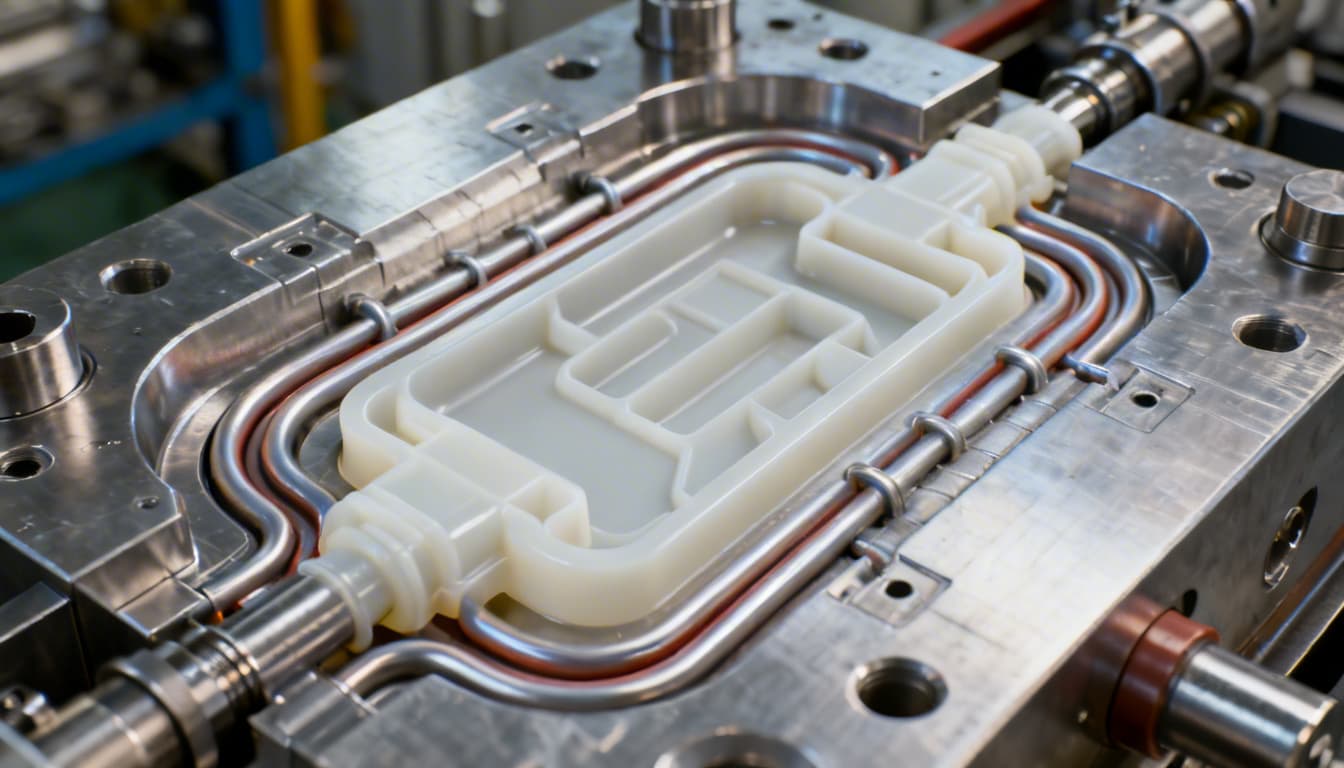
Key Considerations for Designing Efficient Cooling Channels in Injection Molds
In the competitive world of injection molding, efficient cooling channel design is crucial for optimizing cycle times and improving part quality. Poorly designed cooling systems can lead to defects like warping and sink marks, impacting both aesthetics and functionality. Let's delve into the critica
Key Considerations for Designing Efficient Cooling Channels in Injection Molds
In the competitive world of injection molding, efficient cooling channel design is crucial for optimizing cycle times and improving part quality. Poorly designed cooling systems can lead to defects like warping and sink marks, impacting both aesthetics and functionality. Let's delve into the critical considerations for designing cooling channels that enhance mold performance and product quality.
Understanding the Role of Cooling Channels
Cooling channels are integral to the injection molding process, responsible for dissipating heat from the mold to solidify the plastic efficiently. The effectiveness of these channels directly influences cycle time, part quality, and production costs.
Heat Transfer Principles
Effective cooling relies on the principles of heat transfer. The rate of heat dissipation depends on factors like thermal conductivity of the mold material, coolant flow rate, and channel design. Common mold materials like P20 steel and aluminum have thermal conductivities of approximately 29 W/m·K and 167 W/m·K, respectively, influencing cooling efficiency.
Cycle Time Reduction
Efficient cooling can significantly reduce cycle times. For instance, a well-designed cooling system can cut cycle times by 20-40%, translating to substantial cost savings and increased throughput.
Design Parameters for Cooling Channels
Designing effective cooling channels involves several critical parameters, including channel diameter, layout, and proximity to the mold cavity.
Channel Diameter and Spacing
The diameter of cooling channels typically ranges from 8mm to 20mm, depending on the size of the mold and the part being produced. Proper spacing between channels, generally 2-3 times the channel diameter, ensures uniform cooling.
Channel Layout
Optimizing channel layout involves balancing uniform cooling with minimal pressure drop. Spiral and conformal cooling designs offer superior heat transfer compared to traditional straight-line channels.
Material Considerations
The choice of mold material and coolant fluid significantly impacts cooling efficiency and mold longevity.
Mold Materials
Common mold materials include P20 steel, aluminum, and beryllium copper. Each material offers distinct advantages and trade-offs, as illustrated in the table below.
| Material | Thermal Conductivity (W/m·K) | Cost Index | Durability |
|---|---|---|---|
| P20 Steel | 29 | Medium | High |
| Aluminum | 167 | High | Medium |
| Beryllium Copper | 200 | Very High | High |
Coolant Fluids
Water is the most common coolant due to its high heat capacity and availability. However, glycol-water mixtures are used in low-temperature applications to prevent freezing.
Common Defects and Solutions
Inadequate cooling can lead to several defects, with warping and sink marks being the most prevalent. Understanding their causes and solutions is vital for mold designers.
Warping
Warping occurs when uneven cooling causes differential shrinkage. Ensuring uniform channel spacing and consistent coolant flow can mitigate this issue.
Sink Marks
Sink marks result from insufficient cooling in thicker sections. Utilizing conformal cooling channels and optimizing wall thickness (typically 1-3mm) can help address this defect.
Checklist for Designing Cooling Channels
- Determine optimal channel diameter based on mold size and part requirements.
- Ensure uniform spacing between channels to promote even cooling.
- Select appropriate mold material to balance thermal conductivity and cost.
- Choose a suitable coolant fluid, considering temperature and cost implications.
- Incorporate conformal cooling designs for complex geometries.
- Conduct simulations to predict cooling performance and identify potential issues.
Practical Tips for Mold Designers
- Simulate Early: Use simulation software to model heat transfer and identify potential hot spots before manufacturing.
- Regular Maintenance: Schedule regular maintenance to prevent clogging and ensure consistent cooling performance.
- Monitor Coolant Quality: Regularly check and maintain coolant quality to prevent corrosion and scaling.
Conclusion
Designing efficient cooling channels is a critical aspect of injection mold design that directly impacts part quality and production efficiency. By understanding the principles of heat transfer, carefully selecting materials, and optimizing channel design, mold designers can significantly enhance cooling performance. For expert advice and to explore our professional injection molding services, get a free quote from Panda Molding today.