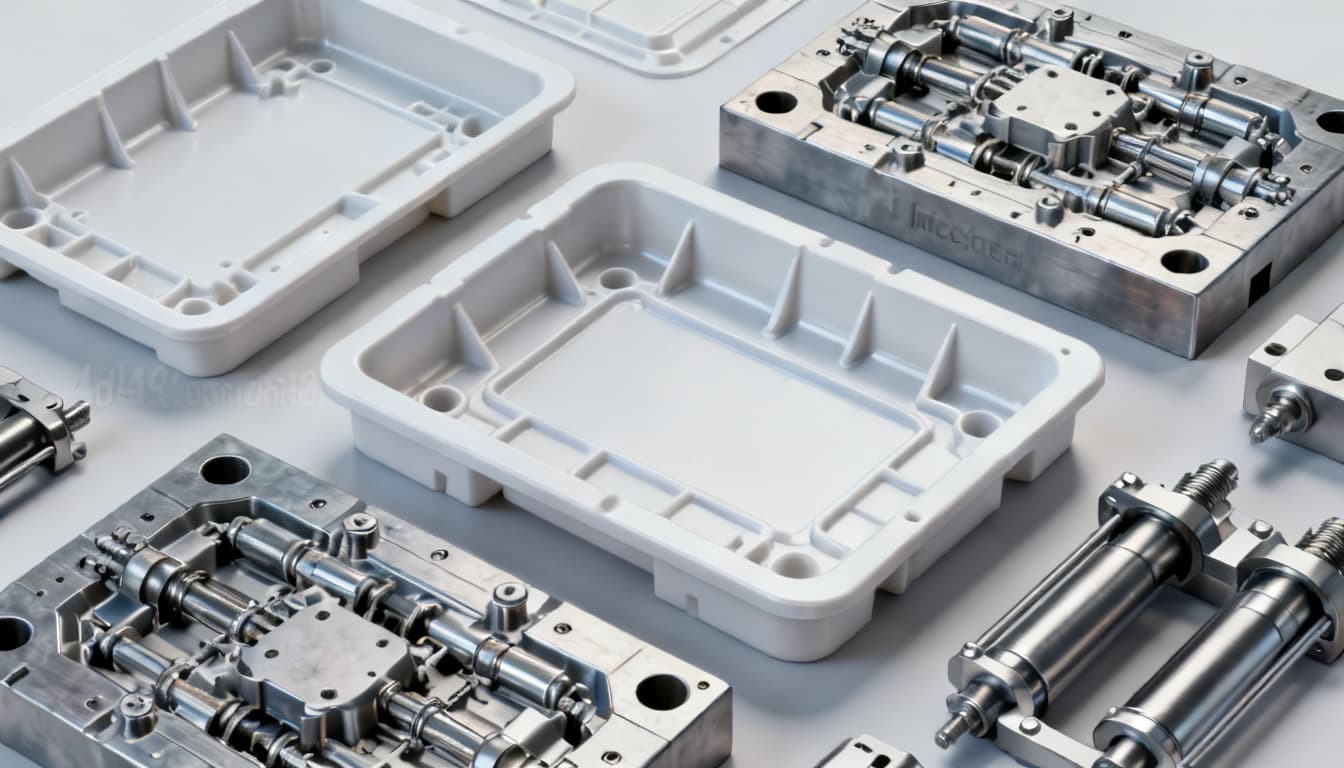
Mastering Injection Mold Design: Best Practices for Enhanced Efficiency and Precision
Designing an injection mold that performs efficiently and with high precision is a complex task that requires a deep understanding of materials, processes, and equipment. A poorly designed mold can lead to defects, increased cycle times, and higher costs. In this post, we'll explore best practices t
Mastering Injection Mold Design: Best Practices for Enhanced Efficiency and Precision
Designing an injection mold that performs efficiently and with high precision is a complex task that requires a deep understanding of materials, processes, and equipment. A poorly designed mold can lead to defects, increased cycle times, and higher costs. In this post, we'll explore best practices to enhance your mold design, minimizing errors and maximizing efficiency.
Understanding Material Properties and Selection
The selection of the right material is crucial in mold design. Each material has unique properties that can significantly impact the molding process. Commonly used materials include ABS, PP, PC, PA66, POM, and TPE, each offering different advantages and limitations.
Material Comparison Table
| Material | Melt Temperature (°C) | Mold Temperature (°C) | Applications |
|---|---|---|---|
| ABS | 220-250 | 50-80 | Automotive, Electronics |
| PP | 160-220 | 10-50 | Packaging, Household goods |
| PC | 270-320 | 80-120 | Optical discs, Safety helmets |
Designing for Manufacturability
A design that is not manufacturable can cause significant delays and increased costs. Follow these guidelines to ensure your mold is designed for manufacturability:
Wall Thickness and Draft Angles
Maintaining a uniform wall thickness between 1-3mm helps in reducing warpage and sink marks. Incorporating draft angles of 0.5-2° facilitates easier part ejection from the mold.
Checklist for Manufacturability
- Ensure uniform wall thickness (1-3mm).
- Incorporate appropriate draft angles (0.5-2°).
- Design with sufficient radii to avoid sharp corners.
- Consider gate location to minimize flow marks.
Optimizing Process Parameters
Fine-tuning process parameters is essential for achieving high precision and efficiency. Key parameters include injection pressure, cycle time, and cooling time.
Process Parameters Table
| Parameter | Recommended Range | Impact on Quality |
|---|---|---|
| Injection Pressure | 700-1200 bar | Too low can cause short shots; too high can cause flash |
| Cycle Time | 30-60 seconds | Affects production efficiency |
| Cooling Time | 50-70% of cycle time | Too short can cause warpage |
Addressing Common Defects
Understanding the root causes of common defects is vital for implementing effective solutions.
Defect Causes and Solutions
- Sink Marks: Caused by excessive wall thickness. Solution: Optimize design to ensure uniform thickness.
- Warping: Caused by uneven cooling. Solution: Adjust cooling time and ensure uniform wall thickness.
- Short Shots: Caused by insufficient injection pressure. Solution: Increase injection pressure and check material flow.
Practical Tip: Regularly inspect and maintain your molds to prevent wear and tear, which can affect part quality. This includes checking for any signs of corrosion, ensuring proper alignment, and verifying that all moving parts are functioning correctly.
Leveraging Industry Standards
Adhering to industry standards such as ISO, ASTM, and DIN can enhance the reliability and quality of your mold designs. These standards provide guidelines on tolerances, testing methods, and quality control.
Standards Application
For instance, ISO 294 provides guidelines on the basic principles of injection molding, while ASTM D638 specifies the test method for tensile properties of plastics. Implementing these standards ensures consistency and quality in production.
Conclusion
Mastering injection mold design involves a careful balance of material selection, design principles, and process optimization. By adhering to best practices and leveraging industry standards, you can enhance the efficiency and precision of your molds. For professional assistance and to get a free quote, consider reaching out to experts who can guide you through the intricacies of mold design.