Mastering Injection Molding Cycle Time: A Simple Guide for Improved Efficiency
In the competitive world of plastics manufacturing, efficiency is key. One of the most crucial factors affecting efficiency in injection molding is cycle time. Reducing cycle time without compromising quality can lead to significant cost savings and increased production capacity. This guide delves i
Mastering Injection Molding Cycle Time: A Simple Guide for Improved Efficiency
In the competitive world of plastics manufacturing, efficiency is key. One of the most crucial factors affecting efficiency in injection molding is cycle time. Reducing cycle time without compromising quality can lead to significant cost savings and increased production capacity. This guide delves into the intricacies of optimizing cycle time, providing practical insights and real-world examples to help you enhance your injection molding operations.
Understanding the Components of Cycle Time
Cycle time is the total time taken to produce a single part, from the start of the injection process to the ejection of the finished product. It consists of several phases, each contributing to the overall duration.
Injection Phase
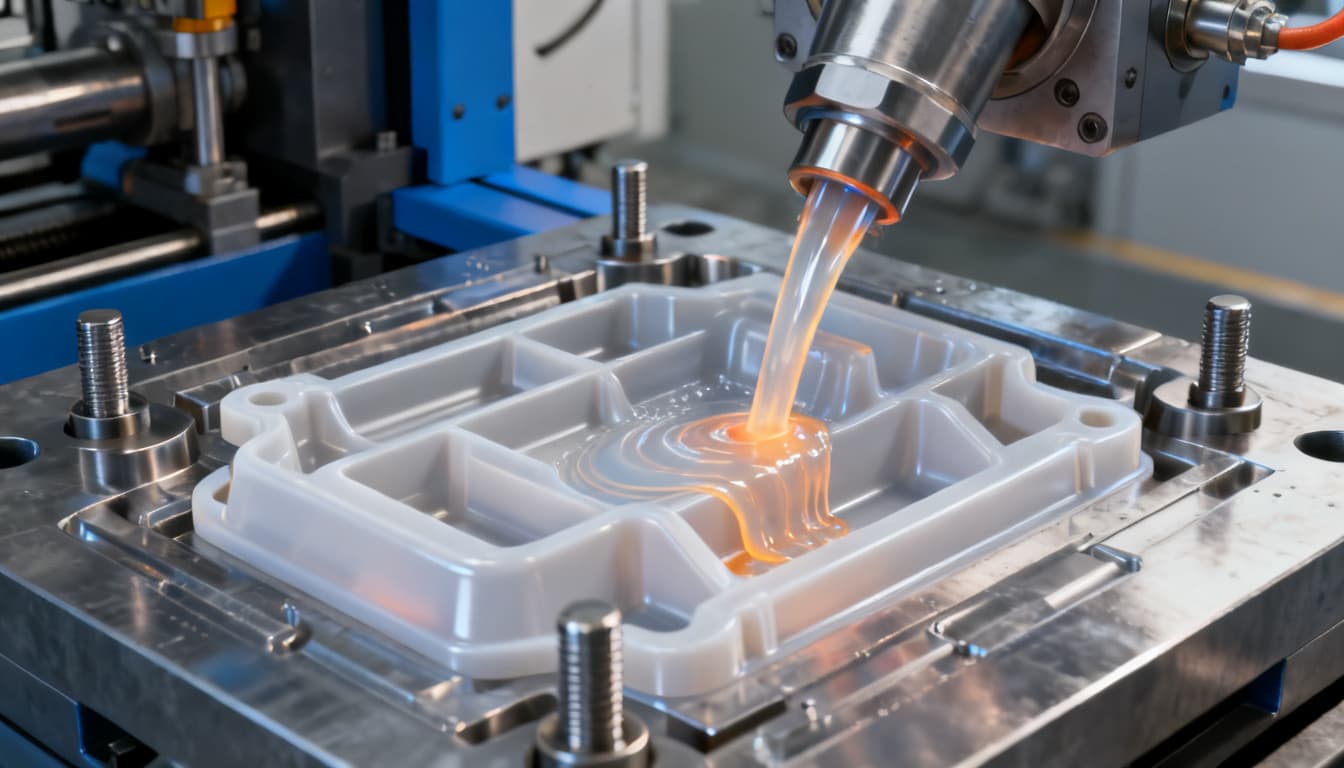
The injection phase involves filling the mold cavity with molten plastic. Key parameters here include injection pressure and melt temperature. For example, ABS typically requires a melt temperature of 210-250°C and an injection pressure of 60-100 MPa.
Cooling Time
Cooling time is often the longest phase in the cycle. It depends on the material's thermal properties and the part's wall thickness. For instance, a 2mm thick polypropylene (PP) part might require a cooling time of 15-20 seconds.
Mold Open and Ejection Time
This phase involves opening the mold and ejecting the part. Efficient ejection systems can minimize this time, typically ranging from 2-5 seconds.
Optimizing Cycle Time for Different Materials
Each material has unique characteristics that influence cycle time. Understanding these differences is crucial for optimization.
Material Comparison
| Material | Melt Temperature (°C) | Cooling Time (s) | Common Applications |
|---|---|---|---|
| ABS | 210-250 | 20-30 | Automotive, Electronics |
| PP | 180-240 | 15-20 | Packaging, Household Goods |
| PC | 270-320 | 30-40 | Optical Discs, Safety Glasses |
Design Considerations for Reduced Cycle Time
Designing for manufacturability can significantly impact cycle time. Consider the following design rules:
Wall Thickness
Maintaining uniform wall thickness between 1-3mm can help reduce cooling time and minimize defects. Thicker walls increase cooling time exponentially.
Draft Angles
Incorporate draft angles of 0.5-2° to facilitate easier ejection, thereby reducing mold open and ejection time.
Common Defects and Their Cycle Time Implications
Defects can increase cycle time due to additional processing or rework. Understanding their causes and solutions is vital.
Warpage
Warpage is often caused by uneven cooling. Ensuring uniform wall thickness and optimizing cooling channels can mitigate this issue.
Short Shots
Short shots occur when the mold cavity is not completely filled. Increasing injection pressure or adjusting melt temperature can resolve this.
Step-by-Step Process for Cycle Time Optimization
- Analyze current cycle time data to identify bottlenecks.
- Adjust injection parameters based on material specifications.
- Redesign mold features for manufacturability, focusing on wall thickness and draft angles.
- Implement and test cooling system improvements.
- Monitor and document changes to ensure consistent quality.
Practical Tips for Injection Molding Efficiency
Tip: Regularly calibrate your injection molding machines to maintain optimal performance. Small deviations in temperature or pressure can significantly affect cycle time and part quality.
Conclusion
Mastering cycle time in injection molding is a balancing act that requires a deep understanding of materials, processes, and design principles. By optimizing each phase of the cycle, you can achieve significant efficiency gains without compromising on quality. For expert assistance and a free quote, reach out to Panda Molding's experienced team. Remember, the key to efficiency is continuous improvement and adaptation to new technologies and methodologies.