Mastering Multi-Cavity Mold Design: Key Considerations for Optimal Production Efficiency
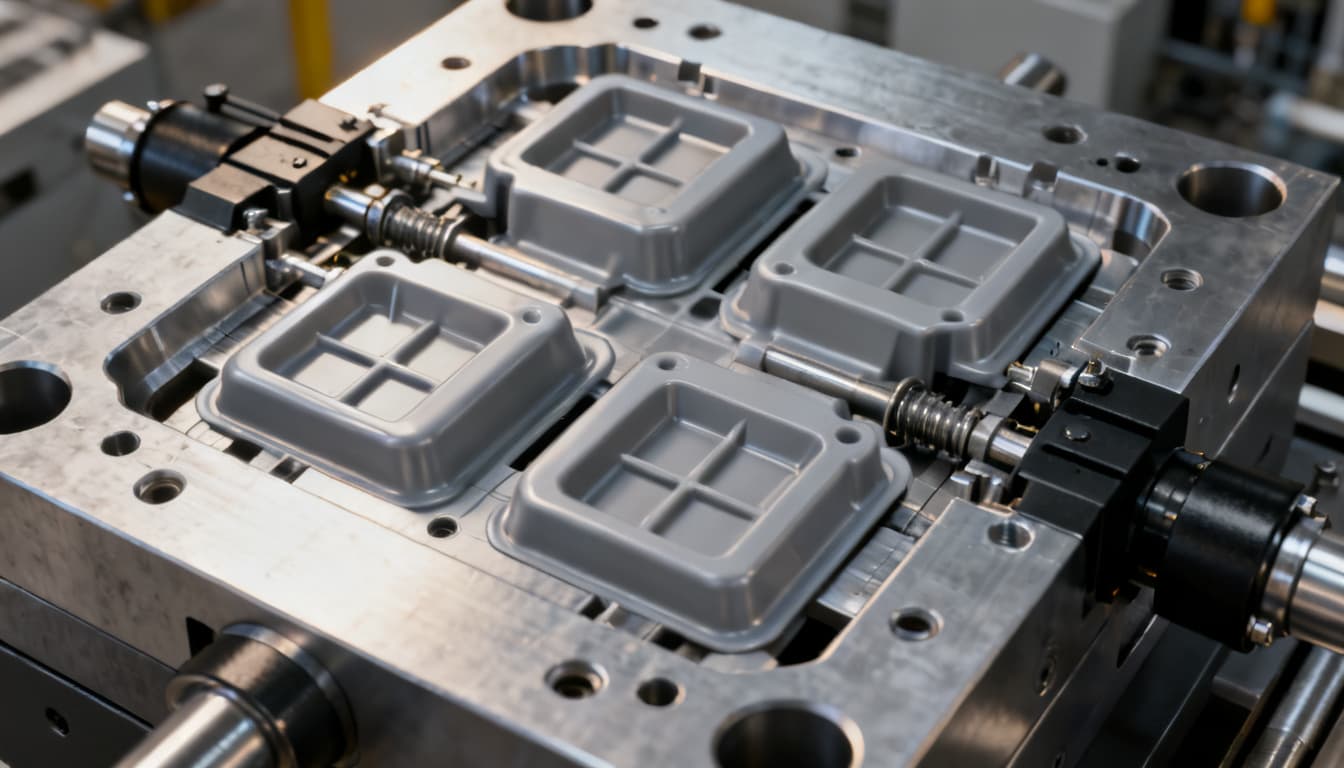
Multi-cavity molds are a cornerstone of high-volume plastic part production, offering significant advantages in terms of cost-efficiency and output. However, designing these molds requires a meticulous approach to ensure that the benefits are fully realized without compromising on quality. Let's del
Mastering Multi-Cavity Mold Design: Key Considerations for Optimal Production Efficiency
Multi-cavity molds are a cornerstone of high-volume plastic part production, offering significant advantages in terms of cost-efficiency and output. However, designing these molds requires a meticulous approach to ensure that the benefits are fully realized without compromising on quality. Let's delve into the critical aspects of multi-cavity mold design and how to optimize them for your production needs.
Understanding Part Consistency Across Cavities
Consistency is key in multi-cavity mold design, as variations can lead to defects and increased scrap rates. Ensuring uniformity across all cavities is a complex task that involves several technical considerations.
Balancing Cavity Pressure and Temperature
Uniform cavity pressure and temperature are essential to achieving consistent part quality. Variations can arise from differences in melt flow or thermal gradients within the mold. Typically, cavity pressure should be maintained within ±5% of the setpoint across all cavities. For materials like ABS, the melt temperature should be kept between 220-250°C, with mold temperatures around 60-80°C.
Gate Design and Placement
The design and placement of gates significantly impact the filling pattern and pressure distribution. A well-designed gate system ensures balanced flow to each cavity, minimizing potential defects such as short shots or weld lines. Common gate types include edge, pin, and submarine gates, each suited for different part geometries and materials.
Material Selection and Its Implications
Choosing the right material is crucial in multi-cavity mold design, as it affects everything from processing parameters to final part properties. Below is a comparison of commonly used materials in multi-cavity molds:
| Material | Melt Temperature (°C) | Mold Temperature (°C) | Typical Applications |
|---|---|---|---|
| ABS | 220-250 | 60-80 | Automotive, consumer goods |
| PP | 220-240 | 20-70 | Packaging, medical devices |
| PC | 260-300 | 80-120 | Electronics, lighting |
Trade-offs in Material Selection
While materials like ABS offer ease of processing and good surface finish, they may not provide the chemical resistance or temperature stability required for certain applications. It's vital to weigh these trade-offs against the specific requirements of your project.
Designing for Manufacturability
Design for manufacturability (DFM) principles are essential in multi-cavity mold design to ensure efficient production and high-quality parts.
Wall Thickness and Draft Angles
Consistent wall thickness (typically 1-3mm) and appropriate draft angles (0.5-2°) facilitate uniform cooling and ejection, reducing the likelihood of defects such as warping or sink marks. For example, a draft angle of 1° per side is generally recommended for most thermoplastics.
Cooling System Design
Efficient cooling is critical to reducing cycle times and ensuring part quality. A well-designed cooling system should provide uniform cooling across all cavities, minimizing thermal gradients that can lead to warping or differential shrinkage. Cycle times can vary significantly based on material and part geometry, but a well-optimized cooling system can significantly reduce these times.
Process Optimization for Multi-Cavity Molds
Optimizing the injection molding process is crucial for maximizing the efficiency of multi-cavity molds.
Injection Pressure and Speed
The injection pressure and speed must be carefully controlled to ensure complete filling of all cavities without introducing defects. For example, an injection pressure of 800-1200 bar is common for materials like ABS, with injection speeds adjusted based on part complexity and wall thickness.
Cycle Time Reduction
Reducing cycle time is a key factor in improving production efficiency. This can be achieved through various means such as optimizing cooling times, using hot runner systems, and ensuring proper material drying prior to molding.
| Process Parameter | Typical Value | Impact on Cycle Time |
|---|---|---|
| Cooling Time | 10-30 seconds | Directly impacts cycle time; must be optimized |
| Injection Time | 1-5 seconds | Shorter times reduce cycle time but may affect part quality |
| Holding Time | 5-20 seconds | Affects dimensional stability and sink marks |
Common Mistakes and How to Avoid Them
Even experienced engineers can make mistakes in multi-cavity mold design. Here are some common pitfalls and how to avoid them:
- Ignoring Material Variability: Always consider material batch-to-batch variability and its impact on processing parameters.
- Overlooking Cooling System Design: Inadequate cooling can lead to increased cycle times and part defects. Ensure uniform cooling across all cavities.
- Inadequate Gate Design: Poor gate design can lead to imbalanced filling and defects. Always simulate flow patterns during the design phase.
Practical Tip: Use simulation tools to model flow, cooling, and warpage in the design phase. This can save significant time and cost by identifying potential issues early.
Conclusion: Key Takeaways for Success
Mastering multi-cavity mold design is a complex but rewarding endeavor. By focusing on consistency, material selection, manufacturability, and process optimization, you can achieve significant improvements in production efficiency and part quality. Remember to consider the trade-offs inherent in material and design choices, and leverage simulation tools to preemptively address potential issues.
For expert guidance and support in your injection molding projects, get a free quote from Panda Molding, your partner in high-quality injection molding solutions.