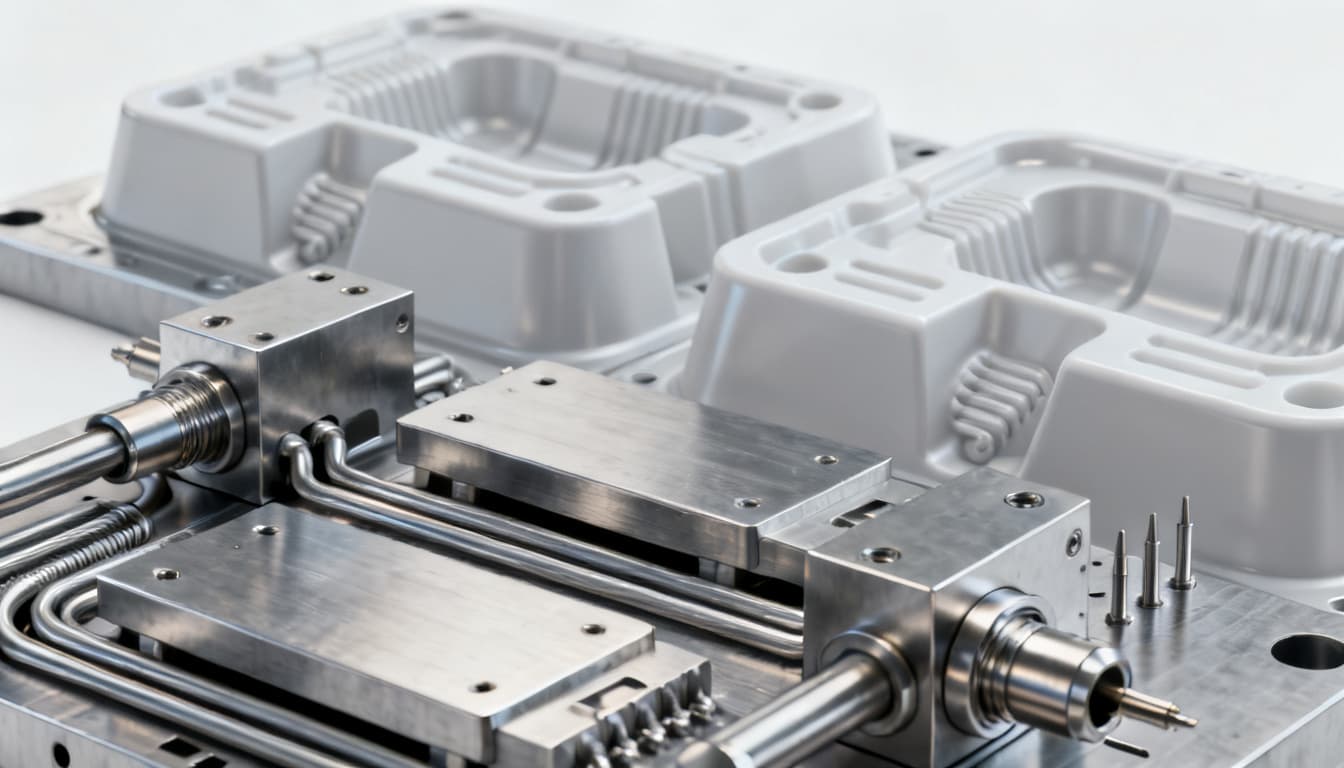
Mastering the Art of Injection Molding: Essential Techniques for Precision Manufacturing
Injection molding is a cornerstone of modern manufacturing, yet achieving precision and efficiency remains a challenge. Whether you're facing issues with inconsistent part quality or high scrap rates, mastering the essential techniques can be the key to overcoming these hurdles.
Mastering the Art of Injection Molding: Essential Techniques for Precision Manufacturing
Injection molding is a cornerstone of modern manufacturing, yet achieving precision and efficiency remains a challenge. Whether you're facing issues with inconsistent part quality or high scrap rates, mastering the essential techniques can be the key to overcoming these hurdles.
Understanding Material Selection
Choosing the right material is crucial for achieving the desired part properties and process efficiency. The selection process should consider factors such as mechanical properties, thermal stability, and cost.
Comparing Common Materials
| Material | Tensile Strength (MPa) | Melt Temperature (°C) | Cost ($/kg) |
|---|---|---|---|
| ABS | 40-60 | 220-260 | 1.5-2.0 |
| PP | 25-40 | 170-210 | 1.0-1.5 |
| PC | 60-80 | 260-310 | 2.5-3.0 |
Material Trade-offs
While ABS offers good impact resistance and surface finish, it may not perform well in high-temperature environments. PC, though more expensive, provides excellent mechanical properties and thermal stability, making it suitable for demanding applications.
Optimizing Process Parameters
Fine-tuning process parameters is essential for minimizing defects and improving cycle times. Key parameters include melt temperature, mold temperature, and injection pressure.
Key Injection Molding Parameters
| Parameter | Optimal Range | Impact on Quality |
|---|---|---|
| Melt Temperature | 220-280°C | Affects flow characteristics and molecular orientation |
| Mold Temperature | 50-90°C | Influences cooling rate and shrinkage |
| Injection Pressure | 500-1500 bar | Determines part density and surface finish |
Real-World Example: Reducing Warpage
In a recent project, we encountered warpage in a large flat part made from PP. By adjusting the mold temperature from 60°C to 75°C and increasing the packing pressure by 10%, we reduced warpage by 30%, achieving a more consistent product.
Design Considerations for Molded Parts
Effective design is crucial for manufacturability and performance. Considerations include wall thickness, draft angles, and rib design.
Design Guidelines
- Wall Thickness: Maintain 1-3mm for balanced strength and cooling efficiency.
- Draft Angles: Use 0.5-2° to facilitate part ejection.
- Rib Design: Keep rib thickness at 50% of the main wall to avoid sink marks.
Common Mistakes and Solutions
One frequent mistake is insufficient draft angles, leading to ejection issues. Ensuring adequate draft can significantly reduce cycle times and tool wear.
Troubleshooting Defects
Defects such as sink marks, voids, and flash can compromise part quality. Understanding their causes and solutions is vital for consistent production.
Defect Causes and Solutions
- Sink Marks: Often caused by thick sections. Solution: Optimize wall thickness and use uniform cooling.
- Voids: Caused by inadequate packing pressure. Solution: Increase packing pressure and time.
- Flash: Occurs due to excessive injection pressure. Solution: Adjust clamping force and reduce pressure.
Ensuring Quality Control
Implementing robust quality control measures is essential for maintaining product consistency and meeting industry standards.
Checklist for Quality Assurance
- Inspect incoming materials for consistency.
- Regularly calibrate equipment to ensure accuracy.
- Conduct dimensional checks on first-off samples.
- Implement statistical process control (SPC) for critical dimensions.
Adhering to ISO 9001 standards can further enhance your quality management system, ensuring customer satisfaction and regulatory compliance.
Practical Tip for Injection Molding
Always monitor and record process parameters for each production run. This data is invaluable for troubleshooting and optimizing future runs.
Conclusion
Mastering injection molding requires a deep understanding of materials, process parameters, and design principles. By applying these essential techniques, manufacturers can achieve precision, reduce defects, and enhance overall efficiency. For professional assistance, consider reaching out to a trusted service provider like Panda Molding for a free quote.