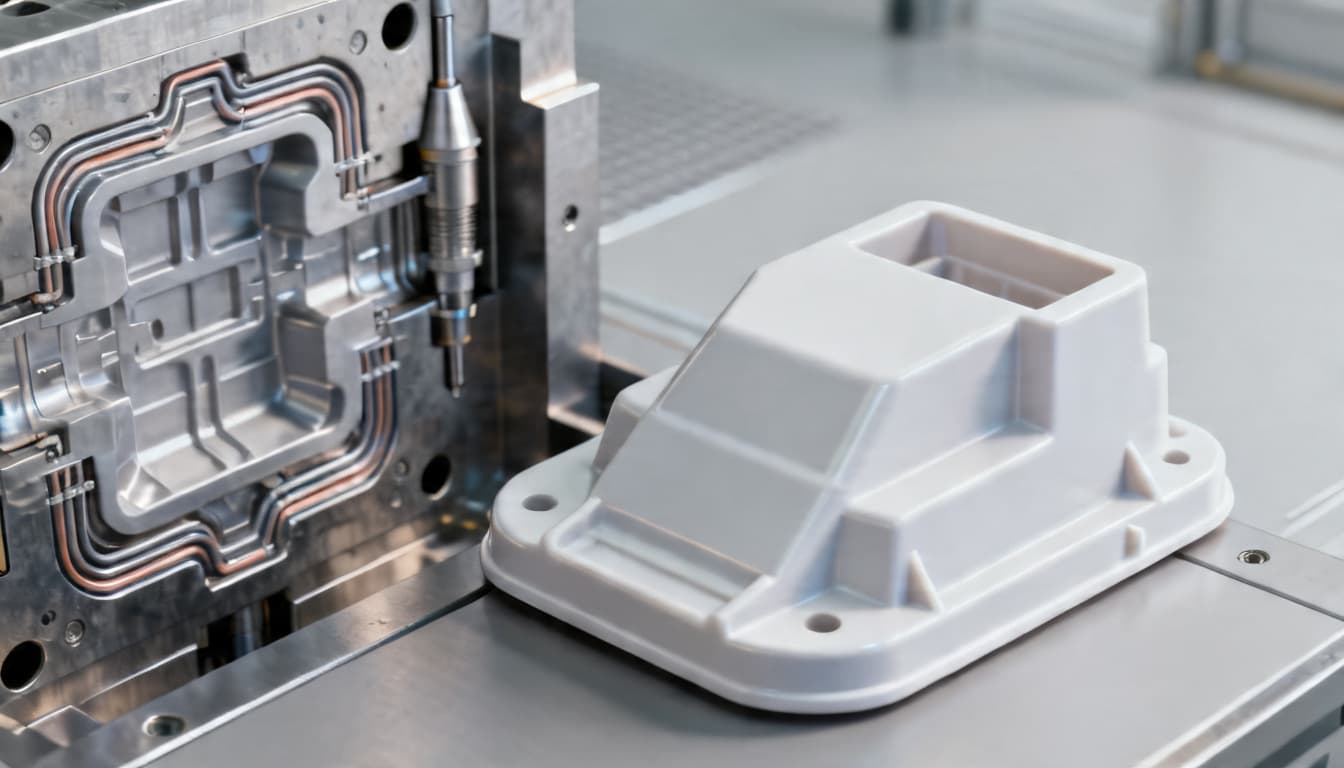
Maximizing Efficiency: Best Practices for Designing Parts for Injection Molding
Designing parts for injection molding presents a unique set of challenges often overlooked until production issues arise. From unexpected warping to excessive cycle times, the consequences of poor design can significantly impact efficiency and cost. This article provides expert insights into optimiz
Maximizing Efficiency: Best Practices for Designing Parts for Injection Molding
Designing parts for injection molding presents a unique set of challenges often overlooked until production issues arise. From unexpected warping to excessive cycle times, the consequences of poor design can significantly impact efficiency and cost. This article provides expert insights into optimizing part design to maximize efficiency in the injection molding process.
Understanding Material Selection
Choosing the right material is crucial for both the performance of the final product and the efficiency of the molding process. Each material has distinct properties that influence design considerations and processing parameters.
Comparing Material Properties
The table below outlines key properties for some common injection molding materials:
| Material | Melt Temperature (°C) | Mold Temperature (°C) | Shrinkage (%) | Typical Uses |
|---|---|---|---|---|
| ABS | 220-260 | 50-80 | 0.4-0.8 | Automotive, Electronics |
| PP | 200-250 | 10-50 | 1.0-2.5 | Packaging, Consumer Goods |
| PC | 270-320 | 80-120 | 0.5-0.7 | Optical Discs, Safety Glasses |
| PA66 | 260-290 | 80-120 | 1.0-2.0 | Gears, Bearings |
| POM | 190-230 | 80-100 | 2.0-2.5 | Mechanical Parts |
Material Trade-offs
While ABS offers excellent impact resistance, its higher shrinkage rates can lead to dimensional instability if not properly accounted for. Meanwhile, PP's lower melting temperature can reduce cycle times but may require additional considerations for part rigidity. Understanding these trade-offs is essential for optimizing both design and process efficiency.
Designing for Manufacturability
Designing for manufacturability involves creating parts that are easy to mold without sacrificing functionality or aesthetics.
Wall Thickness and Uniformity
Maintaining consistent wall thickness is critical. Variations can lead to defects such as sink marks and warping. A standard rule is to keep wall thickness between 1-3mm.
Incorporating Draft Angles
Draft angles facilitate the ejection of parts from the mold. A typical draft angle ranges from 0.5° to 2°, depending on the material and part complexity.
Optimizing Process Parameters
Fine-tuning process parameters can significantly enhance efficiency and reduce defect rates.
Injection Pressure and Speed
Injection pressure and speed must be optimized to ensure complete mold filling without causing flash or burn marks. Typical injection pressures range from 50 to 150 MPa, influenced by the part geometry and material viscosity.
Cycle Time Reduction
Cycle time is a critical factor in overall production efficiency. By optimizing cooling time and ensuring efficient mold design, cycle times can be minimized without compromising part quality.
| Parameter | Recommended Range | Impact on Efficiency |
|---|---|---|
| Cooling Time | 10-30 seconds | Shorter cooling times increase throughput |
| Injection Speed | 20-100 mm/s | Faster speeds reduce cycle time but risk defects |
Preventing Common Defects
Understanding and preventing common defects can save time and cost in the production process.
Addressing Warping and Shrinkage
Warping and shrinkage are often caused by uneven cooling or inconsistent wall thickness. Ensuring uniform cooling and maintaining consistent wall thickness are effective strategies to mitigate these issues.
Dealing with Sink Marks
Sink marks occur due to differential cooling rates and insufficient packing pressure. Increasing packing pressure and adjusting cooling times can help reduce the occurrence of sink marks.
Step-by-Step Design Checklist
- Select the appropriate material based on application requirements and processing capabilities.
- Design parts with uniform wall thickness to prevent warping and sink marks.
- Incorporate draft angles to facilitate easy ejection from the mold.
- Optimize injection pressure and speed to ensure complete mold filling.
- Minimize cycle time by optimizing cooling time and mold design.
- Conduct thorough testing to identify and address potential defects early in the design process.
Practical Tip: Always run a mold flow analysis during the design phase to predict potential issues like air traps and weld lines. This proactive approach can save significant time and cost during production.
Conclusion
Optimizing part design for injection molding is a multifaceted challenge that requires careful consideration of material properties, design principles, and process parameters. By adhering to best practices and leveraging industry standards, manufacturers can enhance efficiency, reduce costs, and improve the quality of their molded parts. For expert guidance and to get a free quote, reach out to our team at Panda Molding.