Optimization Design of Injection Mold Conformal Cooling Channel
In the intricate world of injection molding, achieving optimal cooling is a common challenge that can significantly impact cycle times and product quality. Conformal cooling channels offer a solution by enhancing heat transfer efficiency, yet their design and implementation require careful considera
Optimization Design of Injection Mold Conformal Cooling Channel
In the intricate world of injection molding, achieving optimal cooling is a common challenge that can significantly impact cycle times and product quality. Conformal cooling channels offer a solution by enhancing heat transfer efficiency, yet their design and implementation require careful consideration of several technical parameters.
Understanding Conformal Cooling Channels
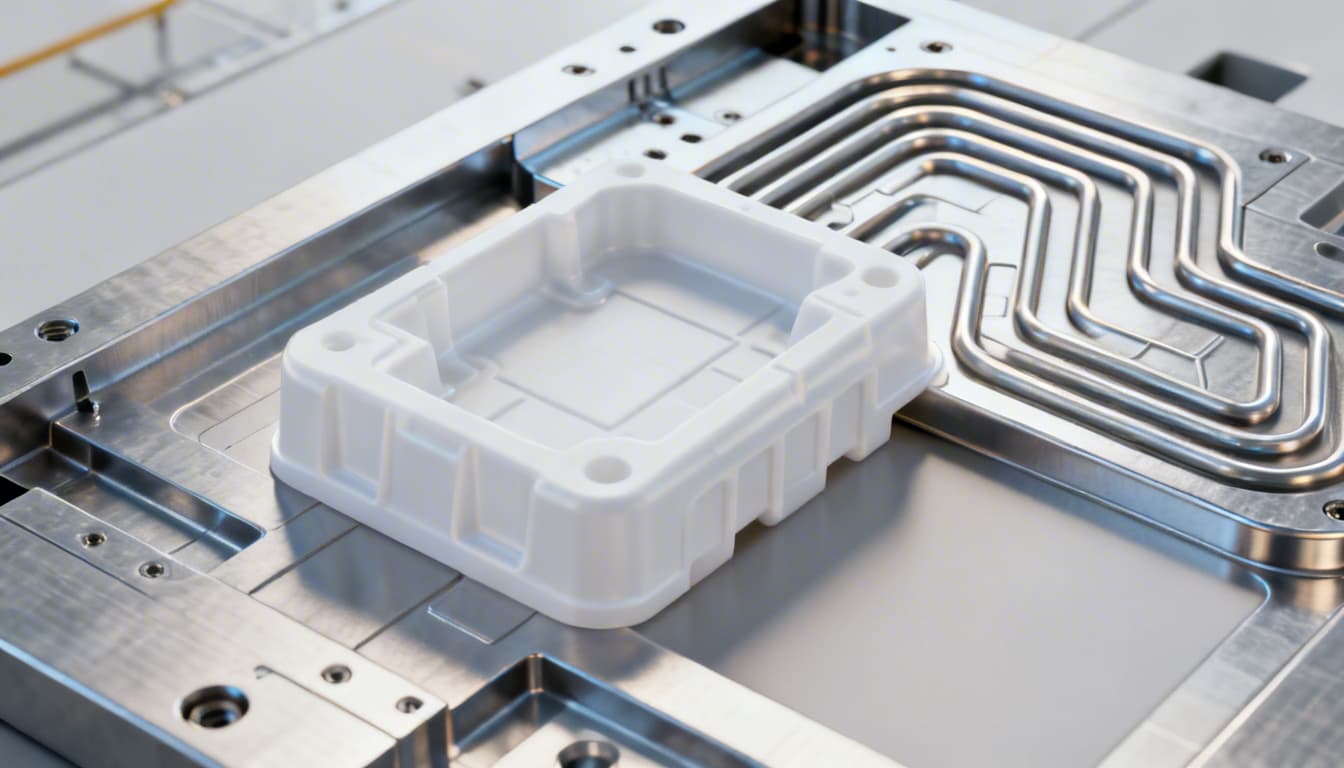
Conformal cooling channels are designed to closely follow the geometry of the mold cavity, providing uniform cooling and reducing cycle times. Unlike traditional straight-line channels, conformal channels can significantly enhance the thermal management of the mold.
Design Principles
When designing conformal cooling channels, consider the wall thickness, channel diameter, and distance from the cavity surface. A typical wall thickness ranges from 1-3mm, while the channel diameter should be optimized to ensure efficient flow without compromising the structural integrity of the mold.
Advantages and Challenges
Conformal cooling offers improved cooling efficiency and reduced warpage. However, it also presents challenges such as increased design complexity and higher initial costs. These trade-offs must be carefully evaluated during the design phase.
Material Considerations
Choosing the right material for both the mold and the molded part is crucial. Different materials have varying thermal conductivities, affecting the cooling rate and overall cycle time.
| Material | Thermal Conductivity (W/m·K) | Typical Applications |
|---|---|---|
| ABS | 0.17 | Automotive, Consumer Goods |
| PP | 0.22 | Packaging, Textiles |
| PC | 0.20 | Electrical, Medical Devices |
Process Parameters for Optimal Cooling
Optimizing process parameters is vital for maximizing the benefits of conformal cooling. Key parameters include melt temperature, mold temperature, and injection pressure.
Temperature Settings
Melt temperature and mold temperature must be carefully controlled. For example, ABS typically requires a melt temperature of 220-250°C and a mold temperature of 50-70°C. Deviating from these ranges can lead to defects such as sink marks or warpage.
Injection Pressure and Cycle Time
Injection pressure should be set to ensure complete cavity filling without excessive stress on the mold. Typical pressures range from 60 to 140 MPa. Cycle time optimization is crucial; conformal cooling can reduce cycle times by 20-30%, enhancing productivity.
Common Defects and Solutions
Even with conformal cooling, certain defects can occur. Understanding their causes and solutions is essential for maintaining product quality.
Warpage
Warpage is often caused by uneven cooling. Ensuring uniform channel distribution and maintaining consistent mold temperatures can mitigate this issue.
Sink Marks
Sink marks result from inadequate cooling or excessive packing pressure. Properly designed cooling channels and optimized pressure settings can help prevent these defects.
Design and Implementation Checklist
- Analyze part geometry and determine critical cooling areas.
- Select appropriate materials based on thermal conductivity and application requirements.
- Design conformal cooling channels to closely follow the cavity geometry.
- Optimize process parameters, including melt temperature and injection pressure.
- Validate the design with simulation software to predict cooling performance.
- Conduct trial runs and adjust parameters based on actual performance data.
Practical Tip: Use simulation tools like Moldflow or SolidWorks Plastics to simulate the cooling process and identify potential issues before physical mold production.
Conclusion
Optimizing the design of conformal cooling channels in injection molds is a complex yet rewarding process that can significantly enhance product quality and production efficiency. By carefully considering material properties, process parameters, and potential defects, manufacturers can leverage conformal cooling to achieve superior results. For expert assistance and a tailored solution, get a free quote from Panda Molding today.