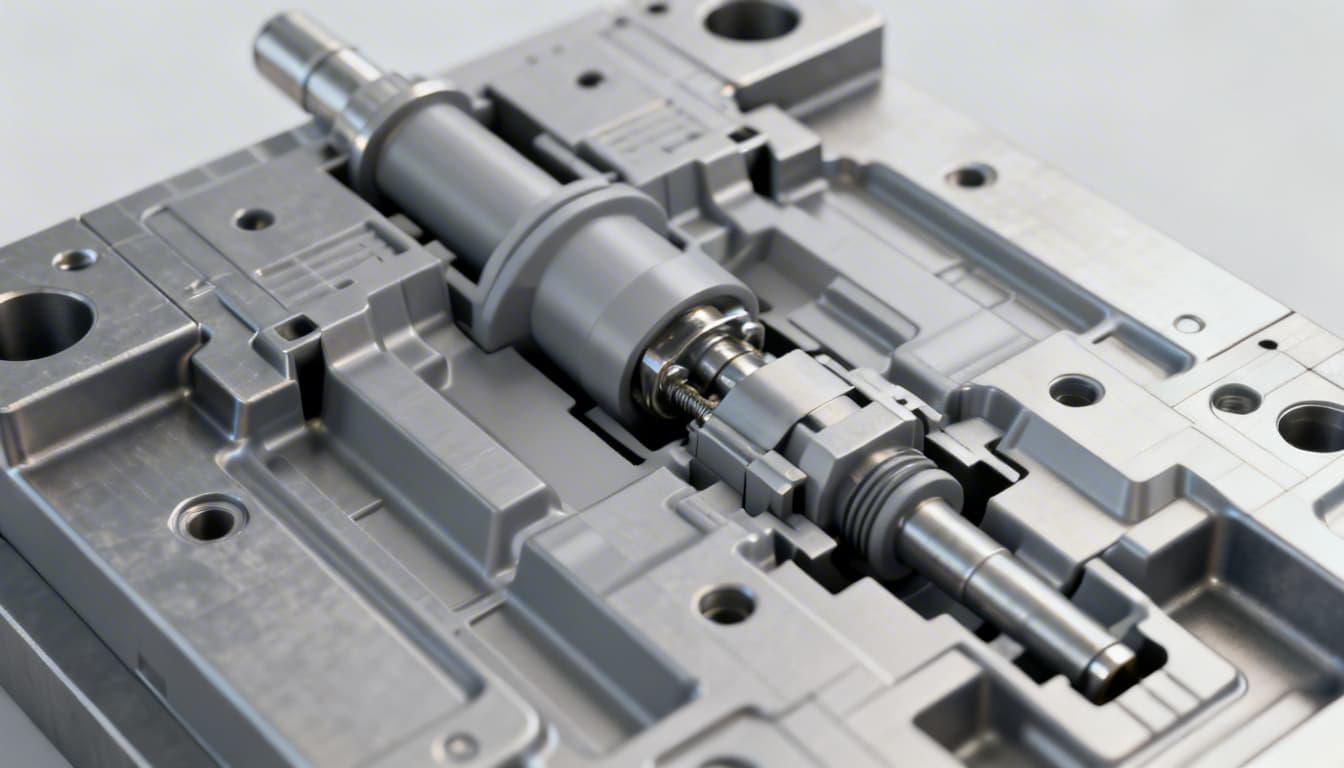
Optimize Your Production: Essential Techniques for Enhancing the Injection Molding Process
Injection molding is a cornerstone of modern manufacturing, offering versatility and efficiency. However, even seasoned manufacturers face challenges in optimizing their processes. Common issues such as cycle time inefficiencies, material waste, and quality inconsistencies can significantly impact p
Optimize Your Production: Essential Techniques for Enhancing the Injection Molding Process
Injection molding is a cornerstone of modern manufacturing, offering versatility and efficiency. However, even seasoned manufacturers face challenges in optimizing their processes. Common issues such as cycle time inefficiencies, material waste, and quality inconsistencies can significantly impact profitability. By implementing strategic improvements, you can enhance productivity and product quality.
Understanding Material Selection
The choice of material in injection molding is crucial and can affect everything from processing parameters to final product performance. Each material has unique properties that must be matched to the application requirements.
Comparing Common Materials
Here's a comparison of some widely used materials in injection molding:
| Material | Melt Temperature (°C) | Mold Temperature (°C) | Applications |
|---|---|---|---|
| ABS | 230-260 | 50-80 | Automotive, electronics |
| PP | 200-250 | 20-70 | Packaging, textiles |
| PC | 270-310 | 80-120 | Optical discs, eyewear |
| PA66 | 260-290 | 70-100 | Gears, bearings |
| POM | 190-230 | 80-110 | Precision parts |
Choosing the right material involves balancing factors such as mechanical properties, thermal stability, and cost. For instance, ABS is favored for its toughness and impact resistance, while PP is chosen for its chemical resistance and low density.
Optimizing Mold Design
An optimal mold design is critical for efficient production and high-quality parts. Key factors include wall thickness, draft angles, and gating systems.
Design Rules to Follow
- Wall Thickness: Maintain uniform thickness between 1-3 mm to prevent warping and ensure consistent cooling.
- Draft Angles: Apply draft angles of 0.5-2° to facilitate easy ejection of parts from the mold.
- Gating Systems: Use appropriate gating methods (e.g., edge, fan, or pin gates) to minimize stress and optimize flow.
Common Mistakes and Solutions
One frequent mistake is inadequate venting, which can lead to burn marks and voids. Ensuring proper venting with channels of 0.025-0.05 mm depth can alleviate these issues. Additionally, overcomplicated designs can cause unnecessary stress; simplicity in design often leads to better performance and reduced cycle times.
Improving Process Parameters
Fine-tuning process parameters is essential for maximizing efficiency and product quality. Key parameters include injection pressure, cycle time, and cooling time.
Key Process Parameters
| Parameter | Recommended Range | Impact on Production |
|---|---|---|
| Injection Pressure | 50-150 MPa | Affects fill time and part integrity |
| Cycle Time | 30-60 seconds | Determines production rate |
| Cooling Time | 40-70% of total cycle time | Impacts dimensional accuracy |
Adjusting these parameters requires a careful balance. For instance, increasing injection pressure can improve fill but may also cause flash if excessive. Similarly, reducing cycle time can boost throughput but may lead to incomplete cooling, resulting in warping.
Implementing Quality Control Measures
Ensuring consistent quality is paramount. Implementing robust quality control measures can help identify issues early and maintain high standards.
Effective Quality Control Strategies
- Conduct regular mold maintenance to prevent defects caused by wear.
- Utilize real-time monitoring systems to track process parameters and detect deviations.
- Perform regular inspections and tests on finished products to ensure compliance with specifications.
Practical Tip: Use statistical process control (SPC) to analyze data trends and identify variations that could indicate potential problems.
Balancing Cost and Efficiency
While optimizing production, it's crucial to balance cost with efficiency. Consider the following strategies to achieve this balance:
Cost-Effective Practices
- Invest in energy-efficient machinery to reduce operational costs.
- Implement lean manufacturing principles to minimize waste.
- Utilize recycled materials where feasible to cut material costs.
These strategies can significantly reduce production costs without compromising quality. However, it's essential to evaluate the trade-offs, such as the potential impact of recycled materials on product performance.
Conclusion
Optimizing the injection molding process requires a comprehensive approach, considering materials, design, parameters, and quality control. By implementing these essential techniques, manufacturers can enhance production efficiency, reduce costs, and improve product quality. For personalized advice and to explore how these strategies can benefit your operations, get a free quote from Panda Molding today.