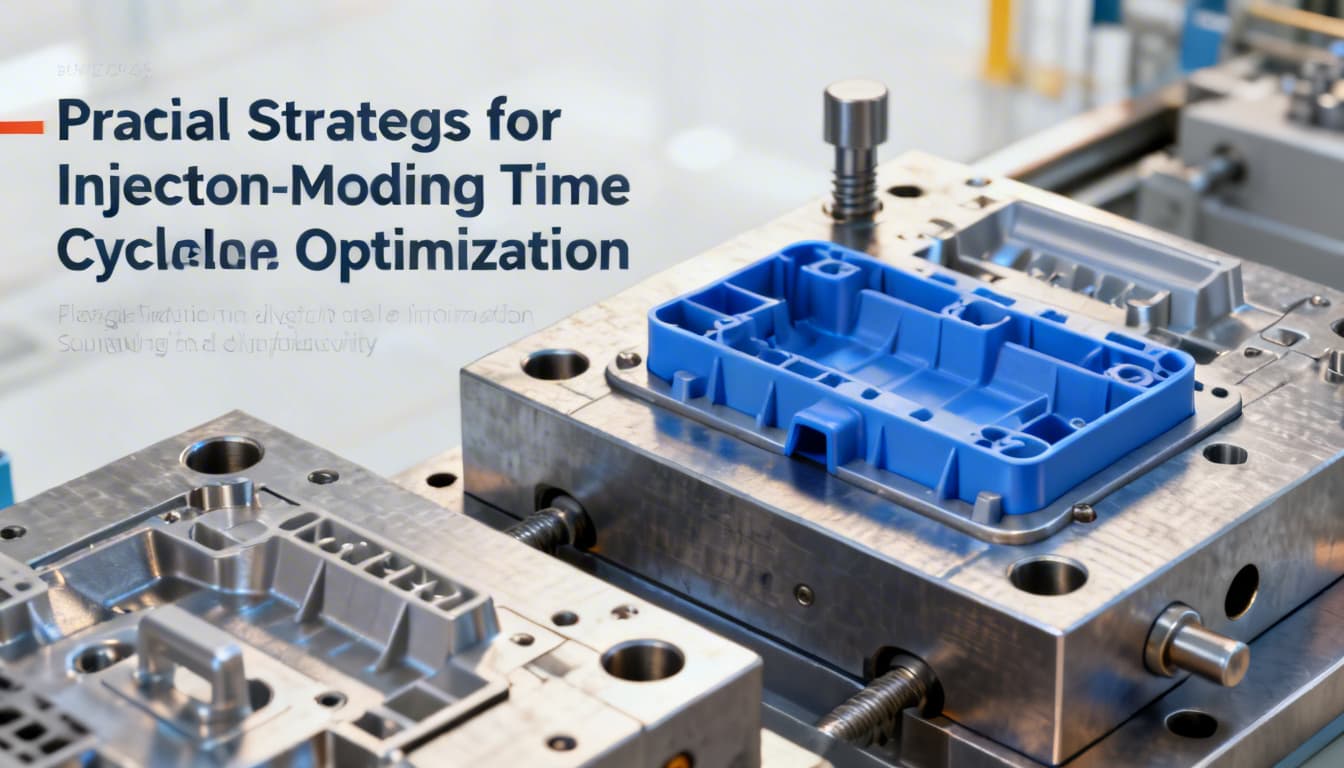
Practical Strategies for Injection Molding Cycle Time Optimization: Boosting Productivity
Efficient cycle time optimization in injection molding is crucial for enhancing productivity and reducing costs. Many manufacturers face challenges with longer cycle times, which can lead to increased operational expenses and reduced production rates. This article explores practical strategies to op
Practical Strategies for Injection Molding Cycle Time Optimization: Boosting Productivity
Efficient cycle time optimization in injection molding is crucial for enhancing productivity and reducing costs. Many manufacturers face challenges with longer cycle times, which can lead to increased operational expenses and reduced production rates. This article explores practical strategies to optimize cycle times without compromising the quality of molded parts.
Understanding Injection Molding Cycle Time Components
Cycle time in injection molding is the total time required to complete one production cycle, consisting of several phases: injection, cooling, and ejection. Each phase has its unique parameters and contributes to the overall efficiency of the process.
Injection Phase
The injection phase involves filling the mold cavity with molten plastic. Key parameters include injection pressure and melt temperature. For instance, typical melt temperatures for ABS range from 220°C to 250°C, while polypropylene (PP) requires 200°C to 250°C.
Cooling Phase
This phase is critical for solidifying the plastic. Cooling time is influenced by the material's thermal conductivity and the mold's cooling efficiency. For example, polycarbonate (PC) generally requires longer cooling times due to its lower thermal conductivity compared to polypropylene.
Ejection Phase
During ejection, the molded part is removed from the mold. Adequate cooling is essential to prevent part deformation. Ejection time can be minimized by optimizing mold design, such as incorporating appropriate draft angles of 0.5° to 2°.
Material Selection and Its Impact on Cycle Time
Choosing the right material is crucial for optimizing cycle time. Different materials have varying thermal properties, affecting cooling rates and overall cycle efficiency.
| Material | Melt Temperature (°C) | Cooling Time (s) | Typical Applications |
|---|---|---|---|
| ABS | 220-250 | 20-30 | Automotive, Electronics |
| PP | 200-250 | 15-25 | Packaging, Consumer Goods |
| PC | 270-310 | 30-40 | Optical Discs, Lighting |
| PA66 | 260-290 | 20-35 | Gears, Bearings |
Optimizing Mold Design
Effective mold design is pivotal in reducing cycle time. Here are some strategies to consider:
Wall Thickness and Uniformity
Maintaining a consistent wall thickness between 1-3mm can significantly enhance cooling efficiency and reduce cycle time. Thicker sections require longer cooling periods, which can be minimized by designing for uniform wall thickness.
Incorporating Efficient Cooling Channels
Designing efficient cooling channels can drastically reduce cooling time. Spiral or conformal cooling channels are more effective than traditional straight channels, as they provide more uniform cooling.
Process Parameter Optimization
Adjusting process parameters can lead to significant cycle time reductions. Here are some key parameters to optimize:
Injection Pressure
Using the optimal injection pressure ensures complete mold filling without excessive packing time. For instance, pressures between 60 and 140 MPa are common for materials like ABS and PP.
Mold Temperature
Maintaining the correct mold temperature is essential for part quality and cycle time. For example, a mold temperature of 40°C to 80°C is typical for ABS, while PP may require 20°C to 60°C.
Quality Control and Defect Prevention
Minimizing defects not only ensures product quality but also reduces cycle time by eliminating the need for rework. Common defects include warpage and sink marks, often caused by improper cooling and inconsistent wall thickness.
| Defect | Cause | Solution |
|---|---|---|
| Warpage | Uneven cooling | Optimize cooling channel design |
| Sink Marks | Thick wall sections | Maintain uniform wall thickness |
Step-by-Step Process for Cycle Time Optimization
- Analyze current cycle time components: injection, cooling, and ejection.
- Review material selection for optimal thermal properties.
- Evaluate mold design for uniform wall thickness and efficient cooling channels.
- Adjust process parameters: injection pressure and mold temperature.
- Implement quality control measures to prevent defects.
- Continuously monitor and refine the process based on production data.
Practical Tip: Regularly conduct mold flow analysis to identify potential bottlenecks and areas for improvement. This proactive approach can lead to significant cycle time reductions and improved part quality.
Conclusion
Optimizing cycle time in injection molding is a multifaceted approach that involves careful consideration of materials, mold design, and process parameters. By implementing the strategies discussed, manufacturers can enhance productivity, reduce costs, and maintain high-quality standards. For expert assistance and a tailored solution, get a free quote from Panda Molding today.