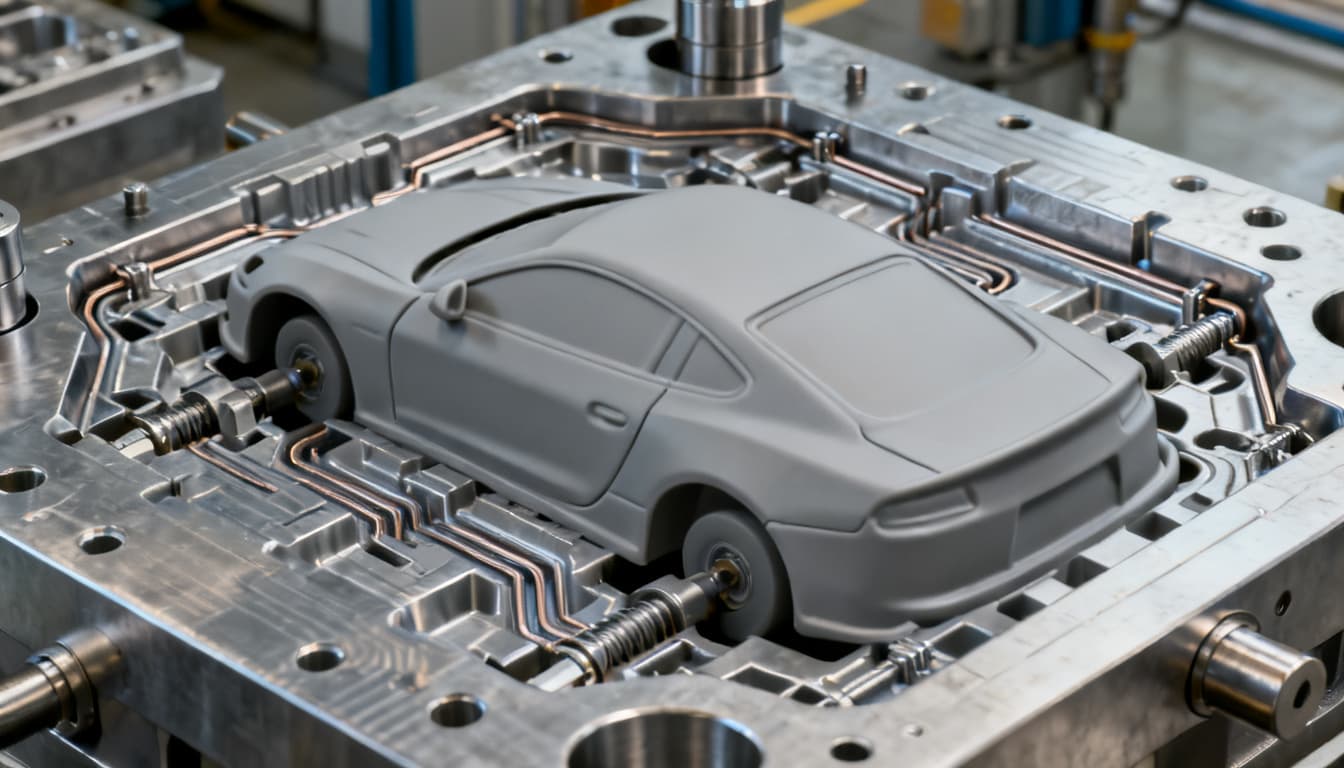
Precision and Performance: Automotive Injection Molding Techniques for 2026
As the automotive industry accelerates towards greater precision and efficiency, the role of injection molding in crafting high-performance components becomes increasingly critical. Meeting the demands of 2026 requires an understanding of advanced techniques, careful material selection, and precise
Precision and Performance: Automotive Injection Molding Techniques for 2026
As the automotive industry accelerates towards greater precision and efficiency, the role of injection molding in crafting high-performance components becomes increasingly critical. Meeting the demands of 2026 requires an understanding of advanced techniques, careful material selection, and precise control of molding parameters. Let's explore how injection molding can drive innovation in automotive manufacturing.
Understanding Injection Molding Parameters
Precision in injection molding is heavily influenced by the control of key parameters such as melt temperature, mold temperature, injection pressure, and cycle time. Each of these factors must be optimized to ensure high-quality, defect-free parts.
Melt Temperature
The melt temperature is crucial for proper flow and filling of the mold. For example, ABS typically requires a melt temperature between 220°C and 260°C. Deviating from these temperatures can lead to issues like short shots or burn marks.
Mold Temperature
Mold temperature impacts the cooling rate and dimensional stability of the part. For materials like Polycarbonate (PC), maintaining a mold temperature between 80°C and 120°C is essential to avoid warping and ensure a smooth surface finish.
Injection Pressure
Injection pressure must be carefully controlled to avoid defects such as flashing or sink marks. A typical pressure range for Polypropylene (PP) is 60 to 120 MPa, providing the necessary force to fill complex mold geometries.
Cycle Time
Optimizing cycle time is crucial for productivity. However, reducing it excessively can compromise part quality. For instance, a cycle time of 30 to 60 seconds is common for automotive components, balancing efficiency and quality.
Material Selection for Automotive Applications
Choosing the right material is vital for achieving the desired performance characteristics. Here's a comparison of common materials used in automotive injection molding:
| Material | Properties | Applications |
|---|---|---|
| ABS | High impact resistance, good machinability | Dashboard components, interior trim |
| PA66 | High strength, excellent thermal resistance | Engine covers, under-hood components |
| PC | High transparency, good dimensional stability | Headlamp lenses, instrument panels |
Addressing Common Defects
Injection molding defects can significantly impact the performance and aesthetics of automotive components. Understanding their causes and solutions is essential for quality assurance.
Short Shots
Short shots occur when the mold cavity is not completely filled. Increasing the injection pressure or adjusting the melt temperature within the recommended range can resolve this issue.
Warping
Warping is often caused by uneven cooling. Ensuring uniform mold temperature and optimizing cooling time are effective strategies to mitigate warping.
Flash
Flash is excess material that escapes from the mold cavity. This can be minimized by adjusting clamping force and ensuring proper mold alignment.
Design Considerations for Automotive Parts
Designing for injection molding involves adhering to specific guidelines to ensure manufacturability and performance.
Wall Thickness
Maintaining a uniform wall thickness between 1-3mm is crucial to prevent issues such as sink marks and ensure structural integrity.
Draft Angles
Incorporating draft angles of 0.5-2° facilitates easy ejection of parts from the mold, reducing the risk of damage.
Step-by-Step Process for Optimizing Mold Design
- Analyze part geometry and identify critical features.
- Select appropriate material based on application requirements.
- Determine optimal wall thickness and incorporate draft angles.
- Design gating system to ensure uniform flow and filling.
- Simulate mold flow to identify potential defects and adjust design accordingly.
- Validate design with prototype testing and refine as necessary.
Cost Considerations in Automotive Injection Molding
Understanding the cost implications of material choice, tooling, and production volume is essential for budgeting and planning.
| Cost Factor | Impact on Budget |
|---|---|
| Material Selection | Premium materials like PC can increase costs but offer superior performance. |
| Tooling | Complex molds with tight tolerances may have higher initial costs but enable precision manufacturing. |
| Production Volume | Higher volumes can reduce per-unit costs due to economies of scale. |
Practical Tip: Regularly calibrate molding equipment and conduct preventive maintenance to avoid unexpected downtime and ensure consistent part quality.
Conclusion
The future of automotive injection molding lies in precision and performance. By mastering material selection, optimizing molding parameters, and adhering to design guidelines, manufacturers can produce high-quality components that meet the evolving demands of the automotive industry. For expert assistance with your injection molding needs, get a free quote from Panda Molding today.