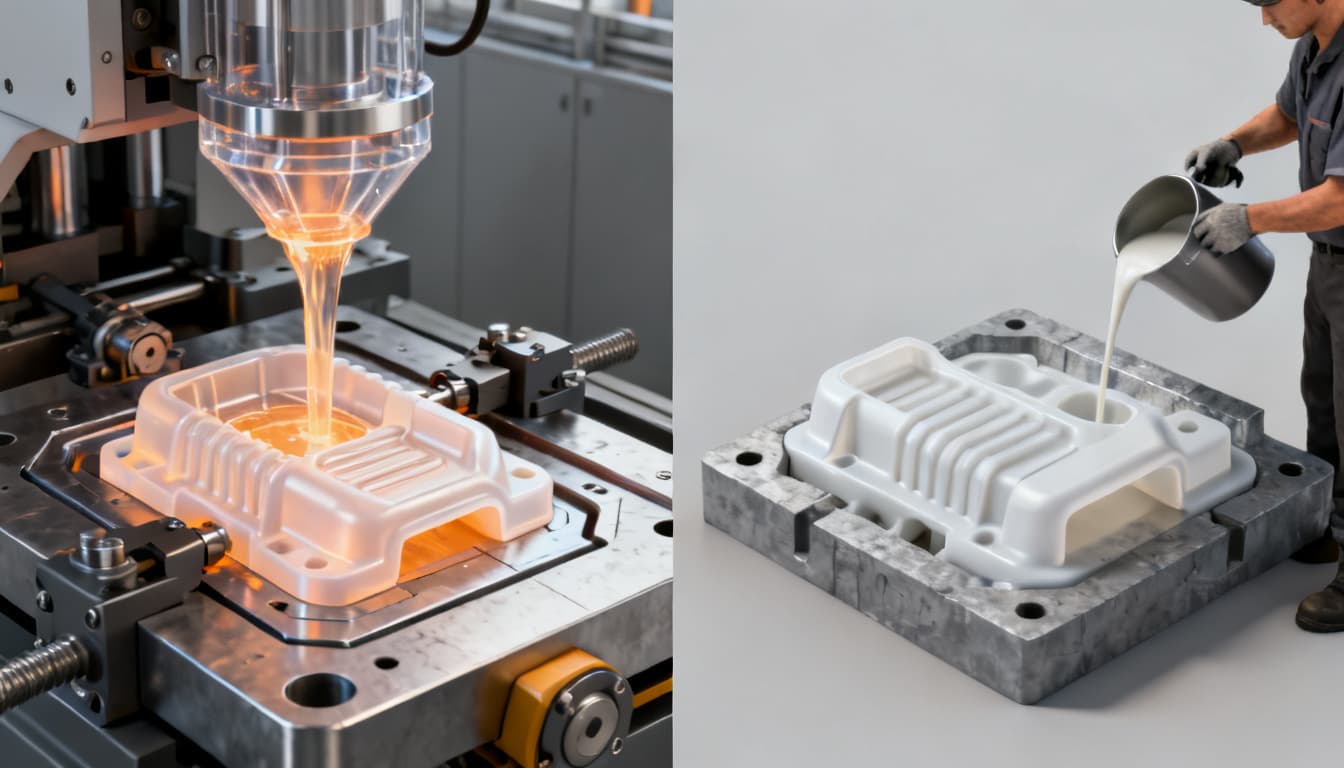
Shot Injection Molding vs. Traditional Methods: Which is More Efficient for Your Project?
Choosing the right injection molding method can significantly impact the efficiency, cost, and quality of your manufacturing project. With various options available, understanding the nuances of shot injection molding compared to traditional methods is crucial for making an informed decision.
Shot Injection Molding vs. Traditional Methods: Which is More Efficient for Your Project?
Choosing the right injection molding method can significantly impact the efficiency, cost, and quality of your manufacturing project. With various options available, understanding the nuances of shot injection molding compared to traditional methods is crucial for making an informed decision.
Understanding Shot Injection Molding
Shot injection molding, a subset of injection molding, involves injecting a pre-determined volume of molten plastic into a mold cavity. This method is particularly beneficial for projects requiring high precision and consistency.
Technical Parameters
Key parameters in shot injection molding include:
- Melt Temperature: Typically ranges from 180°C to 280°C depending on the material.
- Mold Temperature: Generally maintained between 20°C and 80°C.
- Injection Pressure: Commonly set between 50 MPa to 120 MPa.
- Cycle Time: Usually ranges from 15 seconds to 120 seconds per cycle.
Comparing Materials: Shot Injection vs. Traditional Methods
Material selection plays a critical role in determining the efficiency of the injection molding process. Below is a comparison of common materials used in both methods.
| Material | Shot Injection Molding Suitability | Traditional Molding Suitability |
|---|---|---|
| ABS | High precision, suitable for complex geometries | Good for larger parts, less precision needed |
| PP | Excellent for lightweight components | Cost-effective for high-volume production |
| PC | Ideal for transparent parts | Useful for robust, impact-resistant parts |
| PA66 | Great for high mechanical strength | Suitable for automotive parts |
Process Efficiency: Cycle Time and Quality
Cycle time and part quality are pivotal factors in evaluating the efficiency of shot injection molding versus traditional methods.
Cycle Time
Shot injection molding often achieves shorter cycle times due to precise control over the shot volume and consistent material flow. This is especially advantageous for high-volume production runs.
Quality Control
With shot injection molding, achieving uniformity and reducing defects like warping and sink marks is easier due to precise parameter control. Traditional methods may require additional quality checks and adjustments.
Cost Considerations
Understanding the cost implications of each method is crucial for project planning.
| Cost Factor | Shot Injection Molding | Traditional Molding |
|---|---|---|
| Tooling Cost | Higher initial investment | Lower initial investment |
| Material Waste | Minimal waste | Higher material waste |
| Operational Cost | Lower due to efficiency | Higher due to longer cycle times |
Common Mistakes and Solutions
In my 15+ years of experience, I’ve encountered several common pitfalls in injection molding processes.
Defects and Their Causes
- Warping: Often caused by uneven cooling. Solution: Ensure uniform mold temperature and cooling rate.
- Flash: Occurs when material escapes the mold cavity. Solution: Check mold clamping force and ensure proper mold maintenance.
- Sink Marks: Result from insufficient packing pressure. Solution: Increase holding pressure and time.
Checklist for Optimal Results
- Verify material compatibility and specifications.
- Calibrate machine settings according to material needs.
- Regularly maintain molds and machinery.
- Implement consistent quality checks throughout production.
Practical Tip: Always prototype with different materials and settings before full-scale production to identify potential issues early.
Conclusion
Choosing between shot injection molding and traditional methods depends on project requirements, including precision, volume, and budget. Shot injection molding offers advantages in precision and efficiency, making it ideal for complex, high-volume projects. However, traditional methods can be more cost-effective for simpler, larger parts. For tailored advice and to get a free quote, consult with industry experts who can guide you based on your specific needs.