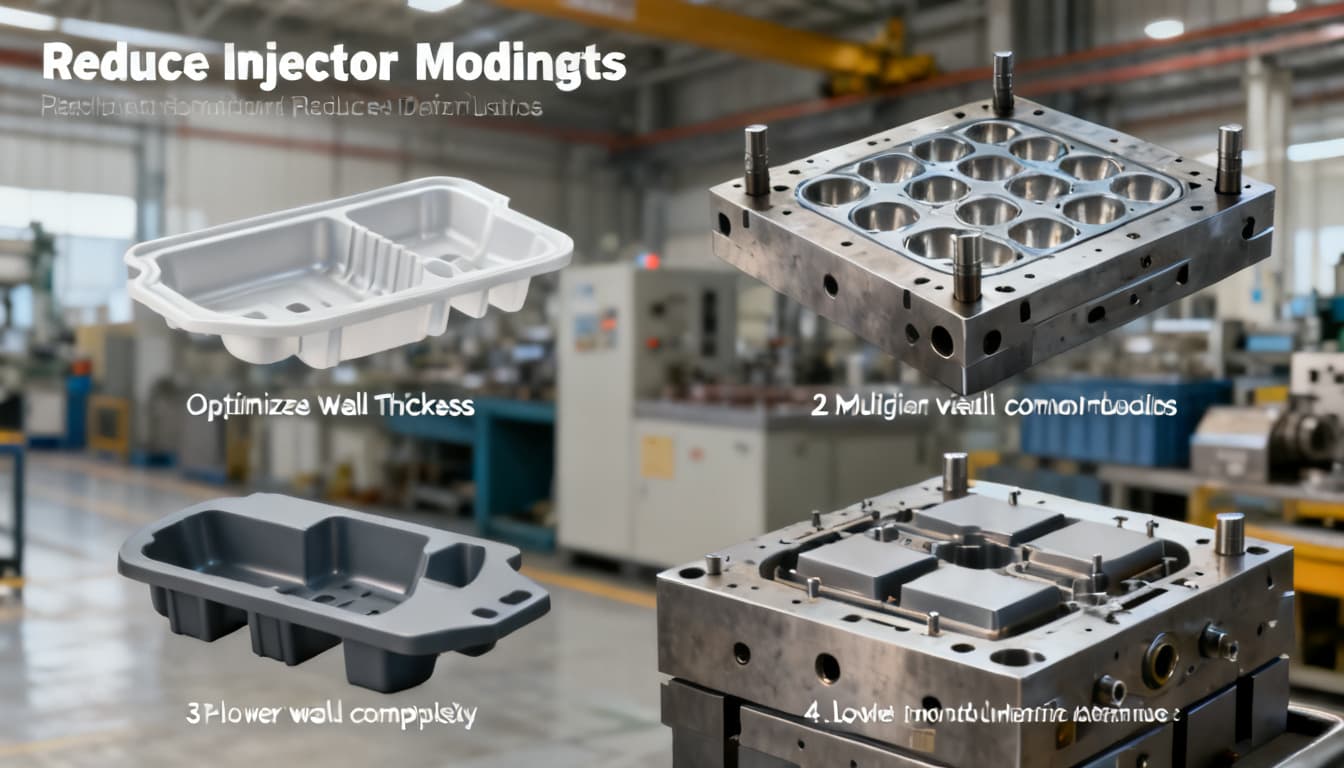
Smart Budgeting: Four Effective Strategies to Reduce Injection Molding Costs
Injection molding is a cost-effective manufacturing process, but without careful planning, costs can quickly escalate. As a seasoned injection molding engineer, I've seen how strategic budgeting can significantly reduce expenses while maintaining quality. Let's explore four effective strategies to o
Smart Budgeting: Four Effective Strategies to Reduce Injection Molding Costs
Injection molding is a cost-effective manufacturing process, but without careful planning, costs can quickly escalate. As a seasoned injection molding engineer, I've seen how strategic budgeting can significantly reduce expenses while maintaining quality. Let's explore four effective strategies to optimize your injection molding costs.
Optimize Material Selection
Choosing the right material is crucial for balancing cost and performance. Material costs can account for 50-70% of the total production cost. Therefore, selecting a cost-effective material without compromising quality is essential.
Compare Material Costs and Properties
Common materials like ABS, PP, and PC offer different benefits and price points. ABS is known for its toughness and impact resistance, while PP is lightweight and cost-effective. PC offers excellent clarity and thermal resistance but at a higher cost.
| Material | Cost ($/kg) | Density (g/cm³) | Tensile Strength (MPa) |
|---|---|---|---|
| ABS | 2.50 | 1.04 | 45 |
| PP | 1.80 | 0.90 | 30 |
| PC | 4.00 | 1.20 | 65 |
Use Recycled Materials
Incorporating recycled materials can reduce costs and enhance sustainability. For example, using recycled PP can save up to 20% on material costs. However, ensure the material's properties meet your product's requirements to avoid compromising quality.
Optimize Design for Manufacturability (DFM)
Design plays a pivotal role in manufacturing efficiency. By optimizing your design, you can reduce cycle times and material usage, leading to cost savings.
Implement Design Rules
Adhering to industry design rules can help minimize defects and improve manufacturability. For instance, maintaining uniform wall thickness between 1-3mm and incorporating draft angles of 0.5-2° can reduce the likelihood of warping and sink marks.
Utilize Simulation Software
Simulation software can predict potential issues before production, allowing for design adjustments that save time and resources. By simulating the injection process, you can identify optimal gate locations, cooling times, and more.
Streamline the Manufacturing Process
Efficient manufacturing processes reduce cycle times and energy consumption, directly impacting costs.
Optimize Cycle Times
Reducing cycle time is a critical factor in cost reduction. For example, optimizing the cooling phase can significantly decrease cycle time. Aim for a cycle time of 30-60 seconds, depending on the part complexity and material.
Maintain Equipment Regularly
Regular maintenance of injection molding machines ensures optimal performance and prevents costly downtime. Implement a maintenance schedule that includes checking hydraulic systems, calibrating sensors, and inspecting mold surfaces.
Leverage Supplier Relationships
Building strong relationships with suppliers can lead to cost advantages through bulk purchasing and negotiated terms.
Negotiate Material Costs
Engage with suppliers to negotiate better rates, especially when purchasing in bulk. Establishing long-term partnerships can also lead to preferential pricing and priority service.
Collaborate on Product Development
Involving suppliers early in the product development phase can result in valuable insights that reduce material waste and improve design efficiency.
Practical Tip: Conduct a regular cost analysis of your injection molding process. Identify areas with the highest expenses and focus on optimizing those aspects first.
Step-by-Step Process: Implementing Cost Reduction Strategies
- Conduct a thorough analysis of your current material usage and costs.
- Review your product designs for manufacturability improvements.
- Implement simulation tools to refine designs and processes.
- Schedule regular maintenance for all injection molding equipment.
- Engage with suppliers to negotiate better material pricing.
Conclusion
Reducing injection molding costs requires a strategic approach that encompasses material selection, design optimization, process efficiency, and supplier collaboration. By implementing these strategies, you can achieve significant cost savings while maintaining the quality and performance of your products. For tailored advice and a detailed cost analysis, get a free quote from our experts at Panda Molding.