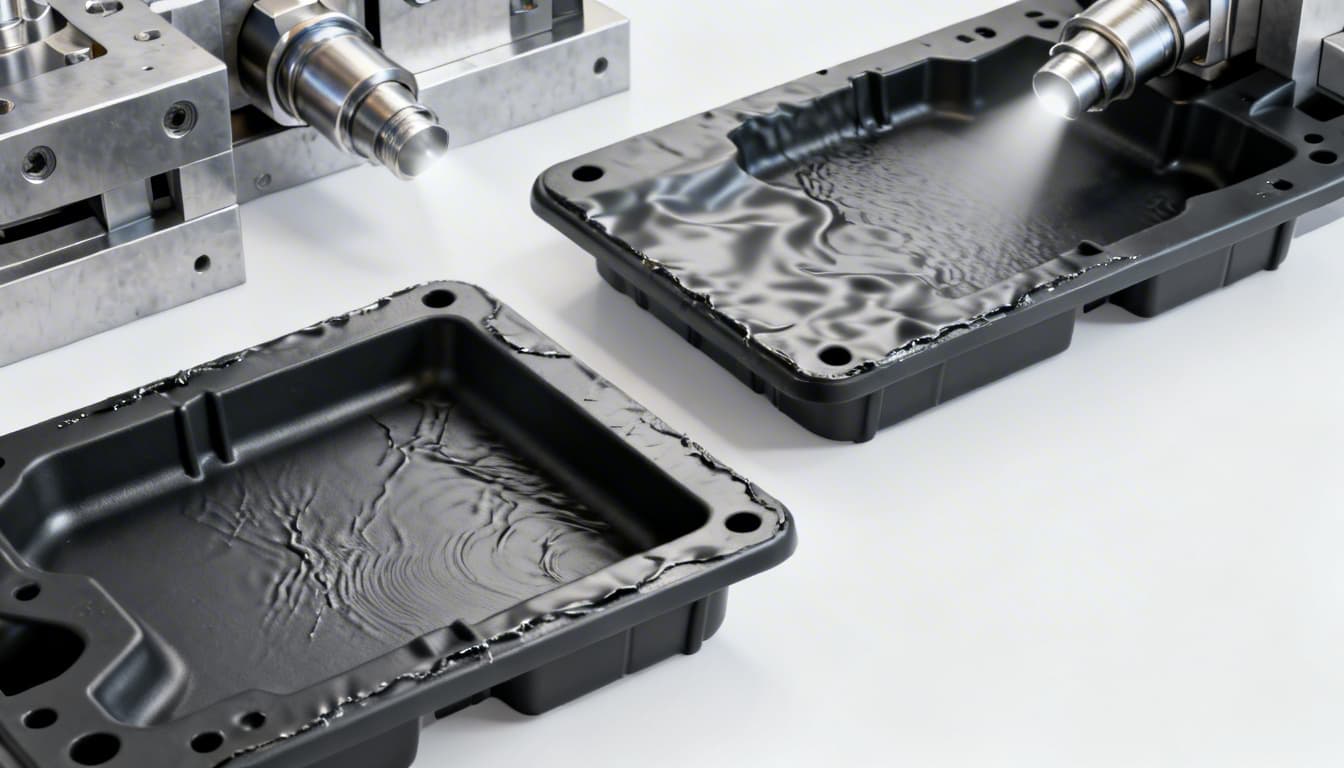
Tackling Common Injection Molding Defects: Effective Remedies for Quality Assurance
Injection molding is a cornerstone of modern manufacturing, yet it is fraught with potential defects that can compromise product quality. Whether you're dealing with warping, sink marks, or short shots, understanding the root causes and implementing effective solutions is crucial for quality assuran
Tackling Common Injection Molding Defects: Effective Remedies for Quality Assurance
Injection molding is a cornerstone of modern manufacturing, yet it is fraught with potential defects that can compromise product quality. Whether you're dealing with warping, sink marks, or short shots, understanding the root causes and implementing effective solutions is crucial for quality assurance.
Understanding Warping and Its Remedies
Warping occurs when different sections of a molded part cool and contract at different rates, leading to deformation. This can be particularly problematic in materials with high shrinkage rates such as polypropylene (PP) and nylon (PA66).
Causes of Warping
Warping is typically caused by uneven cooling, material selection, and part design. For instance, thick sections cool slower than thin sections, leading to differential shrinkage.
Solutions to Prevent Warping
- Optimize Cooling Time: Ensure uniform cooling by maintaining consistent mold temperatures. For instance, PP typically requires a mold temperature of 30-40°C.
- Design Modifications: Use uniform wall thickness (1-3mm) and add ribs to enhance structural integrity.
- Material Selection: Consider materials with lower shrinkage rates, such as ABS or PC. Refer to the table below for a comparison.
| Material | Shrinkage Rate (%) | Typical Applications |
|---|---|---|
| PP | 1.5 - 2.5 | Household items, automotive parts |
| ABS | 0.4 - 0.7 | Consumer electronics, toys |
| PC | 0.5 - 0.7 | Optical discs, eyewear lenses |
Addressing Sink Marks
Sink marks are depressions on the surface of a molded part, often occurring in thicker sections where material shrinkage is more pronounced.
Causes of Sink Marks
These defects are typically due to inadequate packing pressure, prolonged cooling times, or poor part design.
Remedies for Sink Marks
- Increase Packing Pressure: Adjust the packing pressure to ensure adequate material fills the mold. A typical packing pressure ranges from 50-100 MPa.
- Optimize Cooling Time: Extend cooling times to allow for more uniform solidification.
- Design Considerations: Use design techniques such as uniform wall thickness and strategic placement of gates.
Solving Short Shots
Short shots occur when the mold cavity is not completely filled, leading to incomplete parts. This defect is often seen in high-viscosity materials like polycarbonate (PC).
Causes of Short Shots
Short shots can result from insufficient injection pressure, inadequate material temperature, or improper venting.
Effective Solutions for Short Shots
- Increase Injection Pressure: Ensure sufficient pressure to fill the mold, typically between 80-140 MPa.
- Adjust Melt Temperature: Increase the melt temperature to improve flow. For PC, a melt temperature of 260-320°C is recommended.
- Improve Venting: Ensure proper venting to allow air to escape, preventing incomplete fills.
Dealing with Flash
Flash occurs when excess material seeps out of the mold cavity, creating thin protrusions along the parting line.
Causes of Flash
Common causes include excessive injection pressure, worn mold components, or improper clamping force.
Remedies for Flash
- Reduce Injection Pressure: Lower the pressure to prevent excess material from escaping.
- Maintain Mold Integrity: Regularly inspect and maintain mold components to ensure they are in good condition.
- Optimize Clamping Force: Ensure adequate clamping force to keep the mold closed during injection. The ideal clamping force is calculated based on the projected area and a safety factor.
Practical Tips: Regularly calibrate your injection molding machine and conduct mold flow analysis to predict potential defects. This proactive approach can help minimize production downtime and improve part quality.
Conclusion
Injection molding defects can be a significant challenge, but with a thorough understanding of their causes and remedies, manufacturers can ensure high-quality outputs. By optimizing process parameters, selecting appropriate materials, and adhering to design guidelines, you can significantly reduce the occurrence of defects. For a comprehensive solution tailored to your needs, consider reaching out to a professional service like Panda Molding for a free quote.