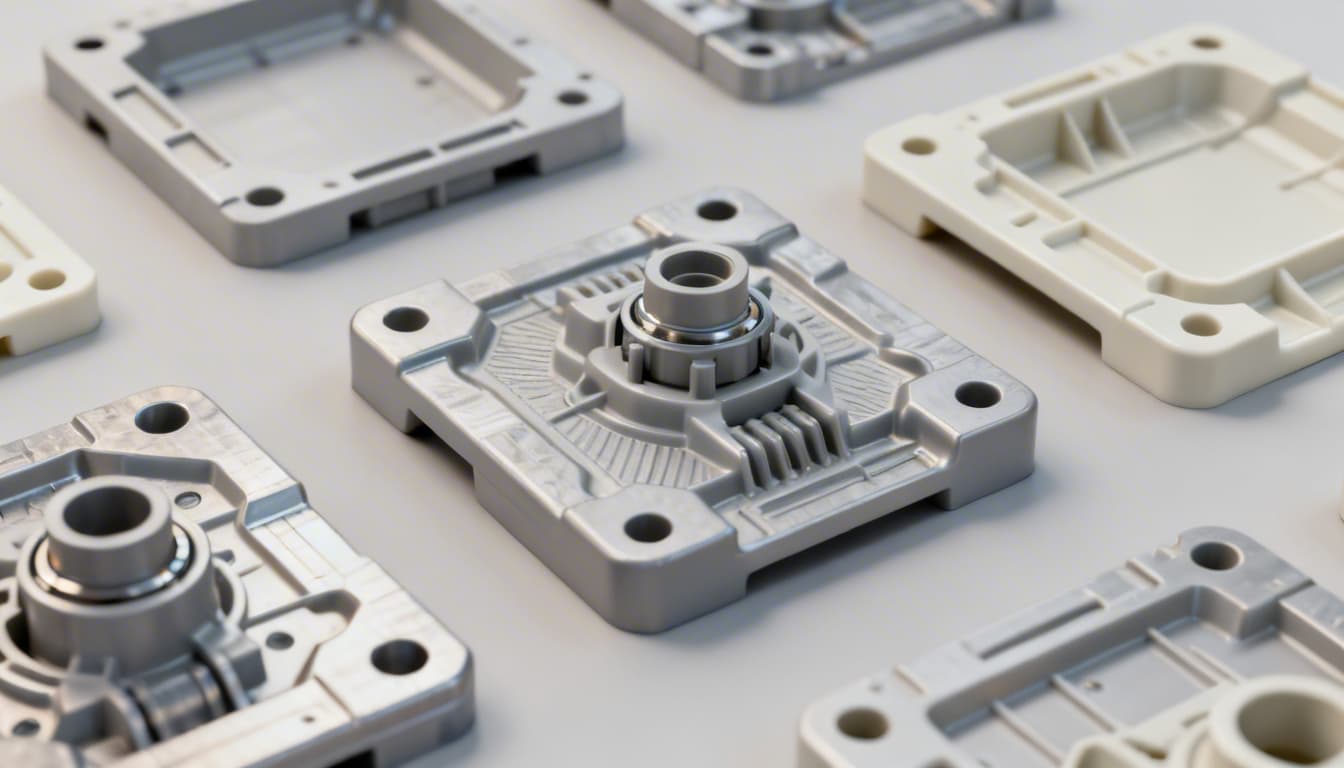
The Essential Plastic Materials Guide for Optimizing Your Injection Molding Projects
Choosing the right plastic material can be the difference between a successful injection molding project and one plagued with defects and inefficiencies. Whether you're dealing with surface finish issues or mechanical failures, understanding the properties and processing parameters of various plasti
The Essential Plastic Materials Guide for Optimizing Your Injection Molding Projects
Choosing the right plastic material can be the difference between a successful injection molding project and one plagued with defects and inefficiencies. Whether you're dealing with surface finish issues or mechanical failures, understanding the properties and processing parameters of various plastics is crucial. Here, we delve into the essential materials and their specific characteristics to help you optimize your injection molding projects.
Understanding Material Properties
Mechanical Strength and Flexibility
Mechanical properties such as tensile strength, flexibility, and impact resistance are critical when selecting materials. For instance, Polycarbonate (PC) offers high impact resistance, making it ideal for products requiring durability. In contrast, Polypropylene (PP) provides excellent flexibility and fatigue resistance, suitable for living hinges.
Thermal Stability
Thermal properties dictate how a material behaves under temperature variations. Nylon (PA66) offers excellent thermal stability, with a melt temperature ranging from 260°C to 280°C, making it suitable for high-temperature applications. On the other hand, ABS has a lower melt temperature of around 220°C, which can be advantageous for reducing cycle times.
| Material | Tensile Strength (MPa) | Melt Temperature (°C) | Flexural Modulus (MPa) |
|---|---|---|---|
| ABS | 40 | 220 | 2000 |
| PP | 35 | 160-170 | 1500 |
| PC | 70 | 260-280 | 2200 |
| PA66 | 80 | 260-280 | 3000 |
Material Selection for Specific Applications
Consumer Products
For consumer goods, materials like ABS and TPE are preferred due to their aesthetic finish and tactile properties. ABS is often used for its glossy finish and ease of painting, while TPE offers a soft-touch feel, ideal for grips and seals.
Automotive Components
Nylon (PA66) and Polyoxymethylene (POM) are commonly used in automotive applications due to their high mechanical strength and wear resistance. PA66 is particularly favored for under-the-hood components, while POM is used for gears and bearings.
Key Processing Parameters
Melt and Mold Temperatures
Accurate control of melt and mold temperatures is essential to avoid defects like warping and sink marks. For example, ABS requires a mold temperature of 60-85°C, while PC needs a higher range of 85-120°C to prevent internal stresses.
Injection Pressure and Cycle Time
Injection pressure and cycle time are crucial for maintaining part quality and production efficiency. Typical injection pressures range from 70 to 140 MPa, depending on the material and part complexity. Shorter cycle times can be achieved with materials like PP, which cools quickly compared to others.
| Material | Injection Pressure (MPa) | Mold Temperature (°C) | Cycle Time (s) |
|---|---|---|---|
| ABS | 90-140 | 60-85 | 30-60 |
| PP | 70-130 | 40-70 | 20-40 |
| PC | 100-160 | 85-120 | 40-80 |
| PA66 | 90-150 | 70-90 | 50-90 |
Common Defects and Their Solutions
Warping
Warping is often caused by uneven cooling or incorrect mold temperature. Ensuring uniform wall thickness and maintaining proper mold temperature can mitigate this issue. For instance, keeping the mold temperature consistent within ±5°C can significantly reduce warpage.
Sink Marks
Sink marks result from excessive material shrinkage, often due to insufficient packing pressure. Increasing the packing pressure by 10-20% can help fill voids and reduce sink marks.
Design Considerations for Optimal Molding
Wall Thickness and Draft Angles
Maintaining a uniform wall thickness of 1-3mm and incorporating draft angles of 0.5-2° are standard design practices to ensure part manufacturability and ease of ejection.
Gate Design
Proper gate design is crucial for controlling the flow of plastic into the mold. Using a direct sprue gate can minimize pressure drops but may require post-processing to remove gate marks.
- Determine the material requirements based on application needs.
- Select materials with compatible processing parameters.
- Design parts with uniform wall thickness and appropriate draft angles.
- Set optimal melt and mold temperatures to prevent defects.
- Adjust injection pressure to ensure complete filling and minimize defects.
Practical Tip: Always run a material trial to validate processing parameters and part performance before full-scale production. This helps identify potential issues early and allows for adjustments without significant cost implications.
Conclusion
Optimizing your injection molding projects begins with informed material selection and understanding key processing parameters. By considering the mechanical and thermal properties of materials, and adhering to industry standards, you can enhance product quality and manufacturing efficiency. For expert assistance and to get a free quote, reach out to Panda Molding and leverage our extensive material expertise and quality control capabilities.