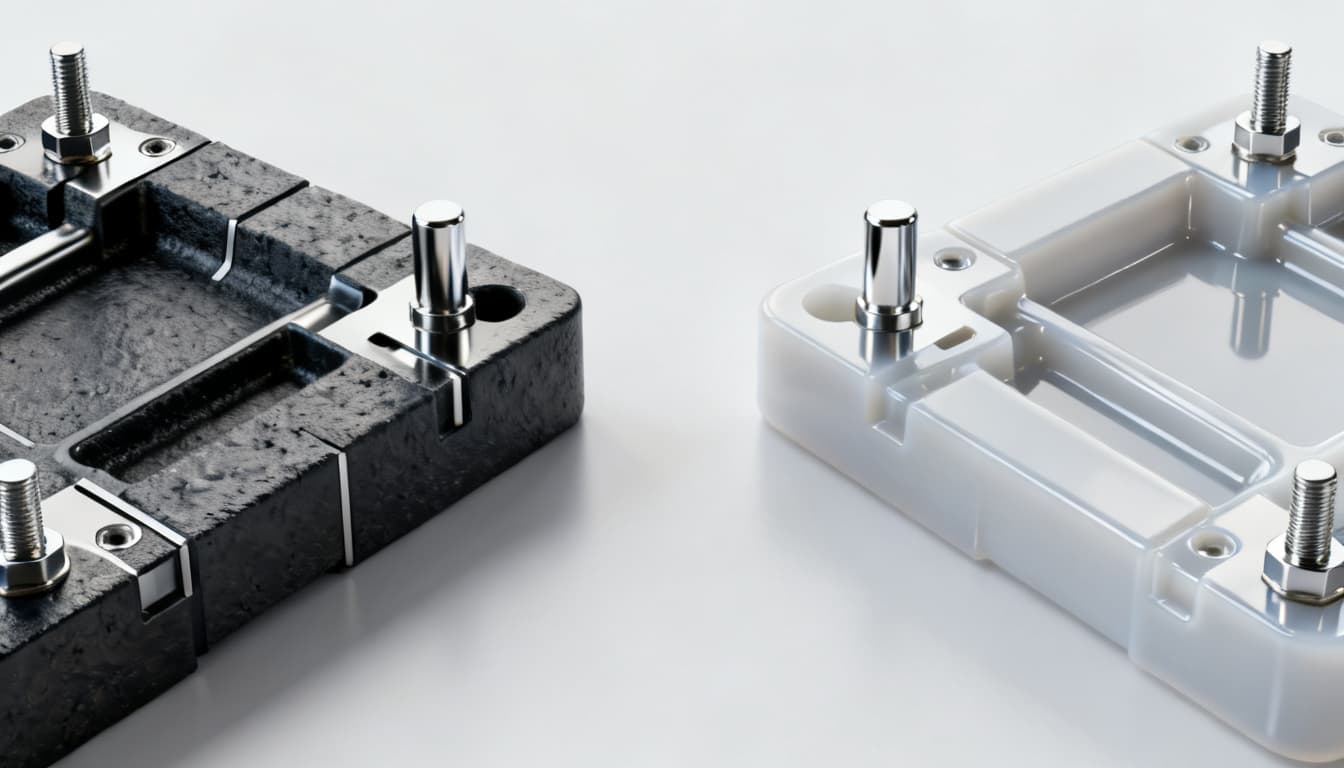
Thermoset vs. Thermoplastic: A Cost-Benefit Analysis for Compression and Injection Molding
Choosing the right material for your molding project can significantly impact both the cost and performance of your final product. Thermosets and thermoplastics each offer unique advantages and challenges, particularly in the context of compression and injection molding. Understanding these differen
Thermoset vs. Thermoplastic: A Cost-Benefit Analysis for Compression and Injection Molding
Choosing the right material for your molding project can significantly impact both the cost and performance of your final product. Thermosets and thermoplastics each offer unique advantages and challenges, particularly in the context of compression and injection molding. Understanding these differences is crucial for making informed decisions that align with your production goals and budget constraints.
Understanding Material Characteristics
Thermoset Properties
Thermosets are polymers that, once cured, form irreversible bonds. This characteristic makes them ideal for applications requiring high thermal stability and structural integrity. Common thermoset materials include epoxy, phenolic, and unsaturated polyester. These materials are known for their resistance to heat, chemicals, and electrical insulation properties.
Thermoplastic Properties
In contrast, thermoplastics can be repeatedly melted and reshaped, offering versatility in manufacturing processes. Popular thermoplastics include ABS, polypropylene (PP), polycarbonate (PC), and nylon (PA66). These materials are favored for their ease of processing, recyclability, and wide range of applications.
Cost Analysis: Thermoset vs. Thermoplastic
Material Costs
Thermosets generally have higher raw material costs due to their complex chemical structures and curing processes. However, they can offer cost savings in applications where durability and performance outweigh the initial investment. Thermoplastics, on the other hand, often benefit from lower material costs and broader availability.
| Material | Average Cost ($/kg) | Key Applications |
|---|---|---|
| Epoxy (Thermoset) | 8-12 | Adhesives, Coatings |
| ABS (Thermoplastic) | 2-3 | Consumer Goods, Automotive |
Processing Costs
Thermoset processing often involves longer cycle times and higher energy consumption due to the curing process, which can lead to increased operational costs. In contrast, thermoplastics generally require less energy and offer faster cycle times, making them more cost-effective for high-volume production.
Performance Considerations
Thermal and Mechanical Properties
Thermosets excel in high-temperature applications due to their ability to maintain structural integrity under heat. For instance, phenolic resins can withstand temperatures up to 300°C. Thermoplastics, while generally having lower thermal resistance, offer superior impact resistance and flexibility, making them suitable for dynamic applications.
Design Flexibility
Thermoplastics offer greater design flexibility due to their ability to be remelted and reshaped. This property allows for intricate designs and complex geometries that might be challenging with thermosets. Additionally, thermoplastics can accommodate thinner wall sections, typically ranging from 1-3mm, and require minimal draft angles of 0.5-2°.
Defects and Solutions
Common Defects in Thermoset Molding
Defects such as voids and incomplete curing are common in thermoset molding. Ensuring uniform temperature distribution and adequate curing time is crucial. For example, maintaining a mold temperature of 150°C and a curing time of 3-5 minutes can help mitigate these issues.
Common Defects in Thermoplastic Molding
Thermoplastic molding can encounter issues like warping and sink marks. These can often be resolved by optimizing mold temperature (typically 40-80°C), melt temperature (180-250°C), and injection pressure (700-1500 bar).
| Defect | Material Type | Solution |
|---|---|---|
| Voids | Thermoset | Increase mold temperature |
| Warping | Thermoplastic | Optimize cooling rate |
Step-by-Step Material Selection Process
- Identify the application requirements (thermal, mechanical, electrical).
- Evaluate the budget constraints and material costs.
- Consider the production volume and processing costs.
- Analyze the design complexity and flexibility needed.
- Select a material that balances performance and cost.
Practical Tips for Successful Molding
Tip: Always conduct a detailed analysis of your part design. Ensure that wall thicknesses are consistent and within the recommended range of 1-3mm for thermoplastics. This minimizes the risk of defects such as warping and sink marks.
Conclusion
Deciding between thermoset and thermoplastic materials involves a careful evaluation of cost, performance, and design requirements. While thermosets offer superior thermal and mechanical stability, thermoplastics provide versatility and cost efficiency for high-volume production. By understanding the specific needs of your project and leveraging the right material, you can achieve optimal results. For more information on how to choose the best material for your molding needs, get a free quote from Panda Molding today.