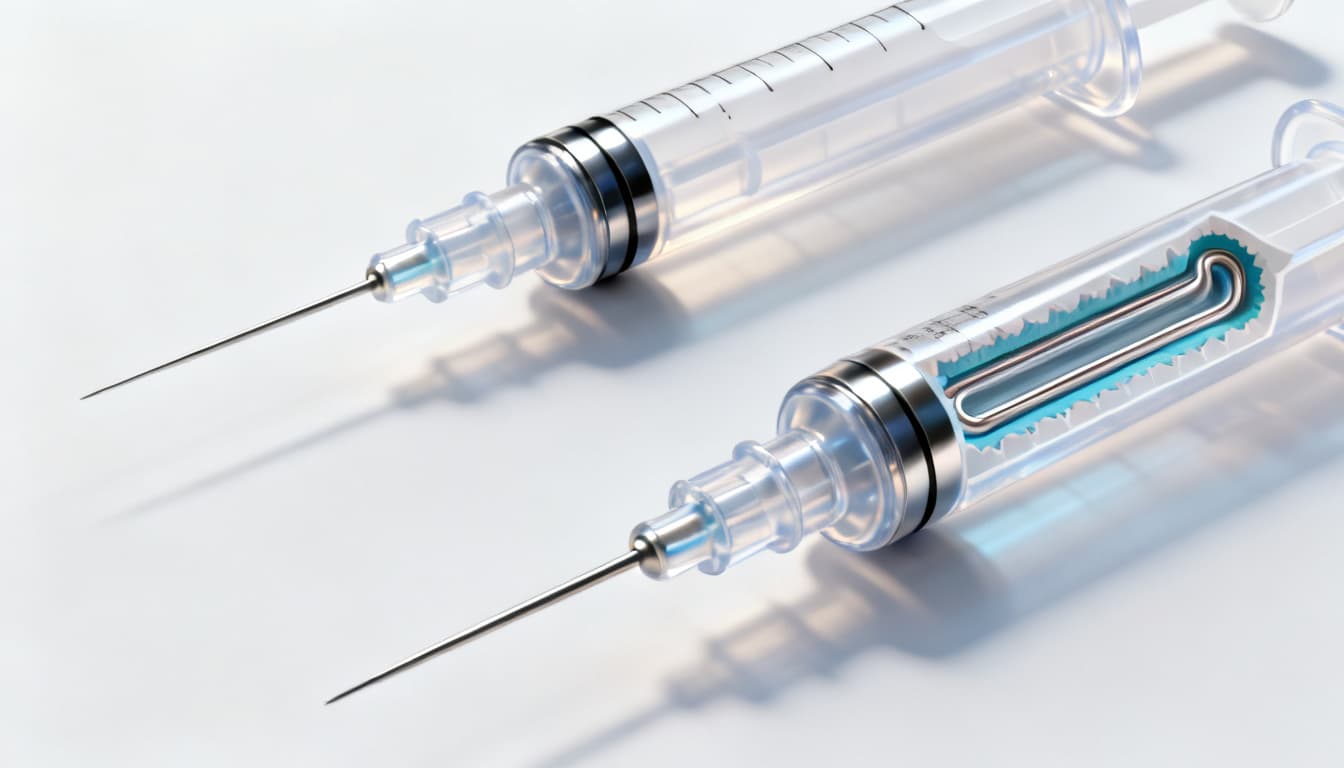
Top Medical Injection Molding Innovations: Meeting Industry Standards with Precision
In the realm of medical device manufacturing, precision and compliance with industry standards are not just important—they are critical. For manufacturers, this means constantly innovating to meet the stringent demands of the healthcare sector. This blog post delves into some of the latest innovatio
Top Medical Injection Molding Innovations: Meeting Industry Standards with Precision
In the realm of medical device manufacturing, precision and compliance with industry standards are not just important—they are critical. For manufacturers, this means constantly innovating to meet the stringent demands of the healthcare sector. This blog post delves into some of the latest innovations in medical injection molding that are ensuring precision and compliance with industry standards.
Advanced Material Selection for Medical Applications
The selection of materials in medical injection molding is a pivotal factor that directly impacts the safety and efficacy of medical devices. Understanding the properties and compliance of different materials helps in making informed choices.
Common Materials Used
Materials such as ABS, PP, PC, PA66, POM, and TPE are frequently used in medical applications. Each material offers unique properties that make it suitable for specific applications.
| Material | Properties | Applications |
|---|---|---|
| ABS | High impact resistance, good machinability | Medical housings, instrument panels |
| PP | Good chemical resistance, low moisture absorption | Syringes, labware |
| PC | High clarity, impact resistance | Transparent components, medical tubing |
| PA66 | High strength, good wear resistance | Gears, bearings |
| POM | Excellent dimensional stability, low friction | Precision components, valves |
| TPE | Flexible, rubber-like properties | Seals, grips |
Compliance with Standards
Materials used in medical injection molding must comply with standards such as ISO 10993 for biocompatibility and USP Class VI for medical-grade plastics. These standards ensure that materials are safe for contact with human tissues and fluids.
Innovations in Mold Design
Innovative mold design is crucial for producing high-precision medical components. Advances in mold design technology have led to improvements in cycle time and product consistency.
Key Design Parameters
- Wall Thickness: Optimal wall thickness ranges from 1-3mm to ensure structural integrity while minimizing material use.
- Draft Angles: Draft angles between 0.5-2° are recommended to facilitate easy ejection from the mold.
Cycle Time Optimization
Reducing cycle time without compromising quality is a key focus in mold design. Advanced cooling systems and precision machining contribute to shorter cycle times, typically ranging from 10 to 30 seconds for medical components.
Process Parameters for Precision Molding
Precision in medical injection molding is achieved through meticulous control of process parameters. These include melt temperature, mold temperature, and injection pressure, among others.
| Parameter | Typical Value | Importance |
|---|---|---|
| Melt Temperature | 180-250°C | Ensures proper flow and filling of the mold |
| Mold Temperature | 40-80°C | Critical for dimensional accuracy and surface finish |
| Injection Pressure | 500-1500 bar | Affects part density and mechanical properties |
Common Defects and Solutions
Defects such as warping, sink marks, and flash are common in injection molding. Addressing these requires careful monitoring and adjustment of process parameters.
- Warping: Often caused by uneven cooling. Solution: Optimize cooling channels and ensure uniform mold temperature.
- Sink Marks: Result from insufficient packing pressure. Solution: Increase holding pressure and time.
- Flash: Due to excessive injection pressure. Solution: Reduce injection pressure and ensure mold clamping is adequate.
Quality Control and Assurance
Quality control is paramount in medical injection molding to ensure each part meets stringent standards. Advanced inspection techniques and statistical process control are employed to maintain high quality.
Inspection Techniques
Techniques such as coordinate measuring machines (CMM) and optical inspection systems are used to verify dimensional accuracy and surface finish.
Statistical Process Control (SPC)
SPC involves monitoring the injection molding process in real-time to detect and correct deviations. Key metrics include cycle time, pressure, and temperature consistency.
Practical Tip: Regular calibration of inspection equipment is essential to maintain accuracy in measurements. Ensure that all quality control instruments are regularly validated against known standards.
Conclusion
The innovations in medical injection molding are driven by the need for precision and compliance with industry standards. By selecting the right materials, optimizing mold design, controlling process parameters, and implementing rigorous quality control, manufacturers can produce high-quality medical components. For more information or to discuss your specific needs, get a free quote from Panda Molding.