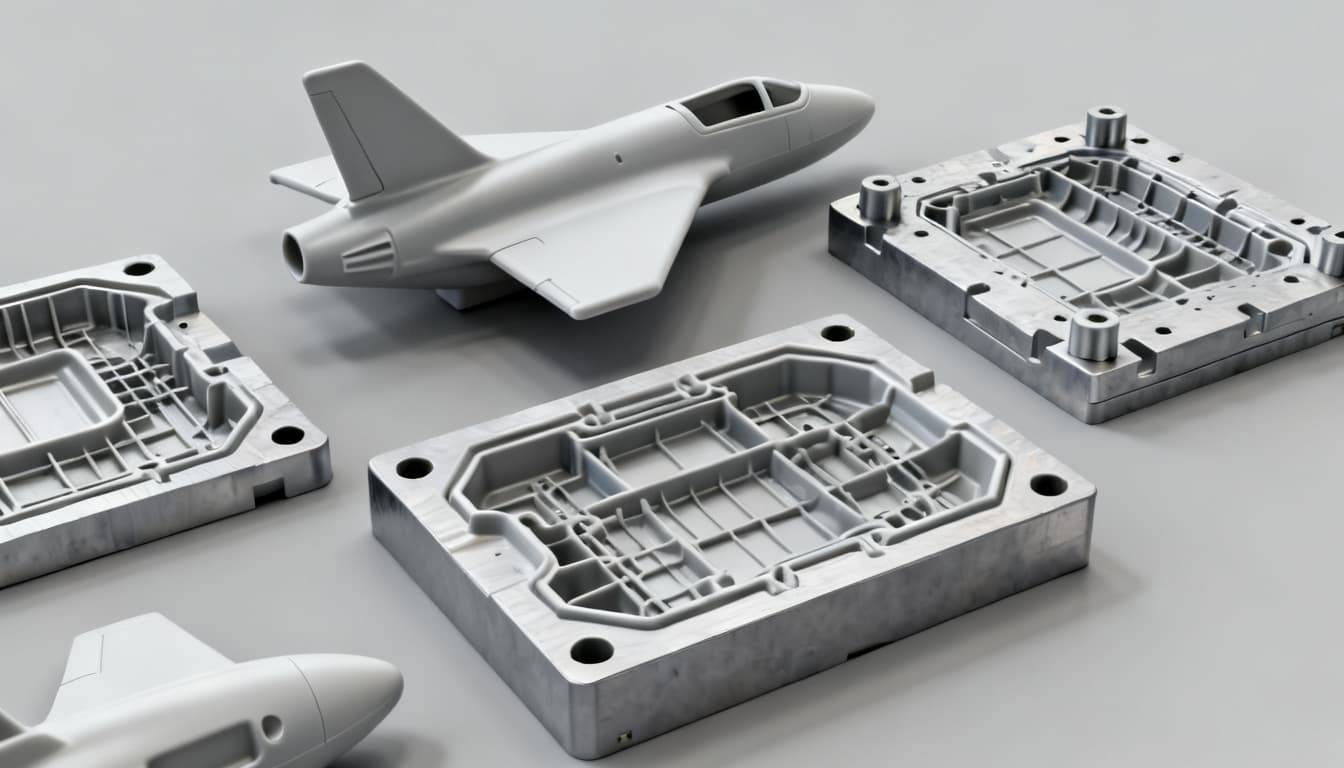
Transforming Aircraft Design: The Benefits of Aerospace Plastic Injection for Lightweight Solutions
As aerospace manufacturers endeavor to reduce aircraft weight for improved fuel efficiency and performance, the adoption of plastic injection molding has become increasingly vital. This process offers the potential to replace traditional metal components with high-strength, lightweight plastics, tra
Transforming Aircraft Design: The Benefits of Aerospace Plastic Injection for Lightweight Solutions
As aerospace manufacturers endeavor to reduce aircraft weight for improved fuel efficiency and performance, the adoption of plastic injection molding has become increasingly vital. This process offers the potential to replace traditional metal components with high-strength, lightweight plastics, transforming both the design and functionality of modern aircraft.
The Role of Plastic Injection Molding in Aerospace
Lightweight Materials for Enhanced Performance
Plastic injection molding allows for the use of materials such as Polyetherimide (PEI), Polyphenylene Sulfide (PPS), and Polyether Ether Ketone (PEEK), which offer significant weight savings compared to metals. For example, PEEK has a density of approximately 1.32 g/cm³ compared to aluminum's 2.7 g/cm³, providing nearly a 50% reduction in weight.
Precision and Complexity in Component Design
Injection molding enables the production of highly complex geometries with tight tolerances, essential for aerospace applications. The process can achieve tolerances as low as ±0.05 mm, allowing for intricate designs that are both lightweight and structurally sound.
Injection Molding Process Parameters
Key Parameters for Aerospace Components
The success of injection molding in aerospace applications hinges on precise control of process parameters. Typical values include:
| Parameter | Typical Value | Material |
|---|---|---|
| Melt Temperature | 340°C | PEEK |
| Mold Temperature | 160°C | PEEK |
| Injection Pressure | 1000-1500 bar | Various |
| Cycle Time | 30-60 seconds | Various |
Common Defects and Solutions
Defects such as warping, sink marks, and voids can compromise the integrity of aerospace components. Warping, often caused by uneven cooling, can be mitigated by optimizing mold temperature and ensuring uniform wall thickness, typically between 1-3 mm.
Material Comparison for Aerospace Applications
Choosing the Right Plastic
Material selection is critical for achieving the desired balance of strength, weight, and thermal resistance. The table below compares several materials commonly used in aerospace applications:
| Material | Density (g/cm³) | Tensile Strength (MPa) | Max Service Temp (°C) |
|---|---|---|---|
| PEEK | 1.32 | 90-100 | 250 |
| PPS | 1.35 | 70-80 | 200 |
| PEI | 1.27 | 85-95 | 215 |
Design Considerations for Injection Molded Parts
Optimizing Part Design
Designing for injection molding requires careful consideration of factors such as wall thickness, draft angles, and ribbing. Recommended design rules include maintaining wall thickness between 1-3 mm and incorporating draft angles of 0.5-2° to facilitate easy ejection from the mold.
Checklist for Successful Design
- Ensure uniform wall thickness to prevent warping.
- Incorporate draft angles to aid part removal.
- Use ribbing to reinforce thin walls without adding excessive weight.
- Design with material flow in mind to avoid voids and weld lines.
Practical Tip: Always conduct a mold flow analysis during the design phase to predict potential issues and optimize gate placement, ensuring a defect-free part.
Trade-offs and Recommendations
Balancing Cost and Performance
While plastics offer significant weight savings, they can be more expensive per unit volume than metals. However, the long-term benefits of reduced fuel consumption and maintenance costs often justify the initial investment.
Real-World Application and Experience
In practice, transitioning from metal to plastic components can lead to unexpected challenges, such as meeting fire safety standards (e.g., FAR 25.853). It is crucial to engage with experienced partners to navigate these complexities. For expert assistance, consider reaching out to our team at Panda Molding for a free consultation: get a free quote.
Conclusion
Plastic injection molding presents a transformative opportunity for the aerospace industry, offering lightweight, high-performance solutions that enhance aircraft efficiency. By understanding the intricacies of materials, process parameters, and design considerations, manufacturers can successfully integrate plastic components into their designs, achieving significant weight savings without compromising on performance.
The journey to lightweight aircraft design is complex, but with the right expertise and tools, it is a path that leads to substantial benefits for both manufacturers and end-users.