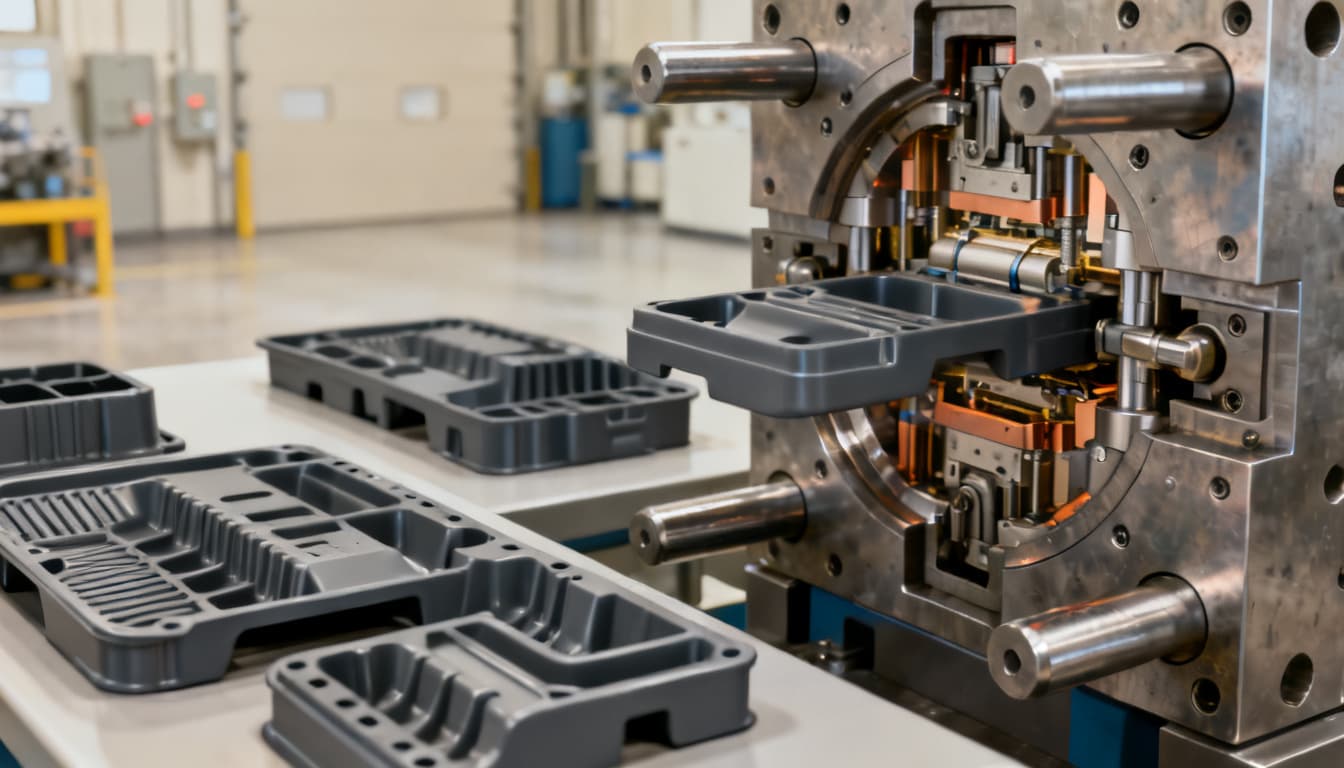
Wisconsin Injection Molding: Innovative Practices for Boosting Efficiency in Local Manufacturing
In Wisconsin, the demand for efficient and high-quality injection molding processes is ever-increasing. Manufacturers face the challenge of optimizing production while maintaining stringent quality standards. This article delves into innovative practices that are enhancing efficiency in local manufa
Wisconsin Injection Molding: Innovative Practices for Boosting Efficiency in Local Manufacturing
In Wisconsin, the demand for efficient and high-quality injection molding processes is ever-increasing. Manufacturers face the challenge of optimizing production while maintaining stringent quality standards. This article delves into innovative practices that are enhancing efficiency in local manufacturing, drawing from industry standards and real-world experience.
Optimizing Material Selection for Efficiency
Understanding Material Characteristics
Choosing the right material is pivotal in injection molding. Each polymer has unique properties that influence processing parameters and final product quality. For instance, ABS (Acrylonitrile Butadiene Styrene) is favored for its strength and rigidity, with a typical melt temperature range of 210-250°C and mold temperature between 50-80°C. In contrast, PP (Polypropylene) offers excellent chemical resistance with a melt temperature of 160-220°C and mold temperature of 10-60°C.
| Material | Melt Temperature (°C) | Mold Temperature (°C) | Key Properties |
|---|---|---|---|
| ABS | 210-250 | 50-80 | Strength, Rigidity |
| PP | 160-220 | 10-60 | Chemical Resistance |
| PC (Polycarbonate) | 270-320 | 80-120 | High Impact Resistance |
Material Optimization Strategies
To maximize efficiency, consider blending materials to achieve desired properties. For example, combining ABS with PC can enhance impact resistance without significantly increasing cycle time. Additionally, using recycled materials can reduce costs and support sustainability efforts.
Refining Process Parameters
Cycle Time Reduction
Cycle time is a critical factor in injection molding efficiency. A typical cycle time ranges from 30 to 60 seconds, depending on part complexity and material. Reducing cycle time without compromising quality requires precise control over parameters like injection pressure and cooling time.
Key Process Parameters
Injection pressure typically ranges from 50 to 150 MPa. Setting the correct pressure is crucial; too low and the part may not fill properly, too high and it can cause flash or wear on the mold. Mold temperature control is equally important, affecting cooling time and part quality.
| Parameter | Typical Range | Impact on Process |
|---|---|---|
| Injection Pressure | 50-150 MPa | Part Filling, Flash |
| Cycle Time | 30-60 seconds | Production Rate |
| Mold Temperature | 50-120°C (varies by material) | Cooling Time, Part Quality |
Implementing Advanced Technologies
Automation and Robotics
Automation in injection molding can significantly enhance efficiency. Robots can handle repetitive tasks such as part ejection and packaging, reducing labor costs and minimizing human error. Implementing robotic systems can lead to a 20-30% increase in production efficiency.
Real-time Monitoring Systems
Real-time monitoring allows for immediate detection of process deviations, enabling quick corrective actions. Systems such as process control software can track parameters like pressure and temperature, ensuring consistent quality and reducing scrap rates.
Design for Manufacturability (DFM)
Design Considerations
Effective DFM involves designing parts that are easy to manufacture without sacrificing functionality. Key considerations include maintaining uniform wall thickness (1-3mm) and incorporating appropriate draft angles (0.5-2°) to facilitate ejection.
Common Mistakes and Solutions
One common mistake is neglecting to design adequate draft angles, leading to ejection issues. Ensuring a minimum draft angle of 0.5° can prevent such problems. Additionally, avoiding sharp corners by using fillets can reduce stress concentrations and improve part durability.
- Ensure uniform wall thickness (1-3mm).
- Incorporate draft angles (0.5-2°).
- Use fillets to eliminate sharp corners.
- Design for easy assembly and disassembly.
Quality Control and Assurance
Implementing ISO Standards
Adhering to ISO standards, such as ISO 9001, ensures consistent quality management systems. Regular audits and certifications can improve customer trust and open new market opportunities.
Inspection Techniques
Utilizing advanced inspection techniques like 3D scanning and CMM (Coordinate Measuring Machines) allows for precise measurement of part dimensions, ensuring adherence to design specifications.
Practical Tip: Regularly calibrate measurement equipment to maintain accuracy and reliability in quality assessments.
Conclusion
Boosting efficiency in Wisconsin's injection molding industry requires a multifaceted approach, combining material optimization, process refinement, advanced technologies, and robust quality control. By implementing these innovative practices, manufacturers can enhance productivity and maintain competitive advantage. For expert guidance and get a free quote on your next project, reach out to our team at Panda Molding.