High Density Polyethylene (HDPE) Injection Molding
Discover the versatility of High Density Polyethylene (HDPE) injection molding for durable, chemical-resistant parts. At pandamolding.com, we deliver precision HDPE molding solutions for automotive, packaging, and industrial applications. Optimize your production with our material expertise and advanced processing capabilities.
Overview
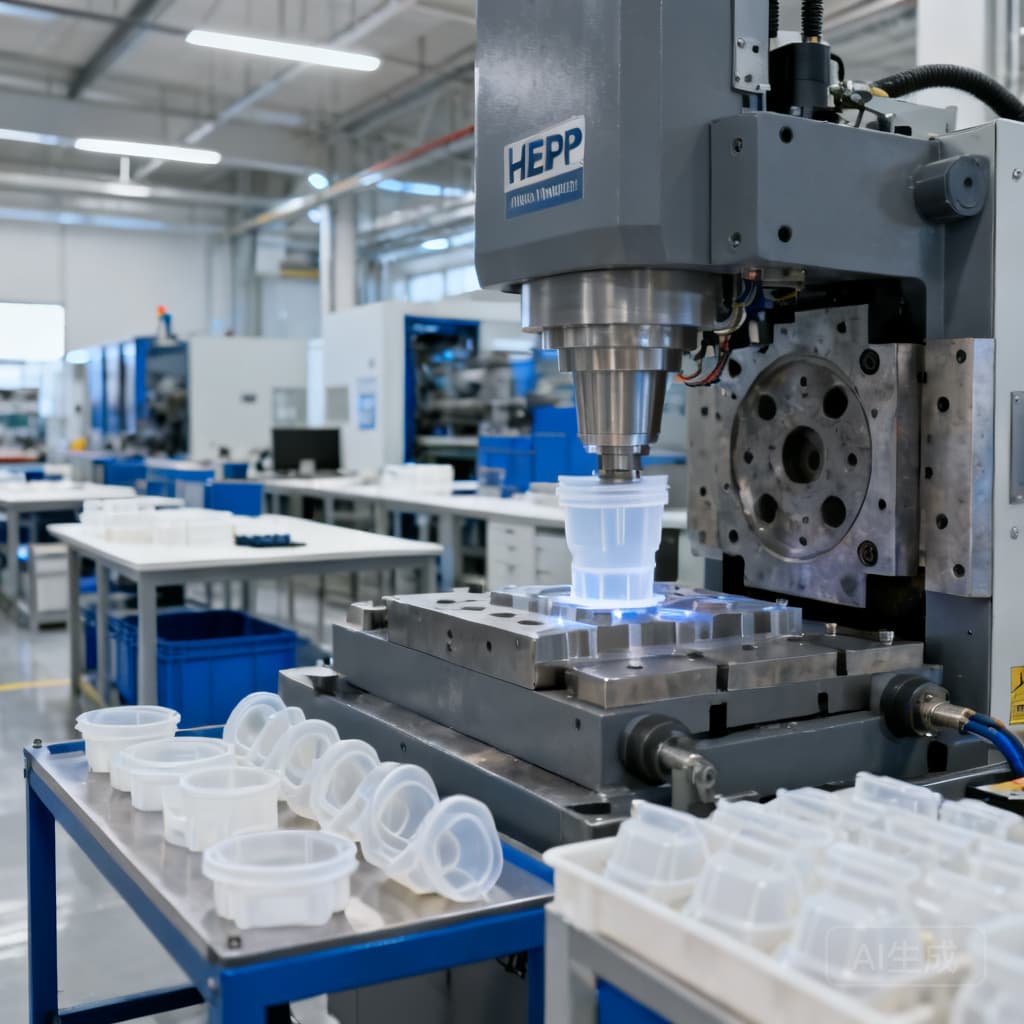
High Density Polyethylene (HDPE) Injection Molding from Panda Molding delivers tough, chemical-resistant parts with predictable cycle times and minimal warpage. Our ISO9001-certified process solves the common pain points of high shrinkage, flash, and dimensional drift, giving you consistent quality from prototype to production. Engineering support included from day one.
", "description": "High Density Polyethylene (HDPE) Injection Molding — Custom Injection Molding by Panda Molding
\nHDPE injection molding is a go-to process for parts that need extreme durability, chemical resistance, and cost efficiency. At Panda Molding, we tackle the real-world headaches that plague HDPE projects — excessive shrinkage, warpage, flash, and cycle-time overruns — by combining decades of tooling know-how with a structured, data-driven approach. Whether you're replacing a metal bracket or launching a new consumer product, our team ensures your HDPE parts meet tight tolerances and ship on time. We work with grades that comply with IS 10146:1982 for safe use, and we optimize every gate, runner, and cooling channel to keep your project on budget (OPaL M6008 data).
\n\nMaterial Specifications & Properties
\n- \n
- Specific Gravity: 0.95 — lightweight yet stiff, ideal for weight-sensitive applications (Scribd data sheet). \n
- Molding Shrinkage: 1.7–2.9% — we pre-compensate in tool design to hold critical dimensions (dimud guide). \n
- Tensile Strength: 2900 psi (20 MPa) — strong enough for structural components, with elongation >10% for toughness (MatWeb overview). \n
- Ignition Resistance: HB at 1/16 inch — meets UL94 HB for general-purpose enclosures and housings (LookPolymers data). \n
- Chemical Resistance: Excellent resistance to acids, bases, and solvents — outperforms ABS and many engineering plastics in harsh environments (SEAWIN comparison). \n
Typical Applications
\nHDPE injection molding excels where impact strength and chemical stability matter more than high-temperature performance. We see it used in:
\n- \n
- Industrial containers and pallets: The material’s high-stress crack resistance and low cost make it the standard for returnable packaging and bulk bins (Protolabs HDPE overview). \n
- Automotive fluid reservoirs: HDPE withstands diesel, coolant, and washer fluids without stress cracking, and its predictable shrinkage allows precise sealing surfaces. \n
- Consumer products (toys, caps, closures): The soft, waxy surface and easy coloring, combined with a moderate melting point, enable fast cycle times for high-volume production (Jiga manufacturing guide). \n
- Medical and labware: Gamma-sterilizable grades meet biocompatibility needs, and the material’s inertness prevents leachables. \n
Material Comparison: HDPE vs. Other Injection Molding Plastics
\nChoosing the right material often comes down to understanding failure boundaries. The table below compares HDPE with common alternatives based on real processing data and field experience (SEAWIN material guide) (Prototool HDPE vs LDPE).
\n| Material | Key Advantage | Typical Failure Mode | Best When… |
|---|---|---|---|
| HDPE | \nChemical resistance, low cost, high impact | \nExcessive shrinkage (up to 2.9%) causing warpage if not compensated in tool design (ZetarMold defect guide) | \nYou need a tough, lightweight part at the lowest possible resin cost and can design for shrinkage | \n
| PP (Polypropylene) | \nBetter fatigue resistance, living hinges | \nLower stiffness; more prone to creep under constant load | \nThe part requires repeated flexing or an integral hinge | \n
| ABS | \nHigher stiffness, better appearance | \nPoor chemical resistance; stress cracking with many oils and solvents | \nAesthetics and rigidity are critical, and chemical exposure is minimal | \n
| PVC | \nFlame retardancy, good chemical resistance | \nCorrosive off-gassing during molding; higher density increases part weight | \nFlame retardancy is mandatory, and you can manage mold corrosion with stainless steel tooling | \n
Processing Guidelines
\n- \n
- Melt Temperature: 200–250 °C (390–480 °F). We profile the barrel to avoid overheating that leads to degradation and black specks. A moderate melt temperature keeps cycle time short while filling the cavity completely (ZetarMold process parameters). \n
- Injection Pressure & Speed: 70–140 MPa (10,000–20,000 psi). We use a medium-to-high injection speed to prevent premature freezing in thin walls, then pack at a lower pressure to control flash and minimize molded-in stress. \n
- Mold Temperature: 20–60 °C (70–140 °F). Uniform cooling is critical to control shrinkage and warpage. We design cooling circuits to maintain a steady mold surface temperature, especially around the gate and thick sections (dimud mold design tips). \n
- Gate & Runner Design: We favor direct or fan gates for thick parts, and tunnel or edge gates for small components. Cold runner systems are standard, but hot runners can reduce material waste in high-volume production. Gate size is oversized by 20–30% relative to ABS to accommodate HDPE’s higher shrinkage and prevent jetting. \n
Quality Assurance
\nEvery HDPE injection molding project at Panda Molding follows ISO9001:2015 documented procedures. First-article inspection includes dimensional verification on a CMM against CAD with critical dimensions held to ±0.1 mm or better, depending on part geometry and shrinkage compensation. We measure melt flow index (MFI) on incoming resin batches to catch lot-to-lot variation that could affect fill and cycle time. Surface finish is assessed per SPI/VDI standards, and functional testing — leak tests, drop tests, or assembly checks — is performed per your requirements. RoHS compliance is verified for all standard HDPE grades. Our process capability studies (Pp/Ppk) ensure that your production runs stay in control, eliminating the dimensional drift that plagues many HDPE programs (Jeekmould insights).
\n\nFrequently Asked Questions
\n- \n
- Q: What materials are compatible with High Density Polyethylene (HDPE) Injection Molding? \n
- A: We process a wide range of HDPE grades — from general-purpose blow-molding grades adapted for injection molding to high-flow, high-stiffness injection grades (e.g., M6008, 4000-series). We can also run HDPE with UV stabilizers, antistatic additives, or glass fiber reinforcement (up to 30%) when the application demands. For multi-material projects, HDPE bonds poorly to most other plastics, so mechanical interlocks or two-shot molding with a TPE overmold are used instead. \n
- Q: What is the typical lead time? \n
- A: Prototype tooling (single-cavity, aluminum or P20 steel) can deliver first samples in 2–3 weeks. Production tooling with multiple cavities and full texture typically takes 5–7 weeks. Bridge tooling options are available for urgent pilot runs. We always provide a detailed project timeline after reviewing your 3D CAD. \n
- Q: What are the MOQ requirements? \n
- A: For prototype and low-volume needs, we can mold as few as 100 parts using a single-cavity tool. Production volumes typically start at 5,000 pieces per order to justify multi-cavity tooling. We support scaling from 1,000 to over 1,000,000 parts per year, with transparent tooling amortization plans. \n
Request a Free Quote
\nReady to move your HDPE part from concept to production? Upload your 3D CAD and 2D drawings for a free design-for-manufacturability review and a competitive quote. Our engineers will assess gate placement, wall thickness, and draft angles to eliminate warpage and flash before the steel is cut. Expect a response within 24 hours — with no obligation and complete confidentiality.
\n\nReferences & Further Reading
\n- \n
- Protolabs: HDPE Plastic Injection Molding \n
- dimud: HDPE Plastic Engineer’s Guide to Injection Molding \n
- ZetarMold: HDPE Injection Molding Process, Design & Defect Guide \n
- Jiga: HDPE Injection Molding Manufacturing Guide \n
- Jeekmould: HDPE Injection Molding Material Definition, Properties, and Applications \n
- SEAWIN: HDPE Vs. Other Plastics Injection Molding Material Guide \n
- Prototool: HDPE Injection Molding vs. LDPE Injection Molding \n
- Scribd: HDPE Injection Molding Data Sheet \n
- OPaL: High Density Polyethylene Injection Molding M6008 \n
- MatWeb: Overview of materials for High Density Polyethylene (HDPE), Injection Molded \n
- LookPolymers: Overview of materials for High Density Polyethylene (HDPE), Injection Molded datasheet \n