Micro Injection Molding for Medical Parts
At Panda Molding, our micro injection molding for medical parts delivers exceptional precision for minimally invasive devices, microfluidics, and implantable components. We combine ISO 13485 cleanroom manufacturing with ultra-tight tolerances down to 0.001 mm, ensuring biocompatibility and part-to-part consistency for critical healthcare applications.
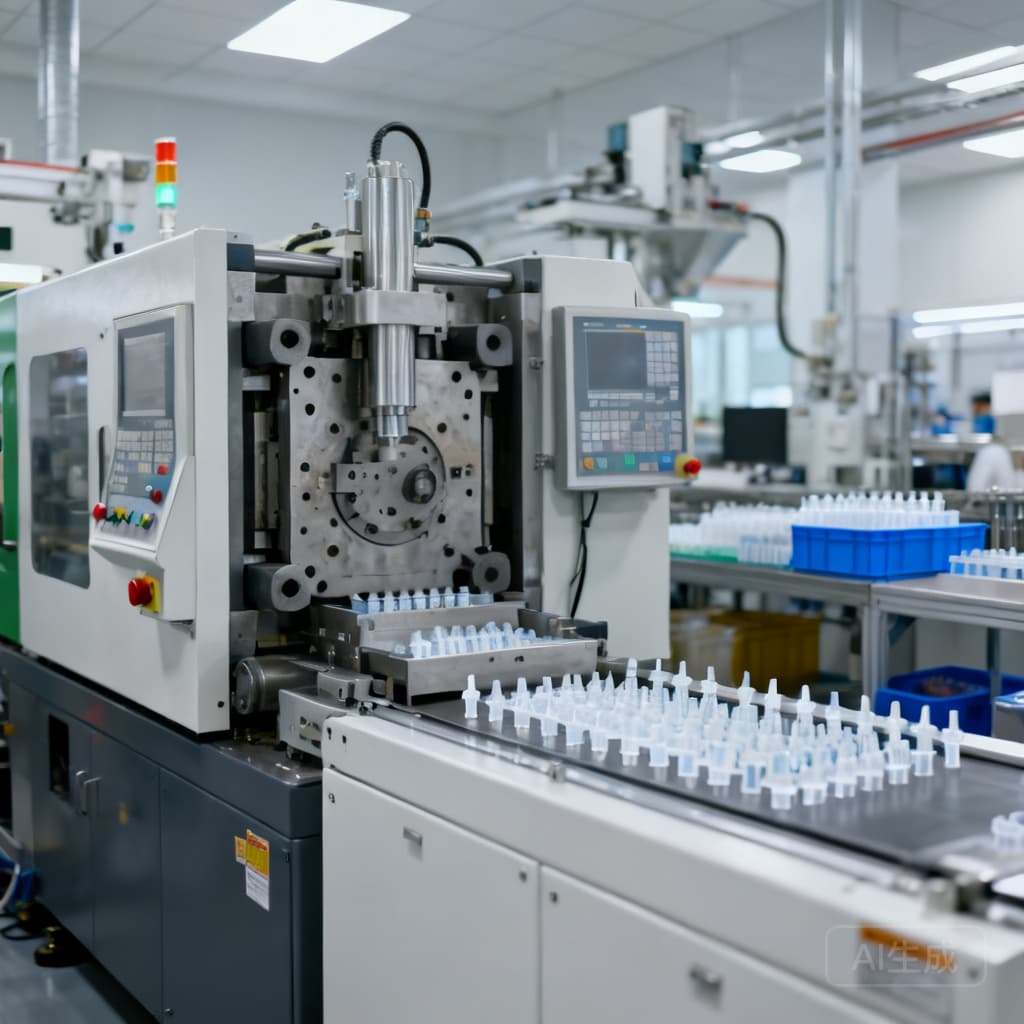
Overview
When medical device components shrink to micro-scale, warpage, flash, and cycle-time overruns can cripple production. Panda Molding's Micro Injection Molding for Medical Parts eliminates these risks with ISO 9001-certified precision, micron-level tolerances, and full process traceability—delivering reliable, scalable output for critical applications.
", "description": "Micro Injection Molding for Medical Parts — Custom Injection Molding by Panda Molding
\nAs medical devices miniaturize, traditional injection molding often introduces flash, short shots, and dimensional instability that drive up scrap rates and cycle times. Panda Molding's Micro Injection Molding for Medical Parts service solves these pain points with dedicated micro-molding cells, ultra-precise tooling, and medical-grade material handling. By integrating multiple features into a single micro component, we help device OEMs reduce assembly steps and achieve consistent part quality at scale—an approach highlighted in industry comparisons of micro vs. traditional molding (Medical Micro Molding). Our process is backed by a comprehensive technical resource that compiles best practices for reliable, high-quality medical parts (Technical Resource Guide).
\n\nService Capabilities
\n- \n
- Micron-Level Tolerances: Part features held to ±0.01 mm through precision tooling and closed-loop process control, minimizing flash and short shots. \n
- Shot Weight Range: From 0.001 g to 20 g, covering microfluidic chips, implantable sensors, and minimally invasive surgical components. \n
- Advanced Tooling: In-house design of micro-cavity inserts with conformal cooling, optimized gate placement, and cold-runner or hot-runner systems to reduce runner waste and control shrinkage. \n
- Cleanroom Molding: ISO Class 7 and 8 cleanrooms for particulate-sensitive medical parts, with full lot traceability and material handling per ISO 13485 guidelines. \n
- Medical-Grade Materials: PEEK, PEI (Ultem), LCP, PPSU, bioresorbable PLGA, and implantable-grade thermoplastics, all processed with documented drying and contamination controls. \n
Industries & Applications
\nMedical micro molding is a highly specialized niche that supports leading OEMs as device technology shrinks (Accumold). Our Micro Injection Molding for Medical Parts is particularly suited for:
\n- \n
- Minimally Invasive Surgical Instruments: Micro forceps jaws, needle drivers, and clip appliers that require absolute burr-free edges and consistent spring properties. \n
- Drug Delivery Devices: Microfluidic manifolds, inhaler nozzles, and auto-injector components where gate vestige and dimensional stability directly affect dose accuracy. \n
- Diagnostic Consumables: Lab-on-a-chip cartridges and micro cuvettes demanding optical clarity, tight channel geometries, and low fluorescence materials. \n
- Implantable Devices: Bioresorbable scaffolds and sensor housings that must meet ISO 10993 biocompatibility and degrade predictably in vivo. \n
For ultra-small parts, the material savings and functionality gains—such as integrating snap fits, living hinges, and fluid channels into a single component—can offset initial tooling costs (Medical Moulds comparison). While alternative methods like 3D printing and CNC machining offer prototyping speed, micro injection molding remains the only scalable process for high-volume production of complex micro medical parts with validated repeatability (KS Group).
\n\nOur Injection Molding Process
\n- \n
- Material Preparation & Drying: Medical-grade resin is dried to <0.02% moisture content in dedicated dryers. Every lot is traceable from receipt to finished part, with certificates of conformance maintained. \n
- Precision Molding: The material is heated to a tightly controlled melt temperature and injected at speeds up to 1000 mm/s into a micro-cavity mold. High injection pressure ensures complete filling of thin walls, while optimized gate and runner design minimizes shear-induced degradation (SHD Mold guide). \n
- Cooling & Ejection: Conformal cooling channels in the injection mold reduce cycle time and control shrinkage uniformly. Parts are ejected with minimal stress using micro-ejector pins or stripper plates, preventing distortion. \n
- Post-Molding & Inspection: Automated degating, 100% vision inspection, and cleanroom packaging preserve part integrity. Dimensional reports and first-article inspections are standard for every production lot. \n
Quality Assurance
\nOur quality system is ISO 9001 certified and operates under ISO 13485 guidelines for medical device manufacturing. We meet FDA QSR and RoHS requirements, with full material certification and biocompatibility testing per ISO 10993 when required (Seasky Medical standards). Dimensional inspection employs vision measurement systems and CMMs capable of sub-micron resolution. Surface finishes as fine as Ra 0.05 µm are achieved through polished tooling and process control. Deep expertise in medical-grade material selection ensures every plastic part meets your exact specifications and regulatory demands (PMC Plastics).
\n\nFrequently Asked Questions
\n- \n
- Q: What materials are compatible with Micro Injection Molding for Medical Parts? \n
- A: We process implantable-grade PEEK, PEI (Ultem), LCP, PPSU, and bioresorbable polymers such as PLGA. All materials are handled in a controlled environment and can be supplied with full ISO 10993 biocompatibility test data. Material selection is guided by your device's sterilization method, mechanical requirements, and regulatory pathway. \n
- Q: What is the typical lead time? \n
- A: Prototype tooling can be delivered in 2–4 weeks, with first-article samples available within days of mold qualification. Production molds typically require 6–10 weeks, depending on cavity count and complexity. We offer expedited programs for urgent development timelines. \n
- Q: What are the MOQ requirements? \n
- A: For prototyping and pilot builds, we can run as few as 100 parts. Production volumes usually start at 5,000 units, but we accommodate lower annual quantities through shared tooling strategies and strategic inventory programs. Our team will help you balance tooling investment with per-part cost. \n
Request a Free Quote
\nReady to move your micro medical device from concept to clinic? Upload your CAD files and drawings for a free design-for-manufacturability review. Our engineering team will provide a detailed quote with lead times and a DFM report within 48 hours. Experience the precision of Panda Molding's Micro Injection Molding for Medical Parts.
\n\nReferences & Further Reading
\n- \n
- Comparing Micro vs. Traditional Injection Molding for Medical Devices \n
- Comparing Micro vs. Traditional Injection Moulding for Medical Devices \n
- Plastic Injection Molding vs. Other Methods | KS Group \n
- Medical Micro Molding » Accumold \n
- Technical Resource: A Guide to Medical Injection Molding \n
- Medical Injection Molding Regulatory Standards Guide | Seaskymedical \n
- Medical Plastic Standards | Precision Injection Molding \n
- What Is Medical Injection Molding? Complete Technical Guide \n