Thin-Wall Packaging Container Molding
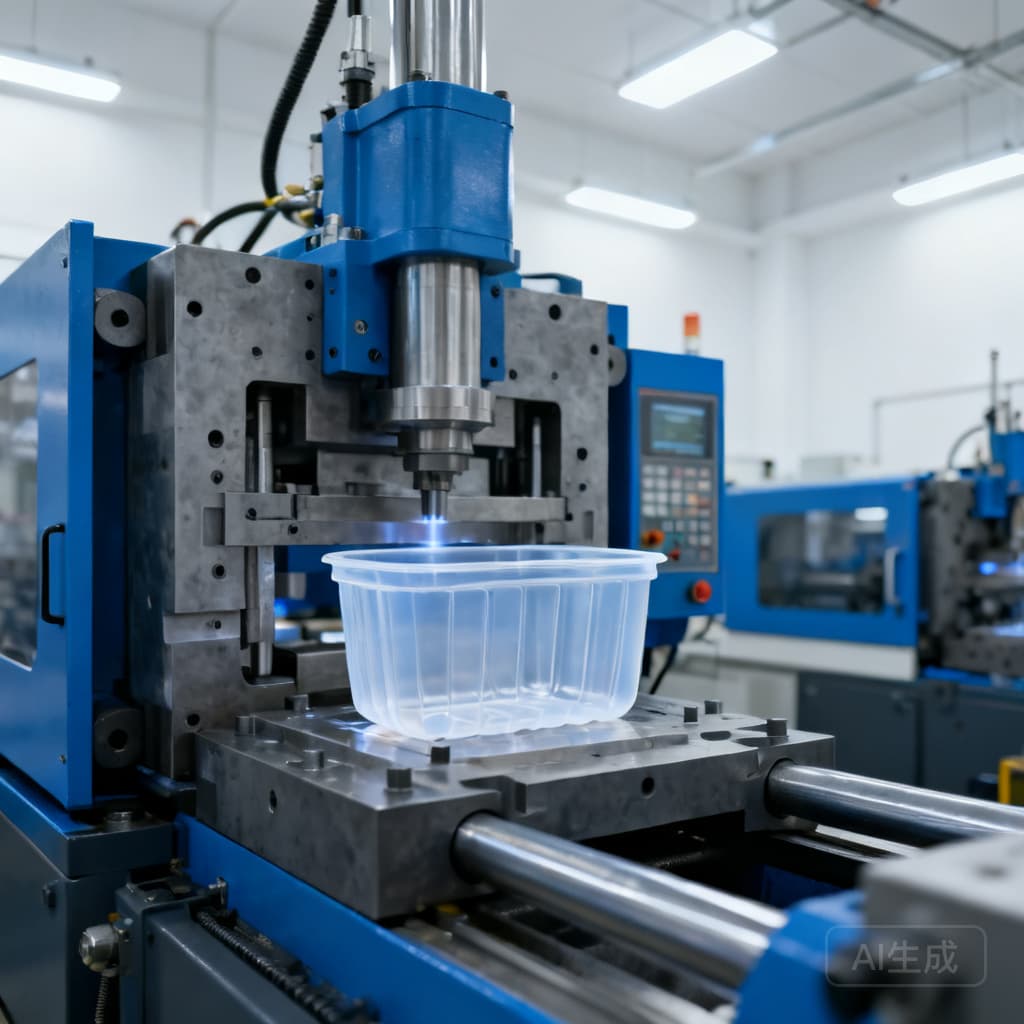
Achieve high-speed, precision Thin-Wall Packaging Container Molding with Panda Molding. Our advanced injection molding expertise delivers lightweight, durable containers with ultra-fast cycle times and minimal material waste. From food-grade tubs to disposable cups, we engineer tight-tolerance molds for maximum productivity and part consistency.
Overview
Thin-Wall Packaging Container Molding from Panda Molding solves the toughest production challenges—warp, flash, and excessive cycle times. Our ISO9001-certified service delivers high-speed, precision injection molding for food packaging, medical trays, and consumer containers, with wall thicknesses down to 0.4mm and flow ratios exceeding 200:1. Get a free DFM review today.
", "description": "Thin-Wall Packaging Container Molding — Custom Injection Molding by Panda Molding
\nIn thin-wall packaging, even minor defects like warpage or flash can trigger costly recalls—the FDA and CPSC regularly post alerts for packaging failures that compromise product safety. Common injection molding defects such as short shots, sink marks, and flash (Xometry Asia, Dayamachinery) are exacerbated by extreme flow-length-to-wall-thickness ratios. At Panda Molding, we combine high-speed injection molding machines, optimized tooling, and rigorous process control to eliminate these risks, delivering consistent, dimensionally stable containers.
\n\nService Capabilities
\n- \n
- Ultra-thin walls: Wall thicknesses from 0.4 mm to 0.8 mm with flow length/thickness ratios exceeding 200:1, meeting the industry definition of thin-wall molding (Wikipedia). \n
- High-speed injection: Fill times under 0.5 seconds using accumulator-assisted machines, enabling cycle times as low as 2–4 seconds for polypropylene containers (ENGEL). \n
- Multi-cavity molds: Up to 64 cavities per mold for high-volume production, with hot-runner systems and optimized gate locations to balance filling and minimize part variation. \n
- In-mold labeling (IML): Fully integrated IML capability for decorated packaging, eliminating secondary operations and reducing scrap (ENGEL). \n
- Tight tolerances: Dimensional tolerances as tight as ±0.05 mm for critical sealing surfaces, ensuring leak-proof closures and stackability. \n
Industries & Applications
\nThin-Wall Packaging Container Molding serves demanding sectors where lightweight, high-barrier, and cost-efficient containers are essential. In food packaging, we produce margarine cups, yogurt pots, and deli containers from polypropylene (PP) that require fast cycles and food-grade compliance. Medical packaging benefits from our ability to mold diagnostic trays and specimen containers with precise dimensions and cleanroom-ready surfaces (Xometry). For consumer goods, thin-wall storage boxes and disposable cutlery demand high stiffness at minimal weight—achieved through optimized rib design and material selection. The process is inherently suited for packaging because it combines high production speed with the ability to hold tight tolerances on snap-fit closures and living hinges, critical for user convenience and product protection.
\n\nOur Injection Molding Process
\n- \n
- Material selection & drying: We select high-flow grades (MFI > 30 g/10 min) of PP, HDPE, PS, or PET, and dry them to <0.05% moisture content to prevent splay and brittleness (Pioneer Plastics). \n
- Mold flow analysis: Every mold design undergoes simulation to predict filling patterns, weld lines, and pressure drops, ensuring the cavity fills before the melt solidifies in thin sections (Miconmould). \n
- High-speed injection: Injection speeds of 300–500 mm/s are used with precise pressure control to pack out the part without flash, compensating for the high shrinkage typical of thin-wall molding (EVCO Plastics). \n
- Cooling & ejection: Conformal cooling channels and optimized cycle times (2–8 seconds) minimize warpage; robotic part removal ensures consistent ejection without damage. \n
Quality Assurance
\nOur ISO9001-certified quality system includes in-process dimensional inspection using CMM and vision systems, with SPC tracking on critical dimensions. Material certification and melt flow index testing are performed per lot. Surface finish is inspected to SPI/SPE standards, and functional tests (leak, drop, stack) are conducted on first-article and production samples. We comply with RoHS and REACH for all materials, and can provide full PPAP documentation upon request.
\n\nMaterial & Process Comparison
\n| Material | \nTypical Wall Thickness (mm) | \nMelt Temperature (°C) | \nShrinkage (%) | \nFailure Boundaries | \n
|---|---|---|---|---|
| PP (Polypropylene) | \n0.4–0.8 | \n220–260 | \n1.5–2.0 | \nWarpage if cooling is uneven; brittle at low temperatures | \n
| HDPE (High-Density Polyethylene) | \n0.5–0.9 | \n200–250 | \n1.5–3.0 | \nFlash due to high flow; sink marks on thick sections | \n
| PS (Polystyrene) | \n0.3–0.7 | \n200–250 | \n0.4–0.7 | \nBrittleness; stress cracking at gates | \n
| PET (Polyethylene Terephthalate) | \n0.4–0.8 | \n270–290 | \n0.2–0.5 | \nHydrolysis if not dried; high melt temp requires precise control | \n
Thin-wall definition per Wikipedia: wall thickness <0.025 in (0.62 mm) and flow length/thickness >200. Thermoforming is an alternative for low volumes, but injection molding offers tighter tolerances and thinner walls (Ready-Made). High-speed machines like ENGEL e-speed achieve flow ratios >1:400 (ENGEL).
\n\nFrequently Asked Questions
\n- \n
- Q: What materials are compatible with Thin-Wall Packaging Container Molding? \n
- A: We commonly process PP, HDPE, PS, and PET, all in high-flow grades. Material choice depends on barrier requirements, impact strength, and heat resistance. For example, PP is ideal for microwaveable containers, while PET offers clarity and oxygen barrier for fresh produce. All materials are FDA-compliant for food contact. \n
- Q: What is the typical lead time? \n
- A: Prototype molds (single-cavity) can be delivered in 2–3 weeks, while production molds (multi-cavity) typically take 4–6 weeks from design approval. First-article samples are shipped within 5 days of mold completion. High-volume production runs can begin immediately after sample approval. \n
- Q: What are the MOQ requirements? \n
- A: For prototyping, we accept orders as low as 100 pieces. For production, MOQ is usually 5,000 pieces per cavity, but we work with customers to optimize batch sizes based on material and color changes. We offer flexible scheduling for ongoing supply agreements. \n
Request a Free Quote
\nReady to eliminate thin-wall molding defects and accelerate your packaging production? Upload your CAD files or drawings for a free DFM review and competitive quote. Our engineering team will respond within 24 hours with a detailed feasibility analysis and project timeline. Contact Panda Molding today.
\n\nReferences & Further Reading
\n- \n
- FDA Recalls, Market Withdrawals, & Safety Alerts \n
- CPSC Recalls & Product Safety Warnings \n
- 16 Common Injection Molding Defects – Xometry Asia \n
- 30 Common Injection Molding Defects – Dayamachinery \n
- Thin-wall injection molding – Wikipedia \n
- Thin-Wall Injection Molding – Xometry \n
- Solutions for thin wall injection molding – ENGEL \n
- Thermoforming vs. Injection Molding – Ready-Made \n
- Thin Wall Container Molds Design & Manufacturing – Miconmould \n
- Thin Wall Plastic Injection Molded Packaging – EVCO Plastics \n
- Essential Injection Molding Design Standards – Pioneer Plastics \n